John Ternus takes over as Apple CEO
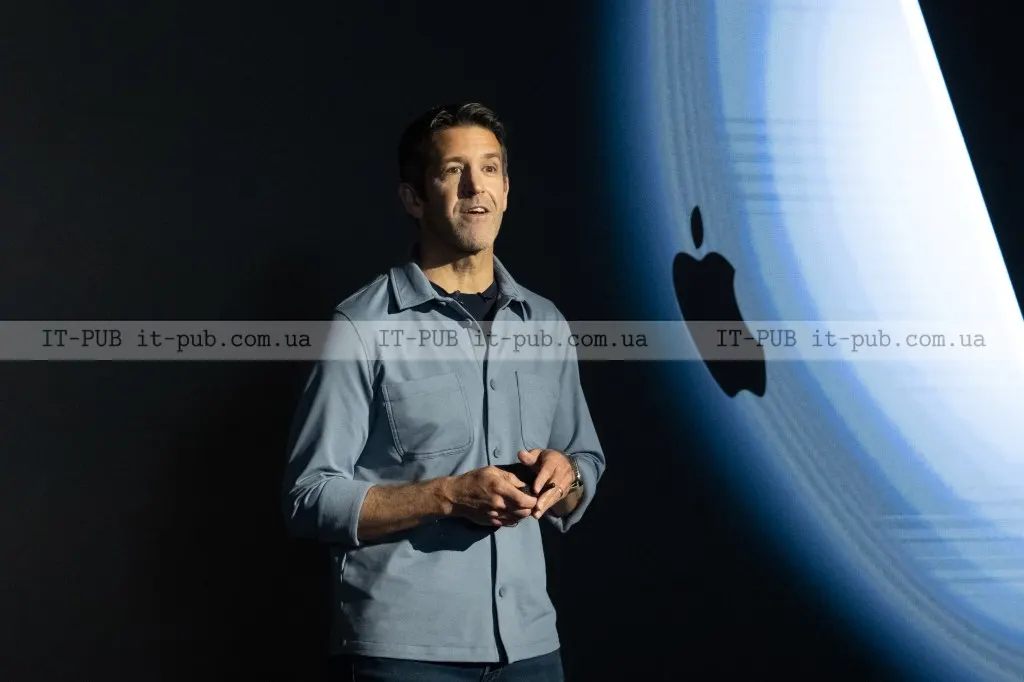
Tim Cook moves to executive chairman as Apple hands the CEO role to hardware chief John Ternus ahead of a new iPhone launch and Siri AI changes.
John Ternus has officially taken over as Apple’s CEO, ending Tim Cook’s 15-year run at the top of the company. The change comes at a busy and sensitive moment for Apple: a new iPhone launch is due next week, and a new Siri experience powered by Google’s Gemini is also expected soon. It also puts a relatively little-known executive in charge of one of the world’s most valuable companies as Apple faces pressure to keep pace in AI.
Cook, who will remain executive chairman, said he was handing the role to someone “brilliant and wonderful and capable.” Ternus, Apple’s senior vice president of hardware engineering, had already been named as Cook’s successor in April, but the move now makes that transition official, as IT-PUB News reports.
A longtime Apple engineer steps into the spotlight
Ternus is 51 and has worked at Apple for 25 years. He joined the company’s product design team in 2001 after his first job at Virtual Research Systems, a small maker of virtual-reality devices.
His rise inside Apple was steady rather than sudden. By 2013, he had become vice president of hardware engineering, and in 2021 he was promoted to senior vice president. He reported directly to Cook and led all of Apple’s hardware engineering — a central post at a company built around products like the iPhone and MacBook.
For most of that career, Ternus stayed largely out of public view. That changed in April, when Apple named him as Cook’s successor. Even now, he is far less familiar to the broader public than the executive he is replacing.
Apple’s leadership has also been unusually stable. The company has had only two CEOs this millennium, and Ternus’s appointment suggests the board still values continuity at a pivotal moment.
Ternus built his career around Apple hardware
Ternus’s work at Apple has long been tied to product details and manufacturing discipline. In his 2024 commencement speech at the University of Pennsylvania, he described one of his early assignments: checking parts for the Apple Cinema Display. He recalled counting screw grooves with a magnifying glass at a supplier facility late at night and arguing that the parts had 35 grooves instead of the required 25.
The anecdote offers a clear picture of the kind of work he has done at Apple. It also reflects the company’s long-standing focus on design precision, including parts most customers will never notice.
He has described that mindset in another context too. In a recent interview, Ternus recalled Steve Jobs paying attention to the finished back of a chest of drawers, even though no one would normally look at it. Ternus said the example stayed with him because it captures Apple’s belief that every part of a product should feel complete.
Over time, his responsibilities grew well beyond individual components. He helped lead hardware development across Apple’s product lineup, including AirPods, Apple Watch, and Vision Pro. He also played a role in Apple’s shift away from Intel chips toward its own Apple silicon, one of the company’s biggest technical transitions in recent years.
More recently, Ternus was involved in the MacBook Neo, Apple’s lower-cost laptop model. According to the source, the device uses an iPhone chip and other hardware trade-offs to reduce cost while still aiming to preserve the Apple experience.
Apple turns to a hardware insider during its AI push
Ternus’s promotion does not look like a sharp break from Apple’s current direction. If anything, it puts a hardware-focused insider in charge while the company juggles several major priorities at once.
One is the upcoming iPhone launch event, which will introduce Apple’s newest hardware line. Another is the rollout of the new Siri AI experience powered by Google’s Gemini. Together, those moves show where Apple is trying to defend its position — in consumer hardware, and increasingly in AI-driven features users now expect from major tech platforms.
That timing makes the appointment especially notable. Apple is not handing the company to a product marketer or a finance chief. It is giving the top job to an engineer whose career has been built around product quality, hardware integration, and manufacturing detail.
That may reassure people who value Apple’s traditional strengths. At the same time, it sharpens attention on areas where the company has faced pressure, especially AI. The source says Ternus will have to steer Apple through its effort to catch up in the AI race and decide what to do with the underlying technology behind Vision Pro.
A low-profile executive now faces public scrutiny
Ternus has kept a relatively low public profile, though a few personal details have surfaced over time. He was on Penn’s swim team, and for his senior project he built a feeding arm that people with quadriplegia could control with head movements.
Public records also show that he made a political donation of $2,900 to Senator Chuck Schumer in 2021.
Beyond that, the source describes him as someone who has mostly stayed out of the spotlight. Even his social media presence is minimal; the text notes that he only recently joined X.
That relative anonymity may be harder to maintain now. As Apple’s chief executive, Ternus will be responsible not just for hardware launches, but for how the company presents itself in a market where AI, platform control, and product ecosystems are under intense scrutiny.
For Apple users, the immediate effects may not be obvious. The company’s next products are already on the calendar, and Cook’s continued role as executive chairman points to a managed transition rather than a sudden change. Still, the choice of Ternus shows Apple placing its next chapter in the hands of a longtime insider shaped by careful engineering, product polish, and attention to details customers often never see.