How SEO Works on a Website
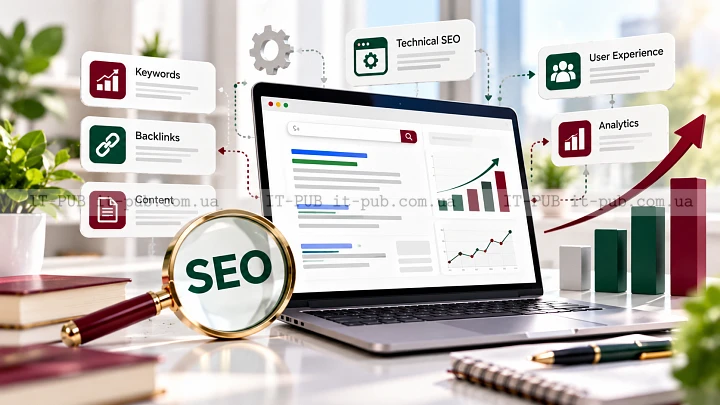
SEO is the process of making a website easier for search engines to understand, trust, and show in search results. It is not one trick, and it is not something you set up once and forget. Search engine optimization is really a combination of content, technical quality, and trust signals that help a page earn visibility.
For site owners, SEO matters because it can bring steady organic search traffic without paying for every click. For users, it helps surface pages that are relevant, useful, and easy to access. The idea is straightforward, even if the systems behind it are not.
How search engines find and read your site
Before a page can show up in search, a search engine has to discover it. That usually happens through crawling, when automated bots follow links and read pages across the web. If a page is hard to reach, blocked, or buried too deep in the site structure, it becomes harder to find.
After that, the search engine tries to understand what the page is about. It looks at the text, headings, links, metadata, images, and other signals on the page. If the page is suitable, it may be indexed, meaning it is stored and organized so it can later appear in search results.
This is where site structure starts to matter. Clear navigation, descriptive internal links, and a logical hierarchy help both people and search engines move through the site. A page that is easy to reach is usually easier to evaluate.
Why content is still the center of SEO
Good SEO for websites starts with content that answers a real search need. Search engines try to match a query with the page that is most helpful, not just the one that repeats the right keywords the most. So the content has to be relevant, clear, and complete enough to solve the user’s problem.
Strong pages usually stay focused on one main topic and explain it in a way that makes sense to a human reader. They use natural language, define terms that may be unfamiliar, and avoid padding the page with repeated phrases. Search engines are much better at understanding meaning than they used to be, so writing for people is still the safest approach.
Content also has to match search intent. Some people want a quick definition. Others want a comparison, a guide, or a step-by-step explanation. If the format does not line up with what searchers expect, search engine ranking becomes harder, even when the topic itself is relevant.
On-page SEO helps search engines understand each page
On-page SEO covers the elements on a page that explain its topic and structure. That includes the title tag, headings, main text, image alt text, and internal links. None of these elements works in isolation, but together they make the page easier to interpret.
The title should be clear and specific. Headings should divide the content into logical sections. The opening paragraphs should make the topic obvious without making the reader work for it. When a page is organized well, both users and search engines can scan it more easily.
On-page SEO also includes the natural use of related terms. A page about how SEO works may reasonably mention crawling, indexing, ranking, organic traffic, and internal linking. Those terms add context. The point is not to force every possible phrase onto the page, but to use the language that naturally belongs there.
Technical SEO keeps the site accessible
Technical SEO deals with how a site works behind the scenes. It does not replace content, but it makes content easier to crawl, index, and use. If the technical foundation is weak, even strong pages can struggle.
A site should load reliably, work well on mobile devices, and avoid broken pages or confusing redirects. Search engines prefer pages that are accessible and stable. Users do too. If a site is slow, awkward to use, or full of errors, that can hurt both visibility and trust.
Technical SEO also includes XML sitemaps, robots directives, canonical tags, and clean URL structure. These details help search engines understand which pages matter and how they relate to each other. Visitors may never notice them, but they shape how the site is read.
Links still signal trust and relevance
Links are still one of the strongest signals in SEO. Internal links connect related pages within the same site. They guide users toward more useful information and help search engines discover content. A page that gets thoughtful internal links from important parts of the site is usually easier to understand.
External links, often called backlinks, come from other websites. They can act as signals that a page is worth attention. Still, not every link carries the same weight. Search engines look at context, relevance, and quality, not just raw volume.
That is why link building should not be treated as a shortcut. The strongest links usually come from useful content, real relationships, or genuine references. A natural link profile lasts longer than aggressive tactics designed to manipulate rankings.
Search rankings are based on many signals at once
There is no single factor that decides where a page ranks. Search engines use many signals together to estimate which result is most useful for a given query. Content relevance, page quality, site structure, links, freshness, and user experience can all influence the outcome.
That is also why SEO is never fully predictable. Two pages can cover the same topic and still perform very differently because one is easier to read, better structured, more trusted, or simply more useful. Search results are comparative, not a checklist.
It is often more useful to think of SEO as something you earn rather than force. A page has to show that it deserves attention. The clearer the topic, the stronger the structure, and the better the overall site, the better the chances.
User experience and SEO now overlap more than ever
Search engines want to send people to pages that work well. That is why user experience and SEO now overlap so closely. A page that is hard to navigate, cluttered with ads, or difficult to read on a phone can frustrate visitors and weaken performance.
Readability matters. So does layout. Short paragraphs, clear headings, sensible spacing, and visible calls to action can make a page easier to use. When people stay longer, explore more pages, or come back later, that often suggests the content is meeting a need.
Accessibility belongs here too. Descriptive link text, alt text for images, and a structure that works with assistive tools improve the experience for more users. Better accessibility often supports better SEO as well.
Why SEO takes time to show results
SEO is usually a long-term process. Search engines need time to crawl new pages, understand changes, and observe how a site performs over time. A new page may not rank right away, even if it is well written.
That does not make SEO slow in a pointless way. It means the work builds over time. A well-structured site with strong content can keep attracting organic search traffic long after publication. Paid ads stop when the budget stops. Useful pages can continue to perform as long as they stay relevant.
Consistency matters most. Sites that keep publishing useful content, fixing technical issues, and improving internal linking tend to build stronger search visibility. SEO rewards patience far more often than shortcuts.
Common mistakes that weaken SEO
One common mistake is writing for search engines instead of people. Pages that repeat the same phrase too often feel unnatural and often do not perform well. Search engines are looking for usefulness, not keyword overload.
Another issue is poor site structure. If important pages are hard to find, they may not be crawled often enough or receive enough internal links to matter. A site can have excellent content and still underperform if the navigation is messy.
Technical problems can hold a site back too. Broken links, duplicate pages, redirect chains, and weak mobile usability all create friction. Even strong content can struggle if the site itself is difficult to access.
A final mistake is expecting instant results. SEO is not a switch that suddenly turns on traffic. It is a process of improving a site so search engines and users have more reason to trust it.
A practical way to think about SEO for any site
The simplest way to understand how SEO works is to break it into three parts.
First, search engines need to find and read the site without running into barriers. That is the technical foundation.
Second, the content has to answer a real search need clearly and completely. That is the relevance layer.
Third, the site needs signals that support trust and usefulness, including internal links, external references, and a good user experience. That is the authority and quality layer.
When those parts work together, a site has a much better chance of earning organic search traffic. If one part is weak, the whole result can suffer.
Building SEO into the site, not around it
SEO works best when it is built into the website from the start. That means planning page structure before publishing, writing content with a clear purpose, and keeping the technical setup clean. It also means updating pages when information changes or when a better structure becomes obvious.
For businesses, publishers, and creators, this approach is more durable than chasing trends. Search engines change, but the basics remain familiar: make pages easy to find, easy to understand, and genuinely useful. That is the core of how SEO works.
A site built on those principles gives itself a better chance to rank, and it gives users a better reason to stay.