Google launches Universal Cart for U.S. shoppers
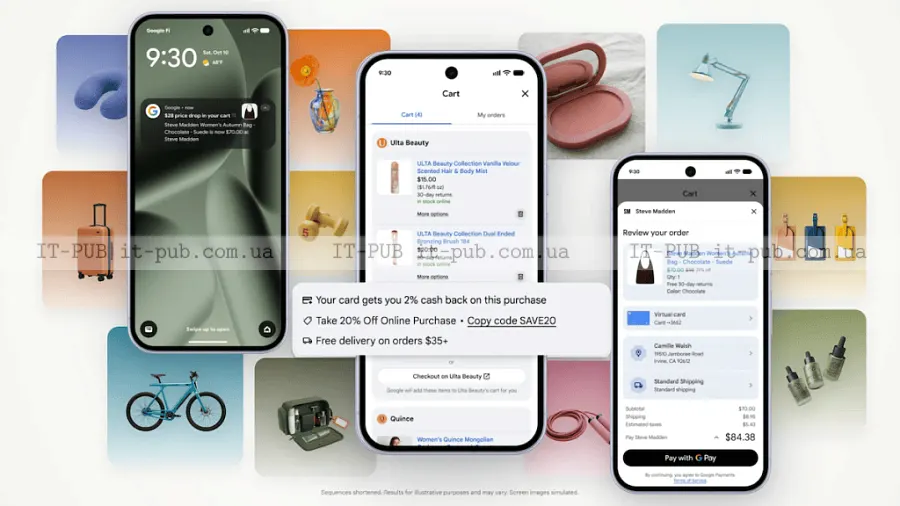
The feature pulls saved products from Search and Gemini into one cart, with price-drop and restock alerts tied to Google’s wider shopping system.
Google has launched Universal Cart for U.S. users, adding a shopping tool that pulls together products found in Search and the Gemini app. The idea is straightforward: save items while browsing, then come back later without losing track of them or starting over. It also shows how Google is pushing AI shopping features beyond demos and into routine use.
The launch matters because it turns Google’s broader AI shopping push into something more directly useful for everyday shoppers. Instead of bouncing between retailers and repeating searches, users can keep tabs on products in one place. Google is also pitching the feature as a way to follow deals and stock changes more closely, which could be useful for anyone comparing options or waiting for an item to return.
One cart links Search and Gemini
Google said Universal Cart can collect products from multiple retailers and keep them in a single place for users to monitor. The company first previewed the feature at Google I/O in May, and it is now available in the U.S.
The core use case is simple. Someone finds a product, saves it, and returns later to continue shopping. Google says the cart keeps both the saved items and the user’s shopping progress, so they do not have to hunt down the same products again or restart the process.
That matters because the feature connects shopping activity across Search and the Gemini app. Rather than splitting product discovery and tracking between separate tools, Google is trying to make the experience feel more continuous. As IT-PUB News notes, that is a practical shift from AI shopping features that mainly focused on discovery.
Price-drop and restock alerts are part of the appeal
Google says Universal Cart does more than store saved products. It is also built to help users track price changes and stock status.
According to the company, the tool can notify users when the price of a saved item drops. It can also alert them when a product that was out of stock becomes available again. For shoppers watching popular or time-sensitive items, that could cut down on repeated checks across retailer sites.
The feature may be especially relevant for people who are not ready to buy right away. By keeping products active in one place, Google is trying to make shopping feel less scattered and easier to manage.
Checkout ties into Google’s Universal Commerce Protocol
Google said checkout in Universal Cart is connected to its Universal Commerce Protocol, or UCP. The company introduced UCP earlier this year as an open standard meant to help AI agents and retailers work together across different parts of the shopping journey, including checkout.
That suggests Universal Cart is not being positioned as a standalone utility. Google appears to be placing it inside a broader shopping system that links product discovery, tracking, and payment. The company’s pitch is that UCP helps those steps work together more smoothly.
For shoppers, the practical point is that Universal Cart is not just a saved-items list. It is connected to the wider buying process, which signals that Google wants the tool to play a larger role between browsing and checkout.
Google expands its AI shopping push
Universal Cart joins a growing set of Google products aimed at AI-assisted shopping. The company already offers conversational product discovery in Search’s AI Mode, along with “Let Google Call,” which uses an AI agent to contact nearby stores and check whether an item is in stock.
Taken together, those tools show Google trying to make AI products more useful in ordinary consumer tasks. Shopping is a clear test case because it brings together search, comparison, availability, and checkout in one flow.
Universal Cart also fits into a broader business push. Google is investing heavily in AI-powered shopping, and this launch adds another practical layer to that effort. The focus is not just on helping people find products, but on managing the path toward a purchase.
Rivals are also building AI shopping tools
Google is not alone in bringing AI into e-commerce. The source notes that Amazon, OpenAI, and other competitors have introduced agentic commerce tools as companies look for ways to make chatbots useful beyond basic question-and-answer tasks.
That helps explain why Universal Cart stands out. It is part of a wider push to turn AI assistants into shopping tools that do more than suggest products. In that sense, Google’s move is both a product launch and a sign of a broader competitive race.
The upside is convenience. A tool that remembers saved items, watches for price changes, and connects with checkout can remove some of the friction from online shopping. The trade-off, at least in broad terms, is that more of the shopping journey may end up concentrated inside a single platform, giving these systems a bigger role in how people discover and buy products.
For now, the rollout is limited to U.S. users. Even so, the launch shows how AI shopping features are moving from preview-stage ideas toward everyday tasks like tracking products, spotting deals, and following purchases through to checkout.