Nvidia unveils open AI models for enterprises and PCs
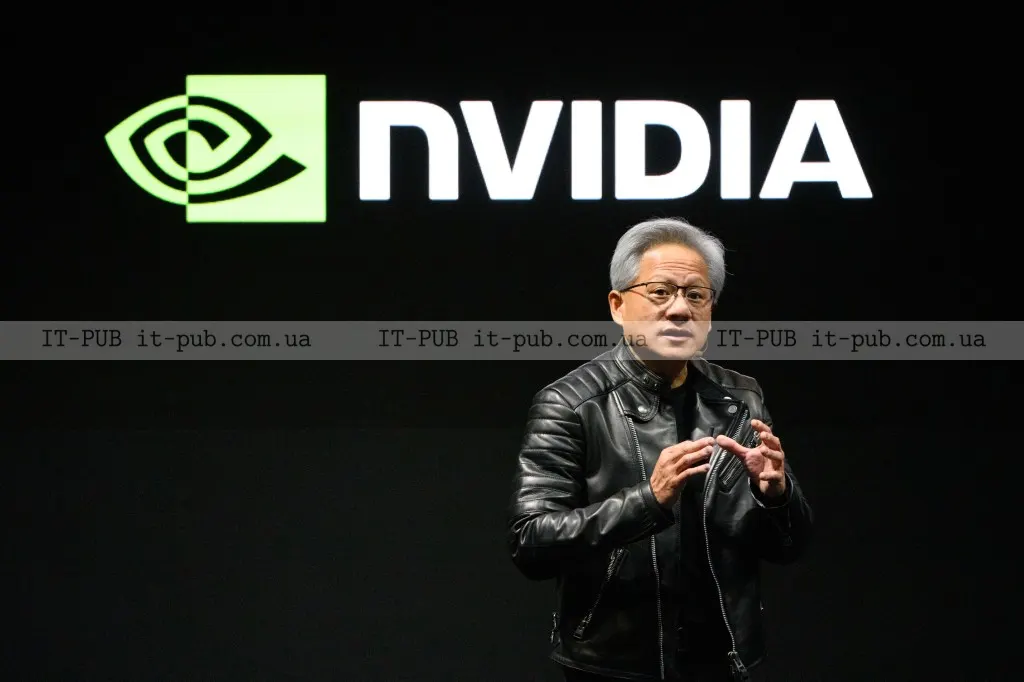
Nemotron 3.5 adds a large model for enterprise agents and smaller Bolt models for local AI PCs, with Nvidia stressing control, speed and privacy.
Nvidia has unveiled a new set of open-weight AI models aimed at two very different audiences: large enterprises running agents on their own infrastructure, and users of new AI PCs that handle tasks locally. The launch matters because it shows how Nvidia is trying to stay central as AI moves beyond cloud-only systems and into business workflows and personal devices. It also lands at a moment when companies and consumers are weighing not just model quality, but where AI runs and who controls the data.
The announcement underscores a growing split in the AI market. On one side are companies that want powerful models they can adapt and run themselves. On the other are consumers and knowledge workers who may want AI features without sending sensitive data to the cloud.
Nvidia targets enterprise agents and local AI PCs
The main model in the new lineup is Nemotron 3.5 Super VL, a 120-billion-parameter system aimed at enterprise agents. Nvidia says it uses fewer parameters than Nemotron 3 Ultra, while still delivering similar accuracy in instruction-following and tool-use tasks.
At the other end are two smaller Bolt models designed for local use. They are meant to run on the new AI PCs powered by the Nvidia RTX Spark chip and on DGX Spark workstations. Nvidia says these machines are going into the market now through partners including Microsoft and Dell.
The target audience is broad: consumers, programmers and enterprise knowledge workers. Nvidia is not just selling a model family here. It is also trying to shape where AI runs — on company infrastructure, on personal devices, or in the cloud.
Nvidia leans on open-weight models for control and deployment
In the blog post announcing the models, Nvidia vice president of Open Models and Software Kari Briski said organizations that want to run agents on Nvidia infrastructure now have “an open, optimized model for their tier without having to choose between capability and deployability.”
That gets to the center of Nvidia’s strategy. The company is leaning into demand from enterprise customers that want to post-train models on their own data and deploy them on their own systems. Briski said that unlike closed frontier models, organizations can post-train Super VL on their own data, deploy it on their own infrastructure and “own what they build.”
It is a pointed pitch in a market where major AI labs often keep their most advanced models behind closed systems. Nvidia is presenting open-weight models as a practical option for businesses that want more control over how AI is used and where their data goes.
The move also comes as some large AI developers look beyond Nvidia chips for their computing needs, including toward AWS’s Trainium, Cerebras and their own custom chips. Nvidia’s response is to double down on enterprise customers that still want to build around its hardware and software stack, as IT-PUB News notes.
Nvidia says Super VL is built for demanding agent tasks
Nvidia claims Super VL completes tasks faster than competing models from Anthropic and OpenAI — specifically Opus 5, GPT 6.1 Sol, Luna and Astra — when it is post-trained on agentic tasks.
The company says those tasks include document intelligence, financial accounting, scientific experimentation, medical insurance claims and security attack resilience. These are not casual chatbot use cases. They point to work that businesses may want AI to handle in structured, repeatable environments where speed and accuracy matter.
As with many major model announcements, Nvidia is pairing performance claims with a list of companies it says are already using Super VL. The names it gave were Skydance, EY, Ramp, Crowdstrike, Perplexity and Salesforce.
The source does not say how these companies are using the model or whether the deployments are broad or limited. Even so, Nvidia is clearly trying to show that Super VL is not just a lab demonstration, but something it says has already attracted interest from recognizable business customers.
The Bolt models are designed to stay on the device
The second part of the launch centers on smaller models built for local execution. Nemotron 3.5 Bolt 74B-A9B 24GB is a 74-billion-parameter model intended for local agentic tasks. Nvidia says it is designed to balance speed with reasoning, including multistep reasoning, tool calling and web browsing.
The smallest model, Bolt E4B, is aimed at conversational agents. It will be released later this month, while Super VL and Bolt 74B-A9B are available now.
This local-first approach matters because it addresses a concern that has followed consumer AI assistants from the start: privacy. Nvidia says PC users can “delegate everyday projects” without sending those workloads to the cloud.
That may appeal to people wary of giving AI systems access to information about their families, health, finances and other personal matters. At the same time, it shows Nvidia sees an opening in hardware as much as software. If users want AI that runs on-device, they need machines built for it.
Privacy concerns shape Nvidia's AI PC push
Nvidia’s local-model strategy is also a bet on a still-early market for consumer AI assistants. The company appears to be trying to create demand not just for models, but for PCs and workstations powered by its chips.
That could matter for both consumers and businesses. For users, local processing may reduce the need to send sensitive data to external servers. For companies, it may offer a way to use AI tools while keeping more control over data and deployment. But the source also makes clear that privacy concerns remain part of the equation, especially for consumer assistants that may need deep access to personal information.
The launch sits at the intersection of two trends: enterprise AI systems that can be customized and run privately, and AI assistants that live on personal devices instead of in the cloud. Nvidia is trying to serve both with one model family.
The company is not entering a blank market. It already has a broader Nemotron family covering multimodal AI, reasoning, coding, math and enterprise automation. This announcement, though, shows a more focused push into systems meant for real workplaces and the new generation of AI PCs.
For Nvidia, that makes the move strategic. The company is competing not just on model performance, but on where AI is deployed and who controls it. For businesses, the new models may offer more flexibility. For users, they may offer more privacy.