Rivian plans outside AI agents for its cars
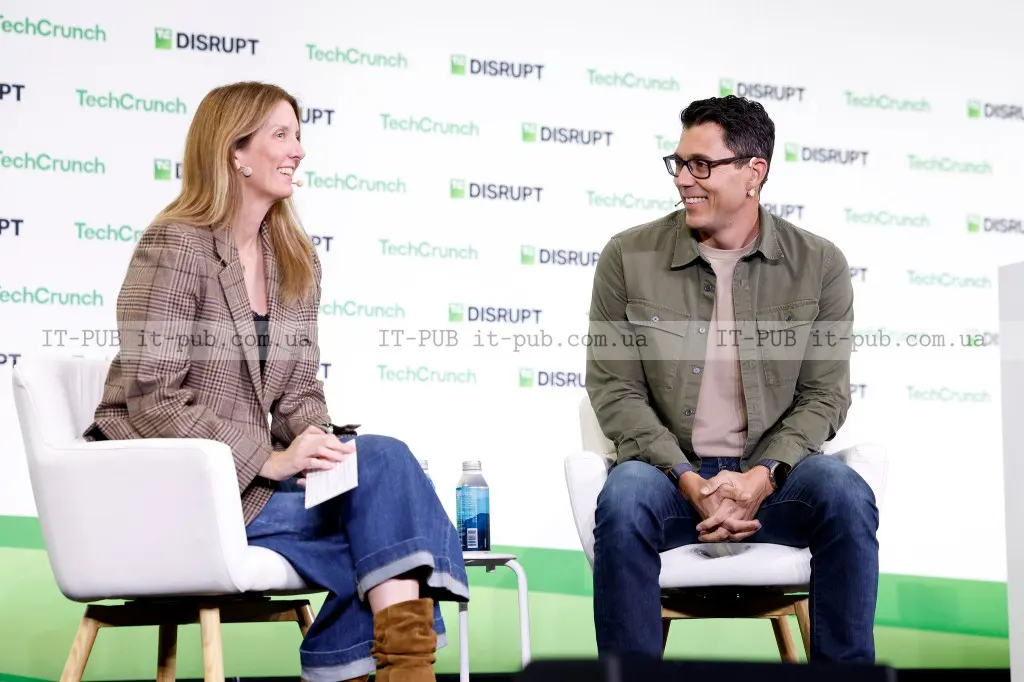
RJ Scaringe said Rivian could eventually let vehicles run AI agents from companies like Anthropic, while keeping braking and steering off limits.
Rivian is sketching out a next step for in-car AI: its electric vehicles could eventually run software from outside companies such as Anthropic. CEO and founder RJ Scaringe raised the idea at TechCrunch Disrupt, describing a future in which Rivian cars do more than respond to basic voice commands. The company is not saying when that might happen, and for now it is pointing to a December “AI & Autonomy Day” event for more detail.
The proposal matters because it shows how carmakers increasingly see the vehicle as a software platform, not just a machine for getting from place to place. For Rivian, that could mean a more capable assistant that handles everyday tasks, uses context from other apps, and works across devices. At the same time, the company drew a firm boundary: anything tied to driving itself would stay off limits to an AI agent.
Rivian wants its assistant to go beyond voice commands
Rivian recently introduced an AI assistant that lets drivers and passengers speak naturally to the vehicle. Scaringe said the company’s longer-term vision goes further, with cars that could run AI agents built by other companies, including Anthropic.
Onstage, he called that possibility “magical.” He did not offer a timeline, though, and Rivian has not added specifics beyond mentioning its December event.
The strategy builds on software Rivian developed itself. Rather than leaning heavily on Apple CarPlay or Android Auto, the company has created much of its in-car system from scratch, including navigation. It has still brought in popular apps such as Apple Music.
That gives Rivian more control over how an AI assistant behaves inside the car. It also means Rivian would have to do more of the integration work itself if it wants outside AI agents to operate smoothly.
Rivian says its software can route requests to different models
Rivian says it has built an in-house “agentic” framework that interprets what a person wants when speaking to the car, then sends that request to the right part of the software.
Scaringe described it as a kind of traffic light. Depending on the task, the system decides which model to use. A simpler request might be handled by a local model running on the vehicle itself, while a more demanding one could be sent to the cloud. Rivian also says it uses different models for different jobs.
In practical terms, that can cover routine commands such as lowering the temperature, turning on seat warmers, or summarizing the news. As IT-PUB News notes, Rivian said that as of May this year, the agent could also access external apps like Google Calendar.
Scaringe suggested the next step would be adding products from frontier AI companies. He also made clear that this would not be easy. Rivian would need to build extensive behind-the-scenes connections and work directly with AI labs to make the system function properly.
Safety limits will keep AI away from braking and steering
The clearest line Rivian drew is around safety. Scaringe said software placed near safety-critical systems requires extreme caution.
He was explicit that an AI agent would not be allowed to decide when to brake or steer. Vehicle-level controls, he said, are not being handed over to an agent.
That distinction matters. Rivian is not describing a self-driving assistant that takes over the car. What it appears to be building is a more conversational layer for comfort, information, and connected services, while driving functions remain under human control.
That may reduce risk, but it also sets limits. The more useful an assistant becomes, the more access it needs to context, apps, and systems. Rivian will have to balance that convenience with the need to keep the car’s core functions isolated.
Shared context across devices could make the assistant more personal
Scaringe said Rivian sees this as an extension of how people already use agentic apps on phones and other devices. To make that work in a vehicle, the company would need to connect the car to the same kind of context those apps collect.
He offered one example: a driver might ask the Rivian assistant to turn on the ventilated seats, then continue a conversation about dinner plans. In that scenario, the car could pull in context from a discussion the user had with the assistant on another device and help think through what to cook for guests on Friday.
That kind of integration could make the assistant feel more useful and less like a simple voice-command tool. It also raises obvious questions about how much personal context a car should be able to access, and how much users will want carried from one device to another.
Rivian did not explain how that data flow would work in practice. It said only that the vehicle would need to connect to context collected by apps such as Muse.
Rivian joins a wider push toward smarter in-car assistants
Rivian’s plans arrive as other automakers are also experimenting with AI assistants. Earlier this year, Tesla added a feature that lets users talk to both SpaceX’s Grok chatbot and its Grok Bot assistant.
That puts Rivian’s comments inside a broader shift in the auto market, where software is becoming a larger selling point and in-car assistants are moving beyond basic voice commands. Rivian’s distinction is that it is talking not just about one chatbot, but about the possibility of plugging in outside AI agents from multiple companies.
For drivers, that could eventually mean a more flexible digital helper inside the car. For Rivian, it means more integration work, more coordination with AI developers, and more pressure to make sure convenience does not come at the expense of safety. December may bring a clearer picture, but for now this remains a plan, not a finished feature.