Why Google Indexing Matters for Your Site
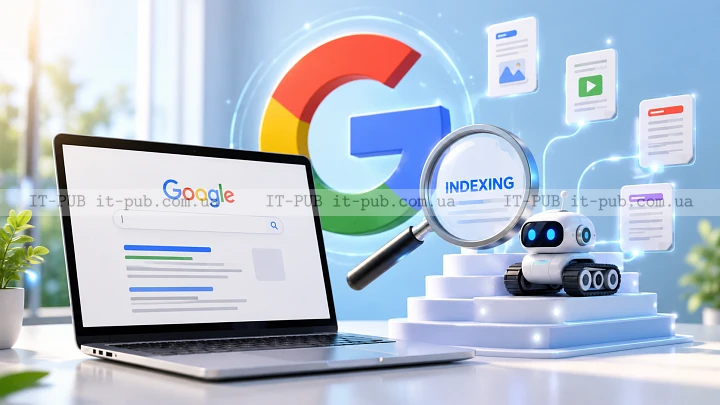
Google indexing is a core part of how search works, but it is easy to get wrong in practice. A page can be live, publicly accessible, and still invisible in search if Google has not added it to the index. Once you understand the basics, it becomes much easier to make better decisions about content, site structure, and technical SEO.
This article breaks down how indexation works, why some pages get missed, and what you can do to improve site indexing without chasing quick fixes.
What Google indexing actually means
Google indexing is the process of storing and organizing information about web pages so they can appear in search results. When Google finds a page, that does not mean the page will automatically show up in search. First, Google has to analyze it and decide whether to add it to the index.
A simple way to think about the index is as a giant library catalog. Google looks at the page, reads signals like the text, links, and metadata, and works out how that page should be classified. If the page is indexed, it can potentially rank for relevant searches. If it is not, users will not find it through normal Google results.
That is also why indexing and crawling are not the same thing. Crawling is when Googlebot visits a page and discovers its content. Indexing comes after that. It is the step where Google decides whether the page belongs in the search index and how it should be understood.
Why some pages get indexed and others do not
Not every page earns a place in search results, at least from Google’s perspective. Search engines do not want their index filled with duplicate, thin, blocked, or low-value content. So a page may be crawled and still never make it into the index.
The reasons are often fairly ordinary: technical barriers, weak internal linking, duplicate URLs, or content that does not add much value. Sometimes the page itself is fine, but Google simply has not discovered it yet. In other cases, the site sends mixed signals that make indexation less likely.
Pages can also drop out after being indexed. Google keeps reassessing the web as sites change. A page that once looked useful may later become outdated, duplicated, or inaccessible, and that can affect whether it stays indexed.
How Google finds and understands pages
Google usually finds pages through links. Internal links are especially important because they help search engines understand the structure of a site and reach new or deeper content. External links can also lead Google to a page, but they are only one path.
Sitemaps help too. They do not guarantee Google indexing, but they give Google a clearer picture of what exists on the site. That can be especially useful for large websites, newer sites, or pages that are difficult to reach through normal navigation.
Once Google discovers a page, the next step is understanding it. It looks at the visible text, headings, links, structured data where relevant, and other signals. The goal is not just to store the page, but to understand what it is about and whether it should appear for certain searches.
The role of technical SEO in site indexing
Technical SEO makes search engine indexing easier by removing friction. If a site has broken links, blocked resources, poor internal linking, or confusing duplicate URLs, Google may have a harder time processing it efficiently.
A clean site structure goes a long way. Important pages should be reachable within a few clicks, and internal links should guide both users and search engines toward the content that matters most. Clear canonical signals also help when similar pages exist, because they tell Google which version should be treated as the main one.
Robots directives matter as well. A page marked with noindex will not be indexed, even if Google can crawl it. A page blocked in robots.txt may not be crawled properly, which can make it harder for Google to understand the page and the links on it. These controls are useful when used intentionally. When they are set by mistake, they often create indexing problems.
On larger sites, crawl budget can also become part of the picture. If search engines spend time on low-value or duplicate URLs, important pages may get less attention than they should.
Why content quality affects Google indexing
Google wants to keep pages in its index that are useful and distinct. That is why content quality matters so much. A page with very little text, copied material, or no clear purpose may be ignored or treated as a low priority.
Strong content does not need to be long. It needs to meet a real need, use clear language, and match the purpose of the page. A product page should explain what the product is, who it is for, and what makes it different. A help article should solve a specific problem. A blog post should cover its topic with enough depth to be genuinely useful.
Quality also includes freshness, where freshness matters. Some pages need regular updates because the information changes. Others can stay relevant for a long time if they remain accurate and well written.
Common indexing problems and what they mean
A common issue is Google indexing the wrong version of a page. This often happens when a site has multiple URLs for the same content, such as tracking parameters or different path variations. In cases like that, canonical tags and consistent internal linking usually help.
Another issue is slow indexation of new pages. That does not always point to a technical problem. Sometimes Google just needs time to discover the page and decide whether it is worth adding. Strong internal links and a clear sitemap can improve discovery, but they do not force a page into the index.
Pages may also be excluded because of thin content, duplicate content, or a noindex directive. Sometimes the problem is broader than a single URL. If many pages on a site look too similar or offer little value, Google may be less willing to index all of them.
How to check whether a page is indexed
The simplest way to check is to search for the page in Google using its URL or a unique phrase from the content. If it appears, it is probably indexed. If it does not, that does not automatically mean something is broken, but it is worth a closer look.
For site owners, Google Search Console is the most useful tool here. It can show whether a page is indexed, crawled, excluded, or blocked. It can also surface technical issues that may prevent indexation. On larger sites, that visibility matters because problems with indexed pages rarely stay isolated for long.
When you review a page, it helps to look at the full set of signals. Can Googlebot access it? Is it linked from an important part of the site? Does its canonical tag point somewhere else? Is it marked noindex? In many cases, the answer is in one of those details.
Practical ways to improve indexing
The best way to improve Google indexing is to make the site easy to crawl and worth indexing in the first place. Start with internal linking. Important pages should not sit on their own with no clear path leading to them. If Google can reach them naturally through the site, they are more likely to be discovered and processed properly.
Keep URLs stable and avoid creating unnecessary duplicates. When similar pages need to exist, use canonical tags carefully. That helps consolidate signals and reduces confusion.
It is also worth checking that valuable pages are not blocked by accident. One noindex tag or one robots rule can keep a page out of search completely. That may be exactly what you want for private or low-value pages, but public content should be reviewed carefully.
Sitemaps should stay accurate and current. They are not a magic fix, but they help Google understand which pages exist and which ones matter. On sites with many URLs, a well-maintained sitemap can support healthier site indexing over time.
How indexing fits into broader SEO
Indexing is not the same as ranking, but it comes before ranking. A page has to be indexed before it has any chance to appear for relevant searches. That makes Google indexing a foundation, not the finish line.
Good SEO starts with pages that can be found, crawled, indexed, and understood. Only after that does ranking come into play. If a page is technically sound but not indexed, it cannot bring in search traffic. If it is indexed but weak, it may still struggle to perform.
That is why technical SEO and content strategy need to work together. Technical work helps search engines access and process the site. Content gives them something worth storing and showing. When both sides are in place, indexing tends to become much more reliable.
When a page should not be indexed
Not every page belongs in Google’s index. Login pages, internal search results, duplicate filters, test pages, and private content are often better kept out of search. Indexing everything creates noise and can weaken the site’s overall quality signals.
The important thing is to be deliberate. If a page should not appear in search, use the right method to keep it out. If it should appear, make sure nothing is blocking it by accident. A lot of indexing issues come down to unclear intent, not complex technical failures.
This matters even more on large sites, where small mistakes can scale fast. A template change, a CMS setting, or a site migration can affect thousands of pages at once.
A simple way to think about Google indexing
The easiest way to think about Google indexing is as a filter. Google discovers pages, evaluates them, and keeps the ones it considers useful enough to store in the search index. That decision is shaped by accessibility, content quality, site structure, and technical signals.
For site owners, the goal is not to force every page into the index. The goal is to make the right pages easy to find and worth keeping there. When that happens, search visibility becomes more stable and more predictable.
Google indexing can sound highly technical, but the practical idea is straightforward. Help search engines reach your best content, remove obstacles, and make the purpose of each important page clear. That is the basis of healthy site indexing and stronger long-term search performance.