Figma adds tools to steer AI agents on its platform
New updates include Figma Specs, public beta access for code layers, and broader integrations as the company pushes for more predictable AI-assisted work.
Figma has introduced a new set of features aimed at shaping how AI agents work inside its design platform. The announcements came during the company’s first Config event in India, where Figma also highlighted its growing presence in the market. At the center of the update is a practical goal: giving teams more control over how design work is created, shared, and turned into code when AI is part of the process.
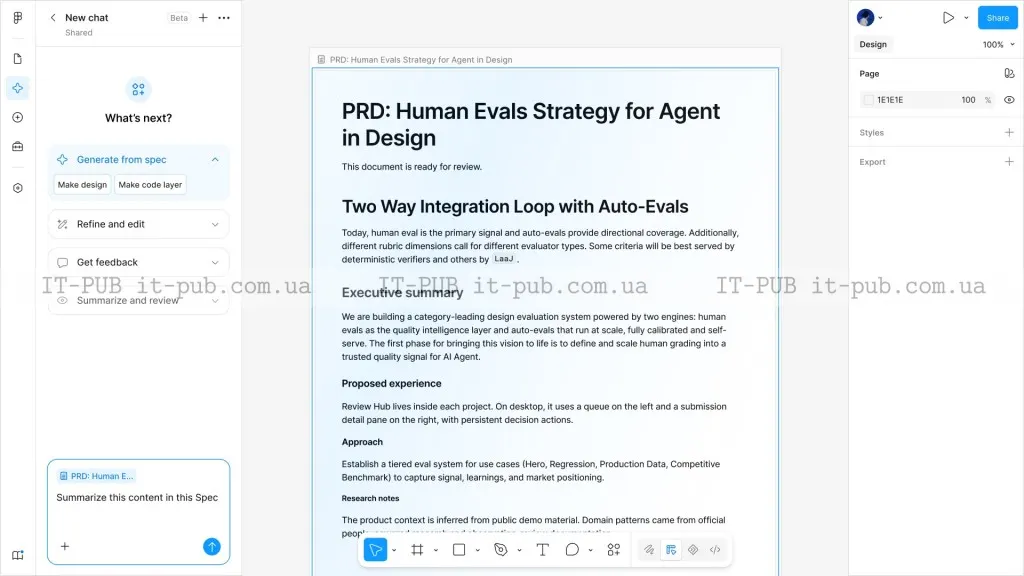
The biggest addition is Figma Specs, a markdown-based editor that lets users define a company’s design language in a clear, text-based format. Figma says the document can serve as a reference point for both teams and agents working in the platform. That matters because AI tools can generate a lot very quickly, but not always in a predictable way, and Figma is trying to make that output easier to guide.
Figma Specs gives teams a place to define design rules
Figma Specs can exist as a standalone file or live alongside work on the canvas. It is more than a plain text editor: users can reference Figma elements, including items already on the canvas, and embed FigJam diagrams, code layers, and designs.
The idea is to give teams one place to document design decisions and rules. Figma says design libraries, code libraries, and guidelines can also be pulled into the system, adding more context while work is being created. According to IT-PUB News, that context can then be used by agents as they try to follow the brand or product rules a team has set.
For companies, that could make design work more consistent across both people and AI tools. For users, it may reduce the chance that an AI-generated design drifts away from the look and feel a team expects. Figma is not presenting this as a final answer to the challenges of AI, though. It is positioning Specs as a way to push the platform toward more controlled results.
Figma expands agent access while stressing limits
The company said its agent on canvas became available to a wider user base in the past week. That expansion comes with a clear caveat: AI systems are not fully deterministic, meaning they do not always produce exactly the same result every time. Figma says it is adding tools that help steer the agent toward more predictable outcomes.
That point runs through the broader announcement. Figma is not just adding AI features; it is also building ways to define how those features should behave. In practice, that could matter for teams that want to use AI for design work without giving up control over brand standards or product consistency.
Figma chief design officer Loredana Crisan described the company’s role as a place where software teams decide what they build and ship. She also pointed to a broader shift in software creation, saying AI has made building more accessible. Her comments suggest Figma sees AI less as a replacement for design work than as a tool for exploring ideas before something is shipped.
Code layers enter public beta
Another major update is code layers, which Figma has now made available in public beta. The feature brings coding directly into on-canvas designs, making it possible to create more interactive prototypes. Figma first announced code layers in private beta in June, so this move opens testing to a wider audience.
Users can also ask the agent to turn a design into code or to change part of the code while iterating on a prototype. That makes the feature relevant not just to designers, but also to product teams looking to move faster between visual ideas and working prototypes.
The public beta launch shows Figma is still testing how far it can push design and code closer together. For teams, that may shorten the path from concept to prototype. At the same time, it raises the same question that runs through the rest of the update: how much should AI be allowed to generate on its own, and how much needs to be defined in advance?
Payload and MCP widen Figma’s workflow
Figma also said it is integrating Payload, the open source headless CMS it acquired last year, with its Figma Make product. Figma Make is used for generating dynamic websites and directly managing content. The company said the integration is meant to bring content management and website generation into the same workflow.
Alongside that, Figma said it is supporting more than 20 new tools with its MCP, including Open Code, Dia, Grok Bot, and Indian AI startup Sarvam. The company did not say more in the source text about how each of these tools will be used, but the update shows Figma is broadening the ecosystem around its platform.
That matters because Figma is positioning itself as more than a design app. It wants to be a place where different tools, libraries, and AI systems can work together. For businesses, that could mean fewer disconnected steps between design, development, and content work — but also more of the workflow sitting inside one platform.
India plays a larger role in Figma’s plans
The India event also underlined how important the market has become for Figma. The company opened its first office in India late last year, with sales, partnership, go-to-market, and product support functions. Figma said India is now its biggest market outside the United States in terms of users.
The company also said the platform works with 40% of India’s top 100 companies listed on the Bombay Stock Exchange. That helps explain why Figma chose India for the announcement. The market is already significant for the company, and the new features appear aimed at teams that want design, code, and content tools to work together more smoothly.
Taken together, the updates show Figma leaning further into AI-assisted product creation while trying to keep a human-defined structure around it. That balance is likely to matter most for businesses, where consistency, control, and speed all have to coexist.