US courts will disclose spyware wiretap approvals
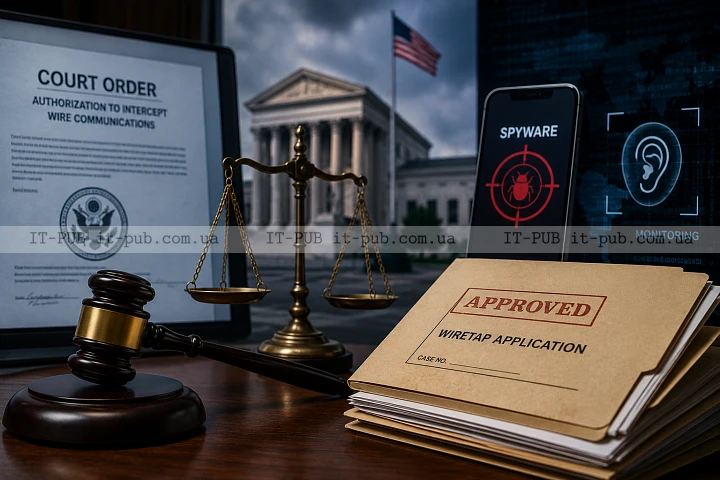
Federal courts plan to add a new category to wiretap reports in 2029, showing how often judges approved spyware for intercepting live communications.
US courts are preparing to publicly track one of the government’s least visible surveillance tools: spyware used to intercept live communications. Starting with data published in 2029, the federal judiciary will disclose how many times judges authorized wiretaps carried out with hacking tools and spyware. That will open a narrow but important window into a practice that has long been hard for the public to measure.
Until now, annual court reports have shown how often wiretaps were approved overall, but not how often spyware or hacking tools were used within that total. According to IT-PUB News, the change creates a separate line of visibility for a form of surveillance that has largely remained out of public view.
Court wiretap reports will add a spyware category
For nearly 20 years, the Administrative Office of the U.S. Courts has published annual Wiretap Reports. Those reports already break down the number of wiretaps approved each year by judge, state, crime type, and other details.
The new change adds a separate category for what the federal government calls network investigating techniques, or NITs. In this case, the reports will cover spyware and hacking tools used to tap into real-time communications.
The Administrative Office said the new “spyware/hacking” category will start being tracked in the 2028 Wiretap Report, which will be published the following year. The agency said reporting forms and procedures must be updated before the new data can appear in the annual report.
The figures will cover live interception, not device searches
The new statistic will not show every way authorities use hacking tools. It will only cover cases where spyware is used to intercept communications in real time, including calls and messages on services such as Signal and WhatsApp.
It will not include cases in which investigators remotely access a phone and pull data stored on the device, such as photos, files, or location information. That kind of action is treated as a search, not a wiretap, and falls under a different legal process.
The distinction matters. Wiretaps are considered highly invasive, and police must meet a high legal threshold before a judge will approve one. Even then, a single order can collect a large volume of communications.
Wyden has pressed for the numbers since 2017
Democratic senator Ron Wyden welcomed the change after pushing for this kind of reporting for years. He has been calling for it since 2017, criticizing what he sees as excessive secrecy around electronic surveillance orders and arguing that the public still lacks a clear picture of how the government spies on people.
In a statement to TechCrunch, Wyden said he was thankful that the federal courts agreed to collect and publish data about hacking. He also said Congress should go further by passing his Government Surveillance Transparency Act, a draft bill reintroduced earlier this year.
His response keeps the focus on oversight, not just technology. The argument is not over whether the government can use these tools at all, but over how much the public should know when they are used.
Privacy advocates call it a long-overdue transparency step
Privacy advocates also described the move as significant. Eva Galperin, cybersecurity director at the Electronic Frontier Foundation, said that until now, observers have only been able to estimate the scale of the problem.
Galperin said that once the numbers are public, it will be harder for authorities to deny that spyware was used in specific cases. She added that the reporting could improve accountability, especially if the total turns out to be large.
Brett Max Kaufman, a senior counsel in the American Civil Liberties Union’s Center for Democracy, called the change “an important and long-overdue step forward for transparency around government hacking” and said it should help inform future policy and law.
Behind those reactions is a simple concern: spyware can be deployed quietly, and without public reporting it is difficult to know how often it appears in criminal investigations or how broadly it is used.
Italy already publishes spyware-use data
The United States is not the first country to disclose this kind of information. The source notes that Italy already publishes detailed data on spyware use.
In 2023, according to publicly available Italian data, spyware was used against 4,321 targets. The comparison puts the U.S. decision in a broader context, showing that public reporting on surveillance is possible even when the underlying tools remain sensitive.
For U.S. courts, the change does not settle the debate over government hacking. It does, however, create a public record where there was previously much less clarity — a record that could shape future arguments over privacy, oversight, and surveillance rules.