Marissa Mayer’s Dazzle leans on camera rolls
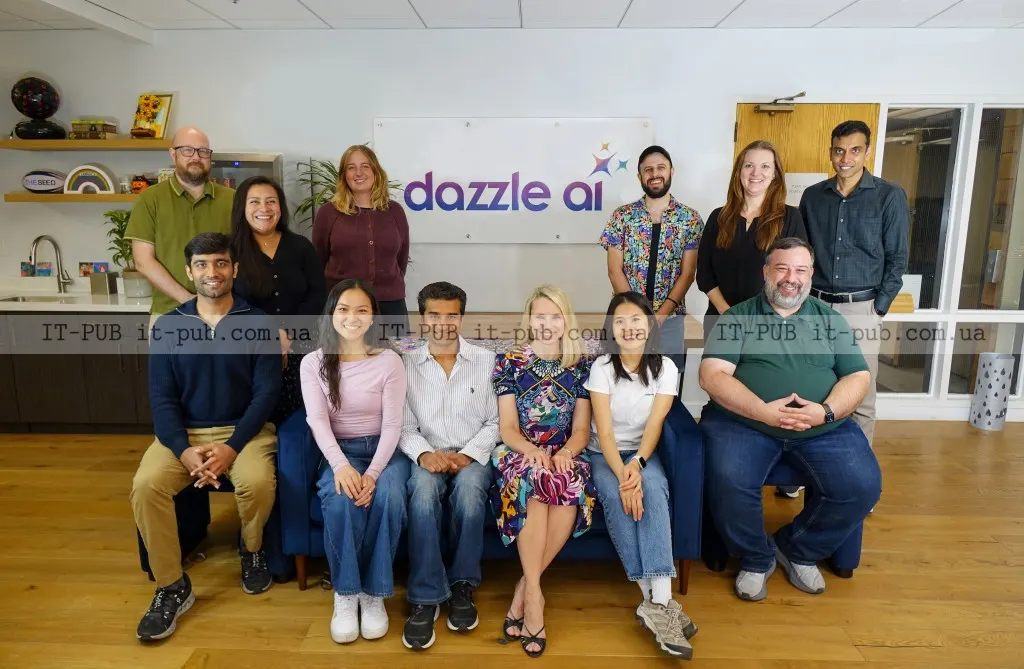
Mayer’s new AI assistant uses photos instead of email or calendars to learn about users, aiming for sharper suggestions while raising privacy concerns.
Former Yahoo CEO Marissa Mayer has introduced Dazzle, a personal AI assistant that takes a different approach from many of the tools now crowding the market. Instead of reading email, calendars, or shopping history to build a picture of a user, Dazzle relies on one source: the camera roll. The idea is to make the assistant feel more personal. It also raises a familiar question about how much private material people are willing to hand over to AI.
The launch matters because it points to a broader shift in consumer AI. Many assistants are trying to become more useful by connecting to larger pools of personal data, and Dazzle follows that pattern through photos rather than text-heavy records of daily life, as IT-PUB News reports.
Dazzle treats photos as the main source of context
Mayer said she sees photos as an overlooked source of information. In her view, a camera roll can reveal far more than many people expect about habits, interests, and routines.
According to Mayer, Dazzle can infer things such as whether a user likes skiing, where they recently traveled, what their children are interested in, and broader preferences around food, style, and leisure. The premise is simple: photos capture personal context that calendars and inboxes often miss.
That is the core of Dazzle’s pitch. The assistant is designed to understand a person through images already stored on their phone, and Mayer argues that this gives the system a richer, more human view of its user.
The app is built for practical help and recommendations
Users can interact with Dazzle through its app or by text. The assistant centers on two main functions.
First, it can scan recent photos to pull out practical details. Mayer gave examples such as extracting information from an event flyer to help fill in a calendar, or noticing a broken garage door in a photo and helping find a repair person.
Second, Dazzle searches the photo library for ideas. Those suggestions can range from vacation plans to birthday gifts, depending on what the assistant believes it has learned from a user’s pictures.
That sets Dazzle apart from tools that mainly answer direct questions or handle straightforward tasks. Mayer is positioning it as something that can make suggestions based on a wider sense of a user’s life.
Mayer argues photos may feel less sensitive than email
A major part of Mayer’s case is privacy. She said users may feel more comfortable giving an AI access to their photo libraries than to more sensitive material such as emails and messages.
That argument lands at a time when the latest wave of AI assistants has drawn fresh attention to security concerns. Mayer directly referenced those worries while making the case for Dazzle’s approach.
She also said the product prioritizes privacy and discards any personal information the AI identifies as sensitive. The company presents that as a safeguard meant to make the assistant less intrusive, even though it still depends on access to a large amount of personal content.
Early demos showed both promise and limits
A demo of Dazzle suggested that the assistant can sometimes produce surprisingly personal recommendations. Mayer said she uses it to brainstorm family outings, and that it inferred her family likes escape rooms after scanning her photos. It then suggested several Bay Area locations she had not heard of.
In testing, Dazzle also suggested Mediterranean vacation spots after apparently picking up on past trips to Spain and Greece. It even suggested Sicily, which stood out because the trip there had taken place four years earlier.
Still, the assistant was not flawless. In one case, it failed to remember that a daughter already knew how to roller skate when asked whether a pair should be bought for her next birthday. That kind of miss shows both the appeal and the limits of a system built around photo history.
At the same time, the assistant surfaced ideas that seemed genuinely useful, including a local pottery studio and a bioluminescent kayak tour in Tomales Bay. Those examples help explain the appeal of photo-based AI: the recommendations can feel more tailored than those from a system that sees only calendars and email.
Sunshine’s earlier photo app hangs over the launch
Dazzle is not Mayer’s first attempt to build a product around photos. Her earlier startup, Sunshine, launched an AI-powered photo-sharing tool called Shine in 2024.
That product was criticized for its outdated design, did not gain broad use, and was eventually shut down. Mayer said it still produced “interesting IP,” suggesting that some of the underlying work carried over into Dazzle.
That history gives the new launch extra context. Dazzle is emerging from an earlier experiment that did not catch on, making this not just another AI debut but a second attempt to make photos central to a consumer product.
A crowded AI field is forcing assistants to differentiate
Mayer’s announcement comes as consumer AI assistants are multiplying quickly. She said she was ready to unveil Dazzle earlier this month, and the timing placed it in the middle of a wave of similar tools that have appeared over the past month.
That crowded market helps explain why Dazzle is framed so differently. Rather than competing directly on access to email or messages, it tries to stand out by using a data source many people may not think of as especially useful: their own camera rolls.
For users, that could mean more relevant suggestions and a more personal assistant. It could also serve as another reminder that the next generation of AI products may depend not just on what people type, but on how much of their private lives they are willing to let software inspect.