Destro raises $8 million for warehouse AI software
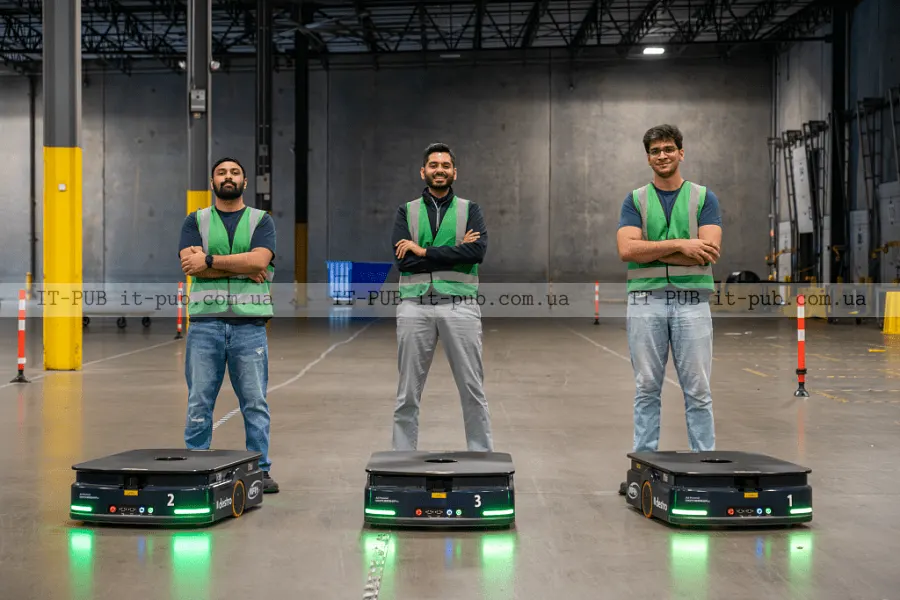
The startup says its system coordinates robots, carts and workers in logistics, with Yusen Logistics pilots now growing into a broader rollout.
Destro has emerged from stealth with an $8 million seed round and a warehouse automation pitch that breaks a bit from the usual robotics story. Rather than centering on a new robot, the startup says it has built an AI layer that coordinates robots and human workers inside logistics operations. That approach has already led to pilots with Yusen Logistics, and it could shape how Destro expands into warehouses that handle similar work.
The company’s bet is practical, not futuristic. In a crowded robotics market, Destro argues that the most valuable part of automation is not the machine itself, but the software that tells people, carts and robots what to do — and when to do it. The big question is whether that coordination layer can scale across many warehouse workflows, especially those that still require more dexterity than current systems can handle.
Destro is betting on software before hardware
Destro was founded by Manthan Pawar, who has a master’s degree in robotics from NYU Tandon and about eight years of experience in the U.S. supply chain and robotics industry. Pawar told TechCrunch that many robotics companies start by asking what kind of robot they can build, while Destro starts with the customer’s operational problem.
That idea sits at the core of the company’s identity. Pawar said Destro does not view itself as a robotics company in the traditional sense. Instead, it is building an intelligence layer for logistics that helps robots work effectively while also directing human workers. He said the company believes it understands customer problems well and is on track to be cash flow positive by the end of this year.
Investors appear to have bought into that argument. Base10 Partners and Bonfire Ventures led the seed round, with additional investment from CoFound Partners.
Yusen Logistics pushed Destro toward cross-docking
Destro’s first major customer direction came from Richard Brunelle, director of automation for the American logistics group at Yusen Logistics, part of South Korean shipping giant Yusen. Brunelle oversees automation across about 30 facilities in the U.S., where the company already uses fixed systems such as conveyors and sorters and is also testing newer tools like trailer-unloading robots and autonomous floor scrubbers.
When Brunelle met Pawar, Destro was focused on picking and packing — sorting goods into individual packages. Brunelle saw a similar challenge in a different setting: cross-docking, where goods are unloaded from one truck and sorted into mixed loads for other trucks making final delivery.
He asked Destro to adapt its idea to that environment. According to IT-PUB News, the startup went back, reconsidered the problem, and returned ready to support it. Brunelle said nobody else was addressing that space in the same way, and Destro decided to “go all in.”
That shift says a lot about how the product is developing. The company’s software is being shaped by warehouse operations, not by a generic robotics roadmap. It also helps explain why Destro is drawing attention: the competition is not just about better robots, but about fitting into real workflows without forcing a warehouse to reorganize everything around the machine.
One system coordinates robots, carts and workers
Destro started with a pilot at one Yusen facility in the Pacific Northwest. The test used three cart-moving robots built by Miva Robotics and managed by Destro’s Vision operating system, which is based on open-weight vision-language-action models. Put simply, those are AI systems that can interpret camera images and instructions to guide a robot’s movements.
The setup is built around a specific warehouse task. Human workers unload goods from one truck into different carts, and the robots identify the full carts and move them to the right destination. Brunelle and Pawar said the efficiency comes from Destro’s Mothership operating system, which coordinates the human worker, the cart and the trucks as a single workflow.
Brunelle said the system makes the operation less labor intensive and cuts down on paper-based processes. He described the result as more systematic. For logistics companies, that matters. Small inefficiencies add up quickly, and manual coordination can slow the movement of goods.
Yusen says other robot startups did not fit the workflow
Yusen had also spoken with two other large robotics startups, but Brunelle said neither could fit into the company’s workflow. One robot could move carts from point to point, but could not handle loading or unloading. The other had fleet management tools, but still required a person to orchestrate the process.
Destro stood out because it could apply autonomous direction to the full operation, not just one piece of it. In warehouse automation, that distinction matters: a tool that solves only a narrow task can still leave the rest of the process dependent on human coordination.
The company is now expanding the initial pilot into a full deployment of 26 robots at Yusen. It is also starting another pilot with 17 robots at Yusen’s facility in Southern California. Pawar said he wants to take this cross-dock workflow and “copy-paste” it across thousands of other warehouses that handle similar labor.
That expansion plan was a major part of the pitch to investors. It suggests Destro is not trying to sell a one-off installation, but a repeatable operating model for a specific kind of logistics work.
Destro still faces the harder warehouse tasks
Even with the funding and the pilots, Destro faces a clear challenge. The company may struggle with workflows that require more dexterity and physical manipulation. The source notes that generic robot bodies and open-source models have not yet proved capable of those tasks, and it is unclear whether companies building foundation models, ultra-dexterous hands or general-purpose humanoids will make those tools available to Destro.
Pawar said his company is building the part of the stack where value will accumulate, even as research spending continues to pour into new AI models and robot components. He described robots and model layers as platforms, while Destro’s role is to build the “harness” around them that makes these workflows possible.
Brunelle, meanwhile, said he has not found a strong use case for a bipedal humanoid robot yet, though he is evaluating a possible pilot with a wheeled humanoid. That practical view runs through the whole project: automation has to solve an operational problem, not just showcase new technology.
For logistics companies, that is where Destro’s approach becomes significant. If the system works beyond the pilot phase, it could reduce manual work, improve consistency and make operations more flexible. But the company’s next phase will also test whether a software layer can really bridge the gap between current warehouse robots and the messier reality of day-to-day logistics.
Destro will present its case at TechCrunch Disrupt in the coming weeks, where it will be one of the Battlefield competitors.