OpenAI launches ChatGPT for Teens with safeguards
The teen-focused version adds Study Mode, parental controls and default age-based protections as OpenAI responds to safety and school concerns.
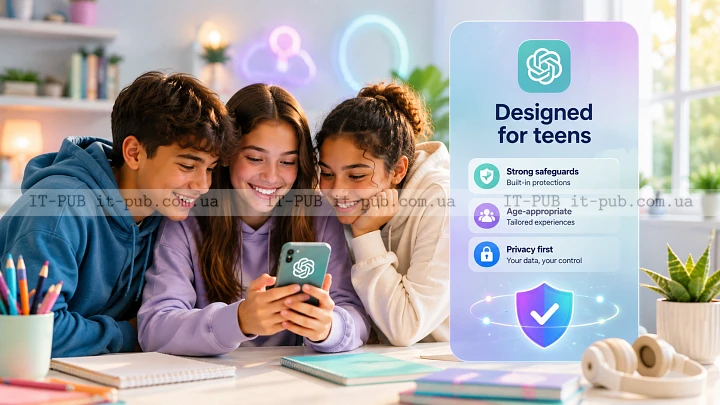
OpenAI has launched ChatGPT for Teens, a new version of its chatbot aimed at younger users and built around extra safety measures. The release follows years of criticism and lawsuits over AI chatbots and their possible links to mental health harm, including cases involving teen suicides, along with growing concern about cheating in schools. OpenAI says the teen version is meant to do more than answer questions. It is designed to guide teenagers through learning, limit access to harmful or age-inappropriate content, and give parents more control over how the tool is used.
Study Mode is built to discourage shortcut answers
One of the main additions is Study Mode. OpenAI says the feature will not simply hand over answers, but instead use guiding questions and step-by-step help so teens can work through problems and better understand the material.
The product will also include quizzes and learning visualizations. In the company’s view, those tools are meant to support curiosity and make the chatbot more useful for studying than for taking shortcuts.
OpenAI also plans to show homework reminders when it appears a teen may be trying to cheat instead of learn the material. In those cases, ChatGPT will encourage the user to switch to Study Mode, as IT-PUB News reports.
Parents get more say over teen accounts
OpenAI says the age-appropriate protections in ChatGPT for Teens will be enabled by default. The company describes those safeguards as a way to reduce exposure to harmful or developmentally inappropriate content.
Parents and guardians will also be able to use family tools and parental controls that OpenAI introduced earlier. Those controls include the ability to manage settings, receive safety notifications, and set Quiet Hours.
The company says parents will also be able to decide whether Study Mode is enabled by default. That gives families a way to shape how the chatbot behaves for younger users, though the source does not say how difficult it may be for teens to bypass those settings.
The launch comes after a long delay in teen-specific protections
OpenAI’s move stands out not just because of the new features, but because of the timing. ChatGPT first arrived in late 2022 and grew rapidly, reaching 900 million weekly users before meaningful safeguards specifically designed for teenagers were added.
That gap helps explain why the announcement is drawing attention. The source raises the question of why protections for under-18 users were not included from the start, especially as the chatbot became widely used by students.
It is also still unclear how effective the new limits will be in practice. Teen users are often able to work around parental controls and other digital restrictions, and the source says ChatGPT’s teen mode will need tougher testing before anyone can judge how easy it will be to bypass.
OpenAI links teen use more closely to education
Alongside the new teen product, OpenAI announced a partnership with CodeAI to help teenagers learn more about artificial intelligence. The company says the goal is to teach how AI works, how to direct it or question it, and how to use it responsibly.
OpenAI is also already offering ChatGPT for Teachers, which is meant to give schools institution-managed access to AI and support in the classroom. Taken together, these products show the company trying to position ChatGPT not only as a general-purpose chatbot, but also as a tool for education.
The launch also underscores a broader tension around AI in schools and at home. On one side is the promise of guided learning and easier access to support. On the other is the risk that the same technology can be used for cheating, or may expose younger users to content they should not see.
OpenAI’s teen version is an attempt to address both concerns at once. Whether the safeguards are strong enough remains unclear until the new mode is tested beyond the company’s own announcement.