Nvidia ties $3.5 billion MediaTek deal to AI chips
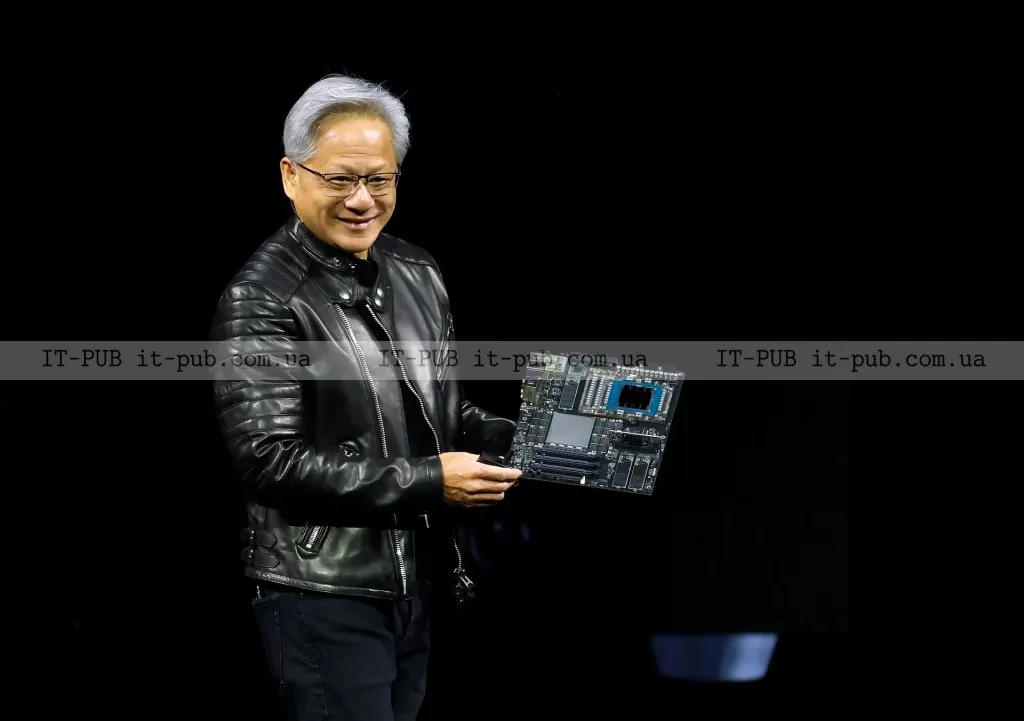
MediaTek will gain access to Nvidia’s NVLink Fusion ecosystem for custom AI chips, as cloud companies push further into in-house hardware.
Nvidia is putting $3.5 billion into Taiwanese chipmaker MediaTek, tightening ties between the two companies around custom AI hardware. The move stands out because it comes as large cloud providers and AI firms try to reduce their dependence on Nvidia’s GPUs by designing more of their own chips. Rather than pushing back against that shift, Nvidia is trying to keep its technology at the center of the systems those companies build. That is the real significance of the deal.
The partnership gives MediaTek access to Nvidia’s NVLink Fusion ecosystem, including NVLink, which lets chips communicate quickly even when they are not made by Nvidia. For AI systems spread across large data centers, that matters because many chips need to work together efficiently. In practical terms, the companies say MediaTek will be able to design custom chips for AI companies and hyperscalers that plug directly into Nvidia-based data centers, as IT-PUB News reports.
Nvidia is backing custom chips instead of resisting them
The deal reflects a broader shift in the AI hardware market. Companies such as Amazon, Google, Microsoft, OpenAI and Anthropic are investing in their own chips in an effort to lower their reliance on Nvidia’s GPUs. If major customers moved away from Nvidia’s hardware stack entirely, that trend could threaten the company’s dominance.
Nvidia’s answer appears to be acceptance rather than resistance. Dion Harris, Nvidia’s senior director of HPC and AI hyperscaler infrastructure solutions, said on Monday that “Nvidia is an AI infrastructure company” and added that the company “expanded beyond pure computing chips years ago.”
The point is straightforward: Nvidia wants to remain central even when customers choose custom chips. It is no longer positioning itself only as a chip supplier, but as the company providing the broader system that connects, scales and supports those chips.
MediaTek gets a larger opening in AI infrastructure
For MediaTek, the agreement expands a business that is still relatively early compared with its long-established chip work in consumer devices. The company has been gradually building its custom data center ASIC operations and said in June that it expects that business to generate $2 billion in revenue in 2026. It also said it hopes to capture more of the market in the coming years.
Nvidia’s backing could help MediaTek push further into that segment. According to Nvidia, the partnership will let MediaTek offer custom chips designed by cloud companies or AI labs and tailored to their workloads, while relying on Nvidia’s “proven scale-up and scale-out technology stack and ecosystem” and “rack-scale architecture.”
Harris described that as opening Nvidia’s ecosystem to MediaTek’s customer base. He said that by giving MediaTek this extension, customers can standardize on rack-scale infrastructure across their AI factories and deploy custom chips alongside others using the same platform.
MediaTek has not publicly shared details about its customer base in custom AI chips, so the size of that opportunity is still unclear from the announcement alone. Still, the direction of the partnership is hard to miss: Nvidia wants MediaTek to grow in custom AI silicon, as long as that growth continues to run through Nvidia’s infrastructure.
The investment fits Nvidia’s broader financing pattern
The MediaTek investment also underscores what the source describes as the circular nature of Nvidia’s financing efforts in recent years. Nvidia has often invested in companies whose work later feeds back into Nvidia’s own ecosystem. This deal follows that pattern.
A similar move came last week, when Nvidia announced a partnership with Amazon Web Services, though without a direct investment. In that case, AWS said it would deploy an additional 2 million Nvidia GPUs across its infrastructure and integrate NVLink Fusion.
Taken together, the two announcements point to the same strategy from different directions. Nvidia is not just selling chips; it is working to make its architecture the default layer for AI systems, whether the chips are Nvidia’s own or custom-built by partners.
That approach may become more important as AI systems grow more specialized. Major cloud providers and AI labs increasingly want hardware tuned to their own workloads. Nvidia’s response is to make sure those systems still rely on Nvidia technology for communication, scaling and data-center integration.
The partnership also extends to PCs and vehicles
The agreement is not limited to large-scale AI infrastructure. Nvidia and MediaTek said they will continue working together on DGX Spark, a small developer-focused desktop AI computer. Their collaboration has also been extended to RTX Spark, Nvidia’s effort to bring its AI technology into consumer AI PCs.
The companies also plan to keep developing platforms for AI-powered, software-defined vehicles in what they call the era of “physical AI.” MediaTek’s automotive platforms already use Nvidia’s RTX graphics for intelligent vehicle cockpits and work alongside Nvidia Drive AGX, Nvidia’s in-car computing platform for autonomous driving workloads.
That wider scope helps explain why the deal drew attention beyond the chip sector. It is not only about one investment or one product line. It links AI data centers, personal computers and vehicle systems through a shared technology relationship.
Jensen Huang, Nvidia’s founder and CEO, said in a statement that “AI is transforming every computing platform — from the world’s largest AI factories to the PC and the car.” He added that together the companies are building platforms that bring Nvidia accelerated computing to new markets and give customers room to create differentiated AI systems at scale.
How much this changes the market will depend on how broadly MediaTek can sell these custom chips and how quickly AI companies keep shifting toward their own hardware. Even so, the signal from the deal is already clear: Nvidia is trying to stay indispensable as the market around it changes.