Nvidia confirms Hugging Face deal for $12.93 billion

Nvidia says Hugging Face will remain open after the $12.93 billion acquisition, even as the deal deepens its reach across AI tools and infrastructure.
Nvidia has confirmed that it is buying Hugging Face for $12.93 billion, ending weeks of rumors around one of the biggest AI deals of the year. The acquisition reaches far beyond a change in ownership: Hugging Face is one of the main places where developers share and use AI models, applications, and datasets. According to IT-PUB News, that makes the deal significant not just for Nvidia, but for a large part of the wider AI development ecosystem. It also revives a familiar question — what happens to an open platform once it becomes part of a company that dominates the hardware behind much of modern AI.
Nvidia says Hugging Face will remain open
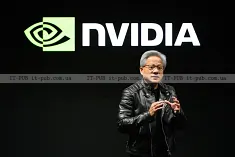
In a blog post, Nvidia CEO Jensen Huang said Hugging Face will continue supporting open source and open-weight models. He also said the platform will keep working to broaden access for developers.
Huang said Hugging Face will remain open to the wider AI ecosystem. Developers, he said, will still be able to choose the models, frameworks, cloud providers, inference services, and computing platforms they want to use. He added that Nvidia compute will not be required to build on or deploy through Hugging Face.
That assurance is likely to matter to developers who use Hugging Face as a neutral place to work with different tools and model types. The company’s role has expanded as AI development has moved from a niche activity into a much larger business and research ecosystem.
Hugging Face brings a huge developer footprint
Hugging Face says its platform hosts three million models, one million applications, and half a million datasets. It is used by more than 18 million developers.
Those numbers help explain why the acquisition drew so much attention. Hugging Face has become one of the most visible names in the AI ecosystem, especially for people building with open models rather than closed APIs. That reach also gives it clear strategic value for Nvidia, which already sits at the center of AI infrastructure through its chips.
Huang also pointed to Nvidia’s own presence on Hugging Face. He said the company has released more than 500 models and 250 open datasets on the platform, arguing that open models help bring developers around the world into Nvidia’s ecosystem.
The acquisition strengthens Nvidia’s position
For Nvidia, this is not just a purchase of a popular AI platform. It also gives the company a way to shape an open ecosystem that still fits closely with its hardware business.
As TechCrunch noted earlier, Nvidia may be able to sell unused capacity to enterprise customers bundled with Hugging Face’s offering. That could make the deal useful not only for model distribution, but also for turning more of Nvidia’s infrastructure into a commercial service.
The broader significance is hard to miss. Nvidia is already a dominant hardware provider for AI development and inference, and ownership of a major open platform could further strengthen that position. At the same time, the company is presenting the move as support for openness rather than control.
Hugging Face says growth requires more compute
Hugging Face CEO Clem Delangue thanked the community in a post on X, saying the company had shown that it could be an alternative to closed-source APIs.
But, he added, reaching a larger scale requires more compute, more support, more collaboration, and more visibility. He said that was why the company spoke with Jensen Huang, who offered exactly that.
Delangue’s comments frame the deal as a response to a practical problem in AI. Open platforms can attract users and developers, but they also need substantial computing power and resources to keep growing. That makes the acquisition relevant not just as a business transaction, but as a test of whether open AI infrastructure can expand inside a major commercial company.
Nvidia ties open models to security and scale
Huang has been a vocal supporter of open models. He previously co-signed a letter calling for open-weight models, arguing that they could strengthen the U.S. position in AI competition with rivals such as China.
Nvidia is also investing heavily in model development. The company recently struck a $6 billion deal with coding startup Poolside to develop open models, according to The Wall Street Journal. During its recent earnings call, Nvidia said it has put more than $50 billion into AI frontier labs.
In the same discussion, Huang linked open models to cybersecurity. He said frontier models matter because they can help power distributed, continuously running autonomous cybersecurity systems that defend against attacks. He described such companies as emerging and said they could not do this without open models.
That framing shows how Nvidia is positioning open AI not only as a developer tool, but also as infrastructure for security and other high-stakes uses. The debate over open versus closed models is no longer only about convenience or ideology. It is also tied to business continuity, digital defense, and the systems companies use to protect themselves.
The deal follows earlier signs of closer ties
The acquisition also arrives after earlier signs that the two companies had already been moving closer. Hugging Face was founded in 2016 and has raised more than $395 million to date, according to Crunchbase. Its last funding round came in 2023, when it raised $235 million led by Salesforce Ventures, with participation from Google, Amazon, IBM, and Nvidia.
The company had also reportedly turned down a $500 million deal from Nvidia last year, according to Financial Times. More recently, The Information reported that Hugging Face was generating $150 million in annualized revenue. In July, Delangue told TechCrunch that the company’s growth rate was bringing it “close to profitability.”
Taken together, those details suggest the acquisition is happening at a point when Hugging Face had already built real scale and business momentum on its own. For users and businesses, the central question now is whether it can preserve the openness that made it popular while becoming part of a company with strong commercial interests in AI hardware and services. Nvidia says the platform will stay open — and given the size of the deal, that promise is likely to face close scrutiny.