HiddenLayer raises $100M as AI security spending grows
The startup says ARR rose more than 10x in a year as companies look for tools to protect AI models, agents and workflows in production.
HiddenLayer has raised $100 million in a Series B round as demand for AI security tools keeps rising. The startup, which focuses on protecting AI models, agents and workflows from attacks and malicious code, says its business has expanded sharply over the past year. The funding lands as companies spend more to secure AI deployments, especially as agents and connected tools move deeper into production systems.
The round also reflects a wider market shift. AI security is no longer being treated as a niche issue, and IT-PUB News notes that HiddenLayer says its products are already used by financial services firms, large tech companies, and customers in the defense and intelligence sectors. At the same time, the company is broadening its focus beyond traditional model protection to newer risks such as prompt injection, agent manipulation and unsafe tool use.
HiddenLayer says revenue jumped more than 10x
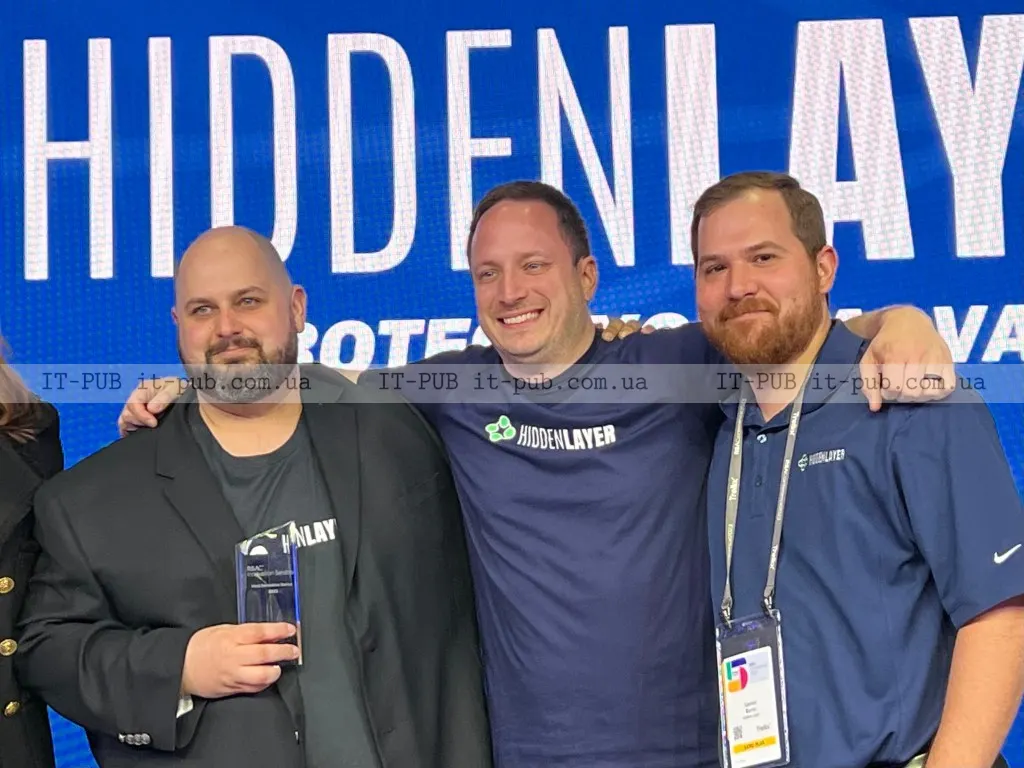
HiddenLayer co-founder and CEO Chris Sestito told TechCrunch that annual recurring revenue grew more than 10 times over the last year. He did not give an exact figure, but said ARR is now in the “tens of millions” of dollars.
Sestito said more than 90% of that growth came from new customers signed in the past year. That suggests the company is not just expanding inside existing accounts, but also pulling in fresh demand as more businesses look for ways to secure AI systems.
The startup’s customer base includes financial services companies and large technology firms building AI products. It also has contracts with the Department of Defense and the intelligence community.
One customer is described only as a “leading frontier model provider” with “more than 700 million weekly users.” The source does not name the company, but the description points to the scale of the organizations now buying AI security tools.
Investors are backing a market that matured quickly
HiddenLayer’s new funding round was led by Delta-v Capital, with participation from Ten Eleven Ventures, Morgan Stanley, Microsoft’s M12, Booz Allen Hamilton and others.
The investment follows a stretch in which the AI security market has moved much faster than it had when HiddenLayer raised its $50 million Series A three years ago. Back then, one of the central questions was whether there would be enough real-world AI attacks to support a dedicated market.
That uncertainty has faded, at least in part. There are still not many public reports of AI agents being exploited at scale, but the risk of systems going off track in production now appears serious enough to drive spending. Gartner estimates that companies will spend $2.83 billion this year on products designed to secure AI tools, up 83% from 2025, and that the figure will rise to nearly $4.78 billion next year.
For investors, the case is straightforward: businesses are moving AI from experiments into live environments, and that creates demand for monitoring, protection and control.
HiddenLayer is extending its tools to cover AI agents
HiddenLayer says it has not abandoned its earlier product set, but it has had to widen it. In 2023, the company sold discovery, runtime protection, attack simulation and supply chain security. Those tools are now being adapted to address prompt injection, agent manipulation and malicious tool use.
Sestito said the company has not needed to pivot away from its original work. Instead, it has expanded from traditional machine learning to generative AI and then to agentic workflows.
He described runtime security as a growing priority as AI deployments spread across businesses. In his view, it is similar to endpoint detection and response, or EDR, but aimed specifically at AI systems.
That matters because many companies are now trying to use AI inside live business processes rather than in isolated tests. As more tools, models and agents are connected, the number of places where something can go wrong also grows. HiddenLayer’s pitch is that security needs to move with that shift.
Open-source and open-weight models create another challenge
HiddenLayer also says it sees a growing opportunity in the security of open-source and open-weight models. Sestito said the company parses and scans about 50 AI file frameworks to verify that a model is actually what it claims to be.
He pointed to risks such as models that appear to be one thing but are actually another, including “hidden models inside of models.” In other words, the concern is that the tool a customer is using may not be the one it thinks it is.
That issue matters in a market where organizations may rely on third-party or open-source components to move faster and cut costs. The upside is flexibility. The trade-off is that trust becomes harder to verify. HiddenLayer is positioning its tools as a way to inspect those components before they are used in production.
HiddenLayer plans to use the funding for expansion
HiddenLayer says the $100 million will help it keep building in this direction, with more emphasis on sales and distribution while also expanding engineering and research.
The company also plans to grow into Europe and the EMEA region. That points to an effort to scale beyond its current base while the market is still taking shape.
At the same time, HiddenLayer faces a familiar problem for cybersecurity startups: larger vendors often move into promising niches. Sestito acknowledged that some parts of AI security could eventually be bundled into platforms from companies such as Microsoft, OpenAI and AWS.
He said he expects AI infrastructure to evolve toward governance features such as discovery, identity and policy controls, rather than the narrower tools HiddenLayer builds today. Even so, he said the company’s current job is to “scale vertically alongside artificial intelligence” and later expand into other areas of cybersecurity that depend more heavily on AI.
That leaves HiddenLayer with momentum, a growing customer base and a major funding round behind it. It also leaves the company with something to prove as bigger rivals develop their own platforms and security features.