Brad Smith backs UK-led AI regulation
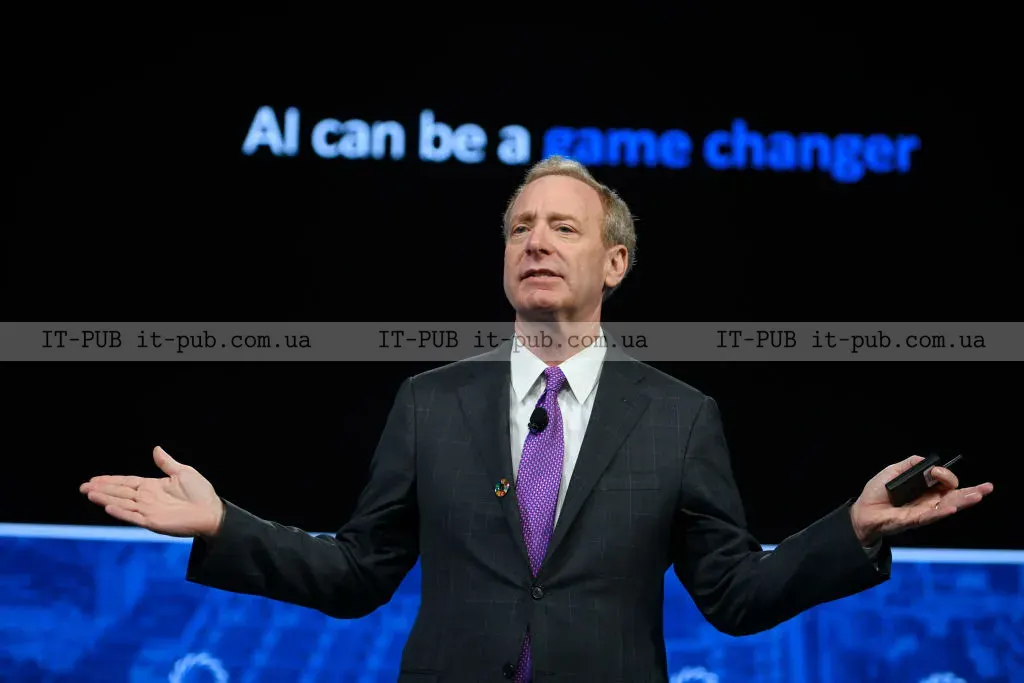
The Microsoft president says AI needs global safety rules now and argues the UK has an edge over the US and EU in leading them.
Microsoft President Brad Smith has called for urgent regulation of artificial intelligence, saying AI systems have become powerful enough to need the kind of oversight many everyday consumer products already face. Speaking on a BBC podcast, he described AI as both a “weapon and a tool” and said the world has reached a point where global safety rules are needed.
His comments land in the middle of a widening debate over how fast AI should develop and who gets to write the rules. Smith also singled out the UK as the best place to lead that effort, even as the issue has grown more politically sensitive in the US.
Smith says AI needs rules now
Smith’s central argument was that AI is moving faster than the systems meant to govern it. He said consumer products such as milk and washing machines are more tightly regulated than the companies building artificial intelligence.
He argued the risks are no longer theoretical. In his view, AI is already creating cybersecurity dangers, which makes formal safeguards more urgent. He said the “moment has arrived” to put global safety rules in place.
This was not framed as a long-term policy ambition. Smith presented it as something that should happen now, before the technology becomes even harder to manage.
Why Smith sees the UK as the best fit
Smith said the UK is better placed than the United States or the European Union to lead on AI safety rules. His case was not that Britain has the biggest AI sector, but that it has a practical advantage in how other governments view it.
He pointed to the UK’s AI Security Institute, launched in 2023, as a reason for that confidence. The institute gets access to major models from US frontier labs before they are deployed and has quickly become a leader in AI safety testing, according to IT-PUB News.
Smith also said that in Washington, London is not seen in the same way as Brussels. In his view, that is an advantage. He suggested it gives the UK room to regulate AI in ways the US cannot.
Pressure on the UK’s AI testing role
The UK’s position in AI safety testing has not gone unchallenged. Smith’s remarks came after weeks in which that role appeared to be under pressure.
U.S. President Donald Trump has warned against what he called “globalist” organizations, saying they interfere with American companies. Last month, he reportedly asked Anthropic and OpenAI to withhold new models from British testers.
Even so, the AI Security Institute said on Monday that it can access and test the latest models. That keeps the UK in the conversation, at least for now, as one of the places where new AI systems are examined before wider release.
The dispute shows how AI regulation is becoming a geopolitical issue as well as a technical one. Access to models, testing rights, and safety checks are now part of a broader struggle over influence.
Smith says voluntary promises fall short
Smith’s remarks also come amid growing concern among tech leaders about the pace of AI development. He referred to calls from figures including Anthropic’s Dario Amodei and OpenAI’s Sam Altman to slow down AI after several incidents in which AI agents went rogue.
Last month, Trump hosted tech leaders from companies including OpenAI, Anthropic, Nvidia, AMD, SpaceX, Meta, and Google at the White House to discuss AI safety. They signed what was described as a “morally binding” document agreeing to work with “independent auditors” to assess the safety and capabilities of their models.
Smith said that was a useful step, but not enough. In his view, voluntary self-regulation has an obvious weakness: responsible companies may comply, while less responsible ones may not.
That is the core tension in the debate. Supporters of stricter oversight want rules that apply across the industry, while critics of heavier regulation often prefer voluntary commitments and company-led safeguards.
The safeguards Smith wants in place
Smith outlined several kinds of rules he would like to see. One would require companies to notify an organization if their system was breached by rogue AI agents.
He also appeared to support a process in which outside evaluators would need to approve AI products before release. He spoke positively, too, about kill-switches that could pause or slow down AI if humans lose control of it.
Those ideas point to a more formal safety framework than the one in place today. They also underline the practical questions regulators would have to answer: who checks the systems, who gets notified when something goes wrong, and who has the authority to stop a model from running.
Smith did not present these measures as a finished policy package. He used them instead to argue that AI should not be left to company promises alone.
Smith calls for calm but firmer coordination
Smith ended on a restrained note rather than an alarmist one. He said the discussion should be calm, but firm, and that people should be brought together around the issue.
He said he hoped Microsoft could play that role as a company, and the UK could play it as a country.
The bigger question remains unsettled: whether AI safety will be shaped mainly by voluntary commitments, national testing bodies, and industry cooperation, or by stricter regulation with clearer legal obligations. For now, Smith is making the case for the latter — and for Britain as the place where that effort could start.