Voice AI still lacks a ChatGPT moment, execs say
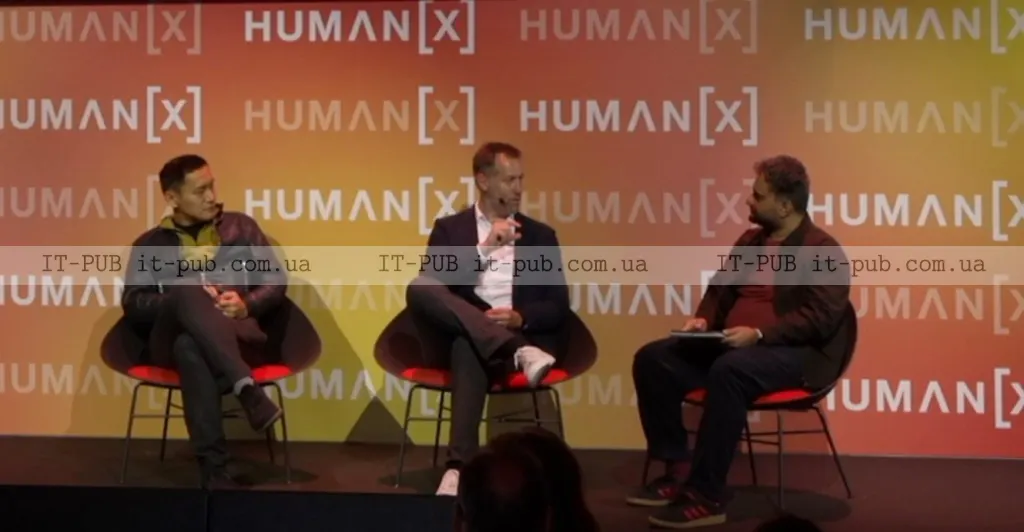
At HumanX, leaders from PolyAI and Otter said voice AI still faces delays, transcription errors and trust issues despite heavy investment.
Voice AI is attracting major investment and a steady stream of new products, but some industry executives say it still has not reached the breakthrough many expected. At the HumanX conference last month, leaders from PolyAI and Otter said the technology is improving, yet still falls short on speed, accuracy and transparency. That leaves businesses with a practical question: when does talking to an AI feel natural enough to trust?
Investors are pouring money into voice, but the product still feels unfinished
The idea of voice as the next major interface has picked up momentum fast. Investors have poured billions of dollars into startups building voice AI products, from model developers and enterprise customer service platforms to meeting note-takers and AI dictation tools.
That funding has been matched by a steady flow of product launches. New models and tools promising human-like conversation appear constantly. But PolyAI CTO Shawn Wen said the industry is not where the hype suggests. He said voice AI still has not had its “ChatGPT moment,” even with the arrival of full-duplex models that can speak while listening.
Wen said the field has already cleared an important milestone by building those models. The harder part now is making reasoning fast enough that responses arrive quickly and the exchange feels natural, as IT-PUB News reports.
Speed can decide whether a voice assistant feels usable
In voice AI, delay is more than a technical nuisance. If a system takes too long to answer, the conversation can quickly feel awkward and artificial, especially in customer service.
Wen said enterprise voice assistants should not sound robotic and should give callers enough confidence that they can actually solve a problem. In his view, the next stage depends on whether users are willing to stay engaged through the first few turns of a conversation. If the voice sounds convincing enough and the interaction builds confidence, he suggested, people may eventually stop feeling the need to switch to a human agent.
That matters for businesses using AI in support roles. Voice tools are being positioned as a way to handle more interactions automatically, but that only works if customers feel the system is responsive and competent enough to help.
Otter says trust still depends on getting the words right
Alex Gay, CMO at meeting notetaker Otter, pointed to a different part of the problem: whether the system correctly understands what people actually said. He said speaker identification, intent capture and turning conversations into useful notes with organizational knowledge are key steps toward automation.
Otter is also working on digital twins that could represent people in meetings. Gay said that for such a system to work, the output voice must carry the emotional expression people expect in a human conversation. Without that, he said, the experience is little more than a chatbot answering questions.
He added that the best meetings are not just information exchanges, but conversations with debate, strategy and a sense of relationship. If an avatar cannot support that kind of interaction, he said, it does not move beyond a basic question-and-answer tool.
Transcription mistakes can ripple into bigger problems
Both executives also pointed to the limits of current voice systems in transcription. Wen said automatic speech recognition, or ASR, often misses important keywords, which can distort the broader context of a conversation.
Gay agreed, saying Otter is still working to improve transcription quality. He stressed that transcription was never meant to be the final product. It is the base layer for productivity tools that depend on accurate meeting records.
That makes errors more serious than a simple typo. If the original transcript is wrong, the follow-up actions built on top of it can also be wrong. Gay said that once a system starts acting on bad information, trust in the platform is lost. In his view, improving ASR remains critical because the consequences spread through everything that follows.
For users, that means the value of voice AI is tightly linked to reliability. A meeting summary, task list or customer-service response is only as good as the system’s understanding of the original speech.
Companies say users need to know when AI is listening or speaking
The other issue raised by the executives is transparency. As voice AI becomes more common in meetings and customer support, companies need to make it clear when people are speaking to an AI or being recorded.
Otter said it wants to build trust among meeting participants. Even in meetings where the bot is not physically present, the company wants to use methods such as notifying everyone in the chat that the meeting is being recorded.
Wen also said people should know when they are talking to an AI in enterprise calls. That matters as voice tools move into settings where users may expect a human on the other end, or at least want to know when that is not the case.
The debate around voice AI is no longer just about whether a model can imitate speech. It is about whether it can do so quickly, accurately and openly enough for people to rely on it in everyday work. Investors may be betting on voice as a core interface, but the executives building these systems say the technology still has several hurdles to clear.