A Technical SEO Audit That Finds Real Issues
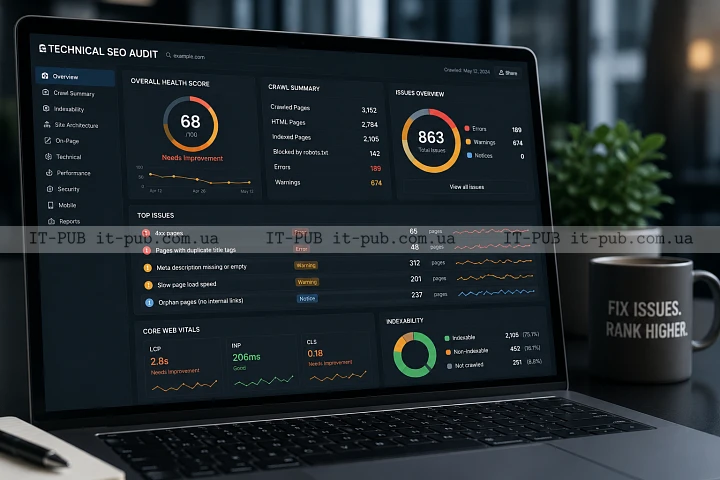
A technical SEO audit helps search engines crawl, understand, and index a website without getting stuck on preventable issues. It also surfaces problems that can quietly hold back visibility, even when the content is strong.
This guide walks through the process in plain English and sticks to checks that matter on most sites, from small business websites to larger content platforms.
What a technical SEO audit actually checks
A technical SEO audit is not about rewriting articles or picking new keywords. It looks at how a site is built, how it behaves, and whether search engines can work with it properly.
Search engines need to access pages, read them, understand which versions are canonical, and decide what belongs in the index. When any part of that breaks, rankings can slip even if the site seems perfectly fine to human visitors.
A solid website SEO audit usually covers crawlability, indexation, site architecture, internal linking, duplicate content, page speed optimization, mobile usability, structured data, and technical signals like redirects and status codes. The point is straightforward: remove anything that gets between your pages and search engines.
Start with crawlability
Crawlability is about access. If search engine bots cannot reach important pages, those pages are unlikely to perform well in search.
Start with robots.txt. This file tells crawlers what they can and cannot access, and a small mistake here can block an entire section of a site. It deserves a careful review, especially after a redesign or migration.
Then look at internal links. If a page sits too deep in the site or is linked only from low-visibility places, search engines may crawl it less often. Important pages should be reachable through clear navigation and relevant contextual links.
It also makes sense to check for broken links and redirect chains. A broken link goes nowhere. A redirect chain forces a crawler through multiple steps before it gets to the final URL. Neither is ideal, and both create unnecessary friction.
Check indexation, not just crawling
A page can be crawlable and still never show up in search results. That is why indexation needs its own review.
Indexation means a search engine has decided to store a page in its index. If important pages are missing, the cause may be noindex tags, canonical errors, duplicate content, or weak quality signals.
A technical SEO audit should compare crawlable pages with indexed pages. A big gap is not always a problem, but it should make sense. Some URLs are meant to stay out of the index, including filtered pages, internal search results, or thin utility pages. Others clearly belong there.
Canonical tags matter a lot here. They help search engines understand which version of a page should be treated as the main one when similar or duplicate URLs exist. When they are set correctly, they reduce confusion. When they are wrong, they can send search engines to the wrong page entirely.
Make site architecture easy to follow
Good site structure helps users move through a website and helps search engines understand it. It should feel logical, stay reasonably shallow, and remain consistent across the site.
In most cases, that means broad categories leading into more specific pages. The pattern works for content sites, ecommerce stores, and service websites alike. Once the structure becomes messy, important pages are easier to miss.
A simple way to review architecture is to ask whether the pages that matter most can be reached in a few clicks from the homepage or main navigation. If not, they may need better internal linking or a cleaner category structure.
Flat architecture is not automatically better in every case. Still, deep and tangled structures tend to cause problems. Search engines can crawl deep pages, but those pages often receive less internal authority and may be revisited less often.
Review redirects and status codes
Redirects are normal and often necessary. They help when pages move, URLs change, or older content is replaced.
The trouble starts when redirects pile up or are handled badly.
A technical SEO audit should flag pages returning non-200 status codes where a live page is expected. Pages that should exist need to return a successful response. Pages that are gone should return the appropriate error or redirect, depending on the situation.
Redirect chains and loops are worth fixing early. A chain slows crawling down. A loop can trap both bots and users. Neither supports search performance.
It is also a mistake to send every removed page to the homepage. It may seem convenient, but it usually creates a poor experience and sends mixed signals to search engines. A more relevant destination is usually the better option.
Look closely at duplicate content
Duplicate content is not always copied text. More often, it is the same page — or nearly the same page — appearing at multiple URLs.
That can happen because of trailing slashes, URL parameters, session IDs, printer-friendly versions, product filters, or both HTTP and HTTPS versions of a site. Search engines can handle some duplication, but too much of it wastes crawl resources and weakens clarity.
The fix depends on what is causing the duplication. Canonical tags, redirects, parameter handling, and cleaner URL rules can all help. The main goal is simple: make the preferred version of each important page obvious.
Duplicate content also overlaps with content management. If several pages target the same intent without enough difference between them, they may end up competing with each other. A technical SEO audit should catch those cases so they can be consolidated or clearly differentiated.
Test page speed and performance
Page speed is not only about user experience. It can also affect crawl efficiency and how people behave once they land on the site.
Slow pages often come from oversized images, heavy scripts, inefficient code, too many third-party tools, or weak server response times. A technical SEO review should identify where the slowdown actually happens instead of treating speed as one vague issue.
It helps to break performance down into loading, rendering, and interactivity. A page may begin loading quickly and still feel slow if large elements appear late or the page takes too long to become usable.
Most performance work starts with the basics. Compress images where it makes sense. Remove scripts that are not needed. Delay non-essential resources. Reduce clutter in templates. Improve server handling if response times are consistently poor.
The aim is not a perfect score in a tool. It is a site that feels fast enough for real people and easy enough for search engines to crawl.
Make sure mobile usability is solid
Search engines assess pages in a mobile context, and users expect sites to work smoothly on smaller screens. If a site looks fine on desktop but breaks on mobile, that is a real disadvantage.
During a technical SEO audit, check whether text is readable without zooming, buttons are easy to tap, and content stays within the screen. Pop-ups and overlays deserve attention too, because they can easily disrupt the mobile experience.
Responsive design is usually the cleanest setup, but it still needs to be implemented well. A responsive site can still have hidden content issues, layout shifts, or weak mobile performance. Testing on real devices is useful because desktop previews do not always tell the full story.
Use XML sitemaps as a guide, not a crutch
An XML sitemap helps search engines discover important URLs. It is not a ranking factor by itself, but it does support crawling and indexation when used properly.
A good XML sitemap should include canonical, indexable pages that you actually want search engines to find. It should not be filled with redirects, noindex pages, broken URLs, or duplicates.
It also needs to stay current. If the sitemap lists pages that have been removed or changed, it creates mixed signals. In a technical SEO audit, the sitemap should be checked against the live site to make sure they match.
Think of it as a clean guide to the site’s key content. It should reinforce the structure you want search engines to understand, not compensate for a broken one.
Structured data can clarify meaning
Structured data helps search engines interpret page content more accurately. It does not guarantee enhanced search features, but it can make the purpose of a page clearer.
For example, it can help identify a page as an article, product, organization, or local business page. That added context can improve how the site is understood overall.
During an audit, the main question is not whether every page has structured data. It is whether the markup is accurate, relevant, and free of errors. Bad markup can be worse than no markup at all.
Structured data should always match what is visible on the page. If the content says one thing and the markup says another, trust breaks down. Keep it accurate and keep it simple.
Watch for thin pages and weak content signals
Technical SEO and content quality overlap more than many people expect. A page can be technically accessible and still underperform because it offers very little value.
Thin pages are pages with limited useful content. Sometimes they exist for practical reasons, but if they are indexable, they can dilute the site. A technical SEO audit should identify them so you can decide whether to improve them, consolidate them, or keep them out of the index.
This also comes up with faceted navigation, tag pages, and internal search results. Left unchecked, these areas can create large numbers of low-value URLs.
That does not mean every such page should be removed. Some are genuinely useful for users and search engines. The real task is deciding which pages deserve visibility and which should stay out of the index.
Audit internal linking with purpose
Internal links do more than connect pages. They distribute authority, show hierarchy, and help crawlers find important content.
Healthy sites usually link from strong, relevant pages to related pages that deserve more attention. That tends to work better than relying on navigation alone.
During a website SEO audit, look for orphan pages — pages with little or no internal linking. These are harder for search engines to discover and often do not receive enough importance signals.
Anchor text matters as well. It should describe the destination naturally. Over-optimized anchor text can look forced, while vague phrases like “click here” add very little context.
Treat logs and tools as evidence, not decoration
Technical SEO works best when it is based on evidence. Crawling tools, analytics, Search Console data, and server logs all show different parts of the picture.
A crawler can uncover broken links, status code issues, duplicates, and missing tags. Search Console can highlight indexation problems and site crawl issues. Analytics can show which pages people actually use and where they drop off. Server logs can reveal how search bots interact with the site in practice.
You do not need every tool from day one. You do need enough data to avoid guessing. A page can look fine in a crawler and still have search problems because of noindex tags, canonical conflicts, or weak internal linking.
Turn findings into priorities
A technical SEO audit only matters if it leads to action. In most cases, the first fixes should address issues that block discovery or indexation. After that, move into structural and performance work.
Pages that are blocked, broken, duplicated, or redirected badly should get attention first. Then improve architecture, internal linking, and speed. Structured data and lower-priority cleanup can come after that.
Not everything has to be fixed at once. A useful audit creates a clear order of work so teams can focus on the changes most likely to make a difference.
Keep the site healthy over time
Technical SEO is not a one-off task. Websites change constantly. Content grows, templates shift, plugins get added, and older pages disappear. Every one of those changes can introduce fresh problems.
That is why regular checks matter, even on sites that already perform well. A shorter website SEO audit done from time to time can catch indexation problems or crawl issues before they spread. It is much easier to fix a small issue early than to untangle a larger one later.
The healthiest approach is to treat technical SEO as ongoing maintenance. Keep the site easy to crawl, clear to index, and fast enough to use comfortably. When that foundation is in good shape, content has a much better chance to do its job.