What Is Web Development and How It Really Works
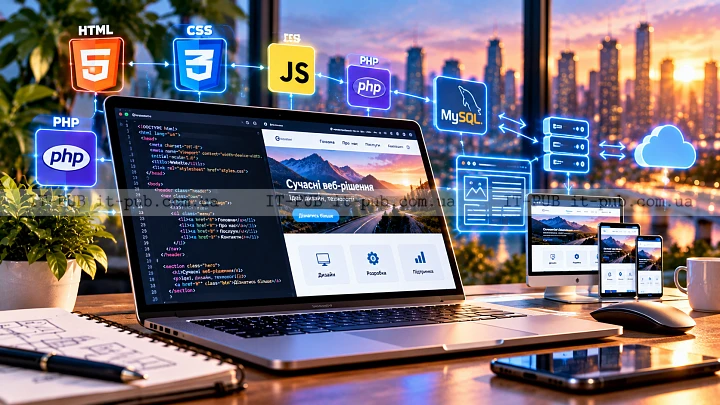
What is web development? Put simply, it’s the process of building and maintaining websites and web applications that run in a browser. That includes the parts people see on the screen and the systems behind them that store data, manage logins, and deliver content.
It’s a broad field, but the core idea is straightforward. A website is never just a design mockup brought to life. It’s a mix of code, structure, content, and logic working together. Once you understand that, the web starts to make a lot more sense, including why different specialists are often part of the same project.
What web development actually includes
Web development is usually split into two main areas: front-end and back-end development. The front end is the part users see and interact with in the browser. The back end handles the work happening out of sight.
On the front end, developers shape the layout, colors, menus, buttons, forms, and responsive behavior. They make sure the site works across different screen sizes and devices. On the back end, the focus shifts to data, authentication, business logic, and communication with databases or other services.
Some teams also work across both sides. That’s where full-stack development comes in. It can be a practical approach for smaller products or teams that need flexibility. In larger systems, responsibilities are often divided more clearly.
And web development doesn’t stop at launch. A live website still needs updates, security fixes, performance improvements, and content changes. In real projects, maintenance is part of the job from the start.
How a website comes together
Most web projects begin with a goal. That goal might be to sell products, share information, offer a service, or support internal business tasks. It influences the structure of the site, the features it needs, and the technical decisions behind it.
Then comes planning. This stage maps out pages, user flows, content requirements, and core functionality. A simple site may only need a handful of pages. A more complex product may need user accounts, dashboards, search, payment handling, or integrations with other systems.
After that, design and development move forward. Designers work on how the site should look and feel. Developers turn those ideas into working code. In many cases, content creation and technical work happen at the same time, because each affects the final result.
Testing is a key part of the website development process. It helps catch layout issues, broken links, slow loading, and features that don’t behave as expected. Once the site goes live, the work shifts into monitoring, fixes, and ongoing improvements.
Front-end development in plain language
Front-end development is the most visible side of web development. It’s the part people actually use in the browser. When a button looks clear and clickable, a menu opens smoothly, or a form gives helpful feedback, that’s front-end work doing its job.
The foundation usually comes down to three core technologies: HTML, CSS, and JavaScript. HTML gives the page structure. CSS controls how it looks. JavaScript adds behavior and interactivity. Together, they turn a static page into something usable.
Good front-end development is about more than making a site look polished. It also needs to be readable, accessible, and consistent. People should be able to use it on mobile devices, with keyboards, or through screen readers. If the interface is overly complicated, even a nice-looking site can become frustrating fast.
Modern front-end development often involves frameworks or libraries that help teams build and manage larger interfaces more efficiently. But the basics don’t change. Clear structure, thoughtful styling, and understandable interactions still matter most.
Back-end development and why it matters
Back-end development powers the parts of a website users don’t see directly. It processes requests, stores and retrieves data, and connects the front end to server-side logic. If the interface is what people experience, the back end is what makes that experience actually work.
A back end may handle user registration, login, search, order processing, or content management. It can also connect the site to databases, payment systems, analytics tools, or external APIs. That’s what allows a website to do more than simply display text and images.
Security is a big part of back-end development. Sensitive data needs protection, access has to be controlled, and systems need to handle information carefully. Performance and reliability matter too. People expect websites to respond quickly and behave consistently, not fail at random moments.
For beginners, this side of the field can feel a little abstract. One simple way to think about it: when you submit a form, save profile data, or load personalized content, the back end is usually doing most of the heavy lifting.
The tools and languages behind web development
Web development basics include understanding that different projects use different tools. There’s no single stack that fits every site. The right choice depends on the size of the project, the team working on it, the budget, and long-term goals.
On the front end, developers commonly use HTML, CSS, and JavaScript. On the back end, many different languages and frameworks can be used. What matters most at the start is not memorizing every option, but understanding how the pieces connect.
Developers also rely on version control systems to track code changes and collaborate safely. That makes it easier to review work, undo mistakes, and keep a project organized. Build tools, testing tools, and deployment systems are also part of day-to-day development work.
In some cases, a content management system makes website development easier, especially when content needs frequent updates. In others, teams build custom solutions to get more control or flexibility. There isn’t one perfect toolset for every situation.
What makes a good website
A good website doesn’t have to be complex. It has to be useful, clear, reliable, and reasonably fast. Visitors should understand where they are, what they can do there, and how to move through the site without second-guessing everything.
Usability matters more than decoration. A visually impressive site that feels awkward to use still fails at its job. Clear navigation, readable text, logical page structure, and helpful feedback all make a real difference.
Performance matters just as much. Slow pages test people’s patience and can hurt engagement. Web developers work to keep load times under control by optimizing images, reducing unnecessary code, and using server resources efficiently.
Accessibility shouldn’t be treated as an extra. It helps people with disabilities use the web more effectively, and it often improves the experience for everyone else too. Small decisions, like proper heading structure and clear labels, can have a big impact.
Web development and user experience
Web development is tightly connected to user experience, or UX. UX is about how a site or app feels to use. A website can be technically correct and still feel awkward if the flow is confusing or the interface behaves inconsistently.
Developers support UX by making interactions predictable. Buttons should act the way people expect. Forms should explain errors clearly. Pages should load in a stable way. These details may seem small, but they shape trust.
Responsive design is another major part of the experience. People browse on phones, tablets, laptops, and large desktop screens. A site should adapt naturally instead of forcing users to zoom in, scroll awkwardly, or tap tiny controls.
When development supports the design instead of fighting it, the result feels smooth. Structure, performance, and usability all need to line up.
Who works in web development
Web development is often collaborative. Depending on the project, the team may include designers, front-end developers, back-end developers, QA specialists, content editors, product managers, and system administrators. In smaller teams, one person may cover several roles.
A front-end developer works on the user-facing side. A back-end developer handles server logic and data processing. A full-stack developer works across both areas, at least to some degree. In practice, these roles often overlap, and collaboration is normal.
Communication is one of the web developer skills that matters more than many beginners expect. Technical work rarely happens in isolation. Developers need to understand business goals, user needs, and constraints like time, budget, and security. Strong teams turn those needs into workable solutions.
Skills that matter for web developers
Technical knowledge matters, but it’s only part of the picture. A web developer also needs logical thinking, patience, and the ability to solve problems step by step. Bugs are part of the work. The real skill is finding them, fixing them, and staying focused on the larger goal.
Attention to detail matters because small errors can break a layout or stop a feature from working. A missing character, a misplaced tag, or an incorrect setting can cause problems that take time to trace. At the same time, developers can’t afford to lose sight of the overall user experience.
The ability to keep learning is just as important. Tools and frameworks change, but the underlying principles stay useful. Someone who understands how the web works can usually adapt more easily as technologies shift.
For beginners, the smartest place to start is with fundamentals. Learn how pages are structured, how styling affects presentation, and how browser interactions work. Once those web development basics are in place, more advanced topics become easier to understand.
How web development differs from web design
Web design and web development are closely related, but they’re not the same thing. Web design focuses on the visual and experiential side of a site, including layout, color, typography, spacing, and overall presentation.
Web development takes those ideas and turns them into a working product. Developers build the code that makes the design responsive, interactive, and connected to data or services. In many projects, the two areas overlap, but the focus is different.
That difference matters. A site with strong design but weak development can feel fragile. A site with solid development but poor design may function correctly and still be difficult to use. In practice, good websites need both.
Why web development remains important
The web is still one of the most flexible ways to deliver information and services. It works across devices, reaches broad audiences, and supports everything from simple landing pages to complex business systems. That range is a big reason web development continues to matter.
It also gives organizations control over how they present themselves online. A well-built site can support branding, customer service, sales, education, and internal operations. For many users, a website is the first real interaction they have with a company or product.
And this isn’t only relevant to large businesses. Small organizations, independent professionals, and community projects benefit from a clear, well-structured web presence too. The scale may change, but the core principles don’t.
A practical way to think about web development
If you want a simple mental model for what is web development, think of it as building a digital space people can enter, understand, and use. The front end shapes the experience. The back end powers the logic. Design helps make it intuitive. Maintenance keeps everything healthy over time.
That’s why web development is both technical and practical. It isn’t just about writing code for its own sake. It’s about creating something useful, stable, and manageable in the long run.
If you’re just getting started, focus on the fundamentals, understand how the parts connect, and build small projects that solve real problems. The field becomes much easier to grasp once you see how structure, behavior, and user needs work together.