TerraPower targets AI data centers with heat storage
The Bill Gates-founded startup plans to announce its first data center project this year, aiming to match nuclear power with AI’s uneven electricity demand.
TerraPower is moving closer to the AI data center market with a project it plans to announce this year, according to Bloomberg. The Bill Gates-founded startup has not named the customer, but the move shows how nuclear newcomers are competing to offer what data centers need most: steady, around-the-clock power. It also points to a harder problem beneath the AI boom — not just generating enough electricity, but handling sharp swings in demand. TerraPower believes its reactor design could help with that.
The project is expected to break ground in 2027 and would become TerraPower’s second power plant. Its first is already under construction in Wyoming. The company is also working with Meta, which in January agreed to buy eight of TerraPower’s Natrium power plants, as IT-PUB News reports.
What sets TerraPower apart is not only that it is building nuclear technology. The company has also built energy storage into its design, which could make it better suited to customers whose electricity use rises and falls quickly. That matters for AI data centers, where power demand can shift unevenly as GPUs move between heavy training workloads and prompt responses.
Nuclear startups see data centers as a major customer
Nuclear power startups have been pitching themselves as an answer to one of AI infrastructure’s biggest constraints: reliable electricity. Data centers need huge amounts of power, and they need it without long interruptions.
That is not a simple fit for nuclear plants. Reactors work best when they run at full output, and they are not designed to change power levels quickly. Existing reactors in the U.S. operate at a very high capacity factor, generating at maximum power 92.5% of the time, but they can only ramp up or down by about 5% of their total rated output per minute, according to the National Laboratory of the Rockies.
Small modular reactors, or SMRs, can respond faster, at around 10% of rated output per minute. Even then, operating below full capacity makes it harder to earn money. Nuclear projects also require very high upfront spending, so any idle capacity becomes especially costly.
That leaves startups with a difficult balancing act. They need reactors flexible enough for modern power demand, but busy enough to justify the investment.
TerraPower’s design stores heat instead of cutting reactor output
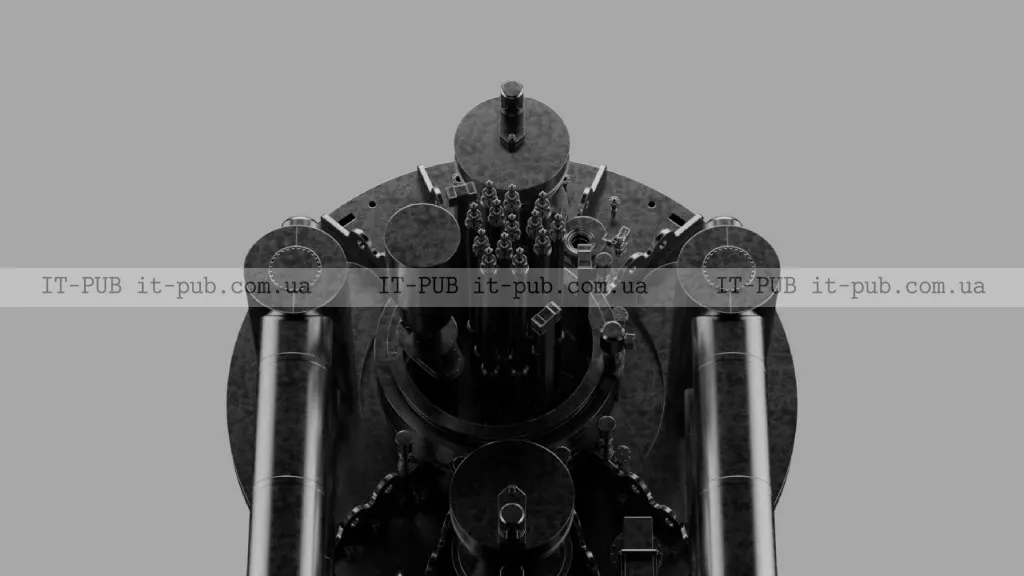
TerraPower’s answer is to keep the reactor running and store excess heat in molten sodium. Its 345-megawatt molten salt-cooled reactor does not simply raise or lower output in the usual way.
Instead, the reactor keeps splitting atoms at a steady pace. When electricity demand is lower, the extra heat is stored in a large tank of molten sodium. When demand rises again, that stored heat is used to make more steam and push the turbines harder.
The idea is fairly direct. It lets expensive equipment keep operating for more hours, even when the grid or a customer does not need maximum electricity all the time. TerraPower is trying to preserve one of nuclear power’s main advantages — high utilization — while adding a buffer that makes the plant more responsive.
The company originally designed the system with renewable power in mind. But the same logic may also fit data centers, whose power needs can be highly variable in a different way.
AI workloads create uneven power demand
The AI boom has changed what many energy buyers are looking for. Data centers that rely on behind-the-meter power need infrastructure that can handle rapid swings in demand, especially during AI training or while responding to user prompts.
According to the source text, those swings can be severe enough to strain natural gas turbines. Operators often need large battery banks to smooth demand, which adds cost.
That is where TerraPower sees a possible edge. By combining nuclear generation with built-in storage, the company is aiming for a system that supports both the steady economics of a nuclear plant and the less predictable needs of a data center.
The approach is also meant to work in a grid with a lot of renewable power, where solar and wind output changes through the day. TerraPower built the design with that intermittency in mind, and that same feature may now be useful for another uneven load: AI computing.
The plan is promising, but still unproven
TerraPower’s model remains a plan, not a finished solution to the AI power crunch. The company has not said who the customer for the data center project will be, and construction is expected to start in 2027.
Still, the planned announcement would matter. It would show that TerraPower sees a direct business opportunity in AI infrastructure, not only in the broader electricity market. It would also give the startup a more visible place among nuclear companies trying to win contracts from data centers and other large power users.
The obstacles have not gone away. Nuclear plants are expensive to build, slow to develop, and financially sensitive to how much they run. TerraPower’s storage system is meant to ease some of that pressure, but it does not eliminate it.
Even so, the pitch is clear. If AI data centers need power that can move with their workloads, and nuclear plants work best when they run steadily, a reactor that stores heat could help connect those two realities.