Daydream launches AI stylist that can shop for users
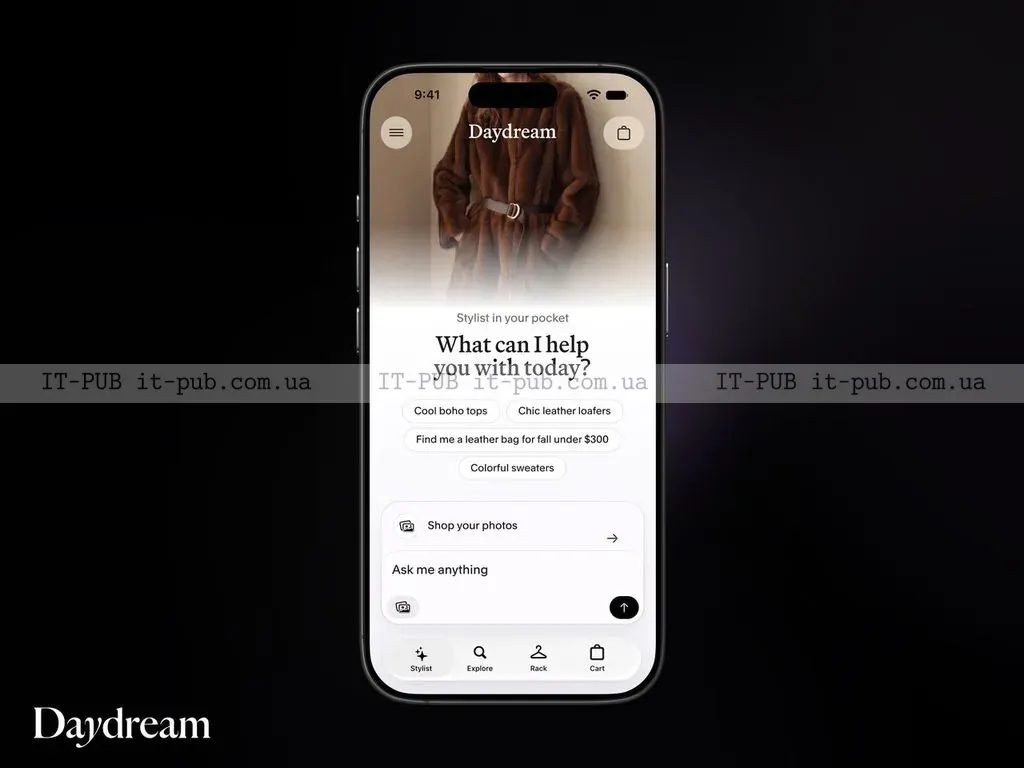
Daydream Agent can suggest outfits, track sales, reuse photos for virtual try-ons and complete purchases, while the company keeps human stylists involved.
Daydream has launched a new AI shopping assistant designed to work like a personal stylist. Called Daydream Agent, it can help users plan outfits, virtually try on clothes, suggest items based on their taste and even complete purchases. The launch pushes AI further into everyday shopping, where convenience and personalization are becoming key selling points. It also revives a familiar question for fashion tech: how much of styling can be automated before human judgment is still needed?
Daydream wants AI to feel like a personal stylist
Daydream, a fashion startup founded by e-commerce veteran Julie Bornstein, says its goal is to put a personal stylist “in everyone’s pocket.” The new agent builds on the company’s earlier AI chatbot, which could suggest outfits and help users find pieces but could not complete the buying process.
With Daydream Agent, that experience goes further. The company says the system remembers a shopper’s style, fit preferences and budget, then uses that information to refine recommendations over time. Users can also upload a photo and have the agent reuse it for virtual try-ons of saved items.
If they decide to buy something, the agent can complete the order through one-click checkout. As IT-PUB News notes, that shifts the tool beyond discovery and into the actual transaction.
The tool tracks sales, new drops and outfit planning
Daydream is positioning the agent as more than a helper for one-off purchases. It can monitor when items go on sale, watch for new product releases from brands, and send weekly updates or surface emerging fashion trends.
Instead of leaving products in a standard cart, shoppers can save items to a persistent “clothing rack,” meant to make comparison easier and give them more time to think before buying. The agent can also connect to a user’s closet and calendar, helping build outfits from what they already own and plan what to wear for upcoming events.
That wider feature set shows where Daydream wants the product to sit — across more of the shopping journey, not just at checkout.
Real-time catalog data drives the recommendations
Daydream says the agent combines its fashion-focused AI with real-time pricing and availability data from a catalog of more than 10,000 brands. That gives the system up-to-date information on stock and cost, which matters for a shopping tool expected to make practical recommendations rather than offer generic style ideas.
The startup first launched as an AI search engine in 2023, then expanded into shopping tools focused on personalized discovery. According to the company, more than 2 million shoppers have used Daydream to discover apparel and accessories since its June 2025 launch.
Daydream is keeping humans in the styling loop
Even with automation at the center of the product, Daydream says people will still shape the styling process. This month, the company brought on its first Stylist in Residence, Francesca Salih, an international fashion stylist and founder of StyleGrid.
Salih provides styling content that helps shape how the agent puts together outfits and gives advice. That reflects Daydream’s view that fashion is not just a data problem. Personal taste, fit and style can be subjective, and the company is signaling that it does not want the AI working entirely on its own.
That balance between machine-generated suggestions and human guidance stands out in the launch. Daydream appears to be treating AI as a way to scale personal styling, not fully replace the judgment behind it.
Shopping is becoming a bigger consumer AI use case
Daydream’s move also fits a broader pattern in consumer AI. The company points to early adopters of AI agents such as Meta’s Muse, where shopping has emerged as a major use case. Meta CEO Mark Zuckerberg recently said shopping was one of the top activities for Muse’s more than 10 million users, and that 25% of people who set up Muse now use it daily.
That helps explain why Daydream is leaning so heavily into shopping. For AI companies, retail is one of the clearest ways to show practical value: the tool can search, compare, remember preferences and, in this case, buy. For shoppers, the appeal is straightforward — less browsing, more personalization and a faster path from inspiration to purchase.
Still, the launch also underlines the limits of automation in a category where taste is personal and decisions are often emotional. Daydream is betting that AI will be most useful when it handles the repetitive parts of shopping, while humans continue to guide the final aesthetic call.