TechCrunch Disrupt 2026 examines AI model choices
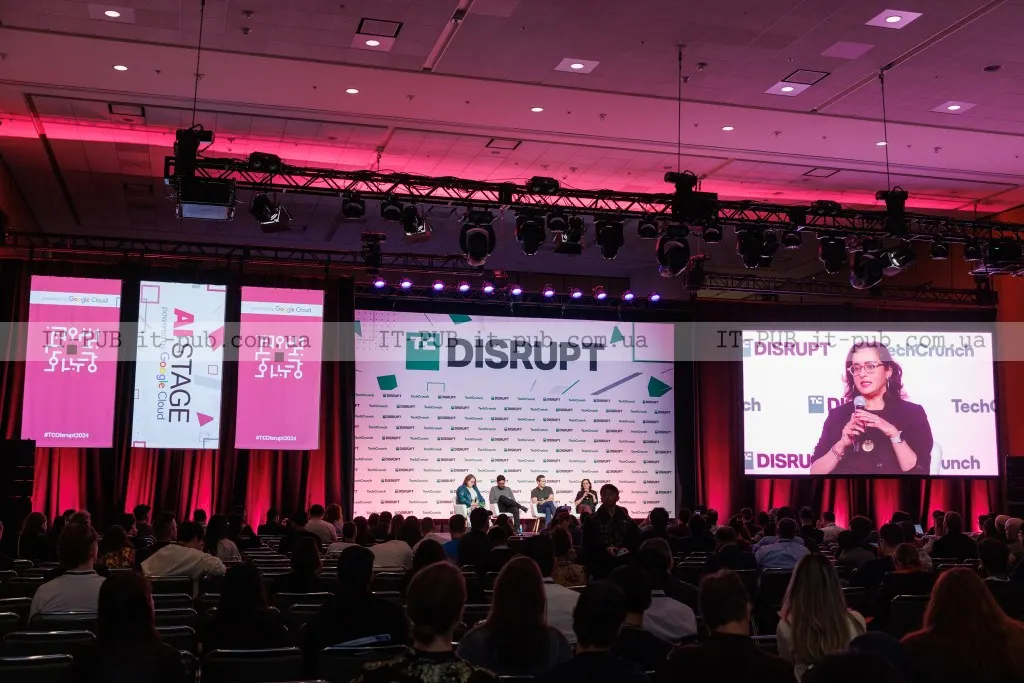
The October event in San Francisco will focus on open vs. proprietary AI, multi-model products, and how those decisions affect cost and control.
TechCrunch Disrupt 2026 will zero in on a question many AI startups are still trying to answer: what, exactly, should they build on? As models improve and the number of options grows, founders are no longer locked into a single architectural choice. That flexibility can help companies move faster, but it also brings tougher trade-offs around cost, ownership, and long-term control.
Set for October 13-15 at Moscone West in San Francisco, the event will feature several sessions on the issue across different layers of the AI stack. The discussions will span multi-model applications, customized systems, and the infrastructure and chips underneath them. For startups, those decisions can shape not just product performance, but how much of the business they actually control.
AI startups are moving beyond a single-model strategy
One of the clearest shifts in the Disrupt agenda is that AI products do not have to depend on one model alone. Some companies are already using multiple models for different tasks instead of committing fully to a single open or proprietary option.
That idea is at the center of “The Real Tokenmaxxing: How the Best AI Companies Navigate a Multi-Model World” on the Builder’s Stage. The session will bring together Mo Jomaa, partner at CapitalG; Vipul Ved Prakash, co-founder and CEO of Together AI; and Zuzanna Stamirowska, CEO and co-founder of Pathway.
They are set to discuss why companies are adopting several models, how they balance cost against performance and flexibility, and when open models can outperform proprietary alternatives. As IT-PUB News notes, the practical impact is hard to ignore: model choice can affect operating expenses, product design, and how quickly a startup can switch to newer tools as they appear.
The debate also centers on how much of the stack to own
Disrupt will also push into a broader issue that comes up once AI founders start building: how much of the stack should they own themselves?
That question will drive “Which AI Should Your Company Actually Deploy: Rent, Customize, or Build,” a session on the Real World AI Stage with Manos Koukoumidis, CEO and co-founder of Oumi. He will discuss whether startups should build their own models, when customization becomes an advantage, and how to choose between open and proprietary AI.
The session is framed as a practical one. Through audience polls, startup scenarios, and a decision-making framework, Koukoumidis aims to help attendees assess frontier APIs, customized open weights, and fully owned AI systems. This is not just a technical call. It can determine how much control a company keeps, how distinct its product can become, and how much time and talent it needs to invest.
Open and proprietary AI still force familiar trade-offs
Not every company will move to a multi-model setup or build its own system. For many startups, the choice will still come down to the familiar tension between open and proprietary models.
Nader Khalil, Director of Developer Tech at Nvidia, and Sydney Sykes, Global Head of VC Partnerships at Nvidia, will take up that issue in “Building AI Startups Worth Betting On” on the Builders Stage. Their session will examine what founders are choosing now, how frontier APIs compare with open-weight models, and how those decisions can shape product strategy and long-term differentiation.
That matters because model selection is not simply a technical preference. It can influence cost, infrastructure requirements, and how much freedom a startup has to make its product stand out. In some cases, the difference may come down to whether a company can build something that competitors cannot easily copy.
The program reaches down to chips and infrastructure
The Disrupt lineup also points to a deeper layer of the AI stack: the hardware that powers these systems.
In “When AI Starts Designing Its Own Hardware,” Anna Goldie, founder and CEO of Ricursive Intelligence, and Azalia Mirhoseini, founder and CTO, will discuss how AI is being used to optimize chips and hardware. The session will also explore why model architecture and hardware are becoming more closely linked, and what a more open AI ecosystem could mean for the infrastructure beneath it.
For startups, that link could matter in a very direct way. If hardware development speeds up, new AI capabilities may reach the market sooner, and the infrastructure available to builders could shift with it. The session suggests that model choice is no longer separate from the physical systems supporting it.
TechCrunch Disrupt 2026 frames flexibility as a business issue
TechCrunch says these sessions are part of more than 200 talks, roundtables, and breakouts across six industry stages at Disrupt. The conference expects more than 10,000 founders, investors, operators, and tech leaders, along with 250+ speakers and 300+ exhibiting startups.
The event will also include matchmaking, dealmaking, and networking opportunities for attendees looking to meet founders, investors, and potential partners. Across the AI sessions, though, one theme stands out: flexibility is starting to matter as much as any single model decision.
A startup might rely on a frontier API today, customize an open model tomorrow, and later spread workloads across several systems. In that kind of environment, the bigger decision may be how much freedom to preserve as the technology keeps changing.