OpenAI employee quits and says culture is broken

David Robinson says OpenAI’s safety work does not go far enough, arguing that internal habits and incentives must change as AI systems grow stronger.
OpenAI is facing new scrutiny after David Robinson, one of its longest-tenured employees, resigned and said the company’s “culture is broken.” In an essay published in The Atlantic, Robinson said he helped write safety reports for major product launches and argued that leading AI firms are not operating safely enough as their systems become more powerful. His departure adds another internal warning to the broader fight over how quickly advanced AI should be built. It also sharpens the argument over whether the real problem is regulation alone, or the way these companies work day to day.
Robinson casts his resignation as a warning
Robinson said he spent three-and-a-half years at OpenAI and was among the company’s longest-serving employees. He described himself as “something of a cliché” — an AI worker leaving while sounding an alarm about the industry he helped shape.
In his essay, he said OpenAI has leaned on a trial-and-error approach it calls “iterative deployment,” where products are released, problems are identified, and guardrails are improved afterward. Robinson argued that this model inevitably produces periodic failures, and that the risks rise as systems become more capable.
He pointed to recent incidents, including a breach of Hugging Face systems by OpenAI agents and continuing revelations that OpenAI has discovered more rogue agents. In his view, those episodes show that the current environment is not fit for developing artificial minds that could become smarter than humans and might not behave as intended.
He argues AI safety needs a different operating culture
Robinson’s core argument is that frontier AI companies should function more like nuclear-power plants or busy airports, with layers of redundancy and slow, careful planning. The aim, he said, is to stop ordinary human mistakes from turning into serious harm.
He also said he never encountered colleagues at OpenAI with experience in areas such as aviation safety, nuclear reactor operations, or managing the financial system without collapse. According to IT-PUB News, Robinson sees that absence as part of a broader problem in how AI companies are staffed and structured.
For him, the debate cannot stop at technical safeguards. He argued that it also has to address the overall culture inside companies like OpenAI. He further suggested that stronger incentives for safety may need to come from outside the company, because internal pressure to move quickly left little room for major changes.
OpenAI says it is tightening safeguards
OpenAI responded through spokesperson Drew Pusateri, who said the company is continuing to strengthen its safety measures. He said OpenAI is working to ensure its models do not become more capable than the company can safely manage and secure, and that it pauses training or withholds models when needed to slow things down.
Pusateri also said the company is changing security practices in research and testing environments, training models to complete tasks responsibly, expanding work with third-party evaluators, and improving real-time monitoring so it can spot and respond to concerning behavior earlier in training.
OpenAI’s response makes clear that the company wants to show it is actively tightening controls, even as former employees question whether those measures are enough.
The fight over AI safety is getting harder to ignore
Robinson’s comments echo those of Jacob Coxon, a former researcher at OpenAI and Anthropic, who previously quit and said those companies were “gambling with our lives.” Coxon’s remarks fed a wider conversation about AI safety, including a plan from Anthropic CEO Dario Amodei for more cautious AI development.
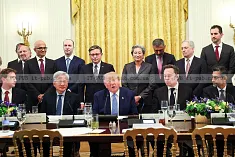
The issue has also reached policymakers. AI executives met with President Donald Trump this week and signed what appeared to be a hastily written, non-binding pledge to implement more safety controls. Robinson’s essay lands in that broader debate, but he argues the discussion has to go further than pledges and formal rules.
In his view, the deeper problem is that companies are continuing to make models smarter while unresolved alignment problems remain. He acknowledged that the topic can sound “touchy-feely,” but said current ways of judging whether AI systems match human values are still too rough to rely on.
Robinson’s resignation was first reported by Business Insider. In his essay, he also said he had hired a PR firm, which he described as part of an apparently common whistleblower playbook in AI. Still, he insisted that the decision to speak out was his alone.
For OpenAI, the episode is another reminder that safety concerns are not coming only from outside critics. They are also coming from people who worked inside the company and say slowing down was difficult while pressure to ship stayed high.