Superhuman buys Fathom to broaden its AI tools
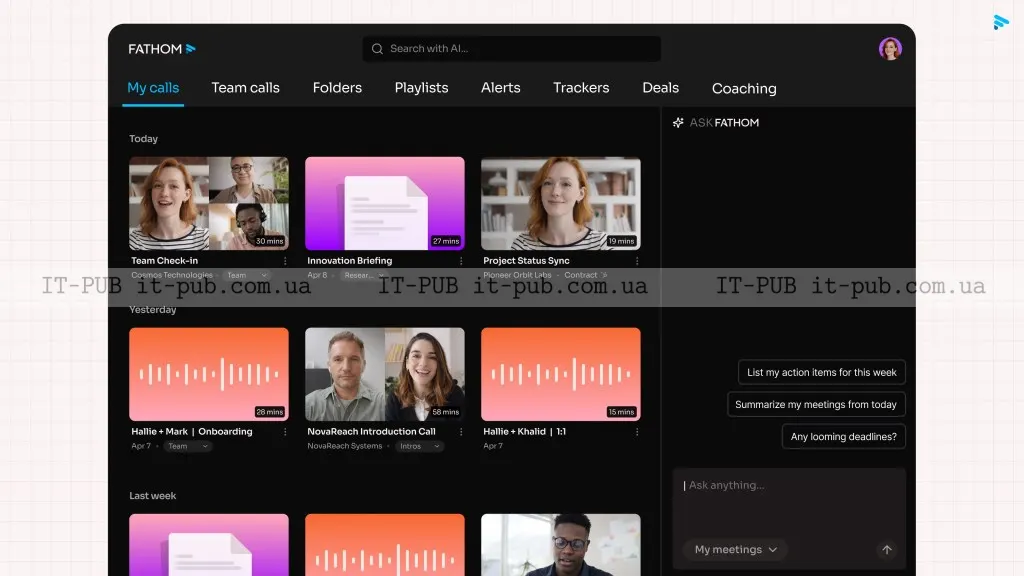
Superhuman is acquiring Fathom as it pushes beyond email and docs, aiming to turn meeting notes into follow-up actions across its platform.
Superhuman is moving further beyond email with its acquisition of Fathom, the Y Combinator-backed meeting notetaker. The deal points to a broader shift in productivity software: companies are no longer focused only on prompts, summaries, or task lists, but on using meeting content to kick off AI-driven work. For users and businesses, that could make it easier to move from discussion to action. It also shows how crowded — and demanding — the meeting-notetaking market has become.
Superhuman opted to buy instead of keep building
Superhuman had already tested a notetaker internally with a select group of users earlier this year, according to TechCrunch. But rather than continue building one from scratch, the company chose to acquire an existing product and bring it into its wider productivity suite.
CEO Shishir Mehrotra said the testing process made one thing clear: building a strong notetaker is harder than it may seem. He said Superhuman had been working in the area for some time, and that the experiment strengthened its confidence in demand for the category. At the same time, it exposed how much work is required to make meeting recording and note-taking reliable across the product.
Mehrotra also said he was impressed by some of the technical work done by Fathom’s team, though he did not provide specifics. He added that a notetaker could help Superhuman surface meeting context in real time.
Fathom adds funding, users and a ready-made product
Fathom was founded in 2020 and has raised more than $30 million, according to the source. PitchBook data valued the company at $94 million in 2024. Its investors include Zoom Apps Fund, Telescope Partners, BoxOne Ventures and Maven Ventures.
Its backers also include several well-known figures: Reddit CEO Steve Huffman, former Twitch CEO Emmett Shear and Cruise co-founder Kyle Vogt.
The product has already reached a sizable audience. Fathom says more than 400,000 people use it monthly, helped by a generous free plan. It also says that more than 1 million people have recorded meetings through the service so far.
For Superhuman, acquiring a product with that level of usage means it does not have to start from zero. For Fathom, the deal opens access to a much larger distribution channel. According to IT-PUB News, Richard White pointed to Superhuman’s 40 million user base as a major reason the acquisition made sense.
The meeting-notetaker market is getting tougher
The acquisition comes as competition in meeting notetakers intensifies. Startups such as Granola and Read AI have raised millions of dollars, and newer entrant Wispr has also entered the field. Pressure is rising on these companies: a solid customer base is no longer enough if the product mainly records meetings and produces notes.
That helps explain why Superhuman is moving in this direction. AI-powered productivity platforms often automate work after a user enters a prompt and sets up a workflow. The next step, in the view of these companies, is for AI to begin work on its own using information gathered during meetings — especially topics discussed and action items assigned.
Meeting notes are becoming more than a record of what was said. They can also serve as context for follow-up emails, task updates and scheduling decisions. In Superhuman’s case, that could eventually tie together several parts of its product line.
Superhuman wants meeting context across its platform
Superhuman already offers an email client, a docs app, a calendar, a database product and a newly launched AI agent builder platform. Adding a meeting notetaker gives the company another way to connect those tools.
In practical terms, Superhuman says this could let users draft emails, update database entries, schedule follow-up meetings and allow AI agents to begin work based on what was discussed in meetings. The company’s aim is not simply to capture notes, but to turn them into a working layer for the rest of its platform.
White said Superhuman’s 40 million user base made the acquisition attractive because it creates a chance to reach users at scale. He also said that if Fathom had remained independent, it would have needed to build many of the things that already exist inside Superhuman.
He framed the deal in terms of speed and distribution. In his view, Superhuman already has the infrastructure that a standalone Fathom would have had to build over time.
Why the deal matters for everyday users
The acquisition reflects a broader shift in software: tools are increasingly designed not just to store information, but to act on it. For people who spend much of their day in meetings, that could narrow the gap between conversation and follow-up.
At the same time, the move underlines the pressure on AI productivity startups to show they can do more than one narrow job. Meeting notetakers may still be useful on their own, but the market is pushing toward more integrated systems that move from recording to execution.
Superhuman’s purchase of Fathom shows how quickly that expectation is reshaping the category. What started as a notetaking product is now being absorbed into a wider push to build AI tools that can understand meetings, extract context and help move work along.