Spotify makes Siri requests simpler on newer iPhones
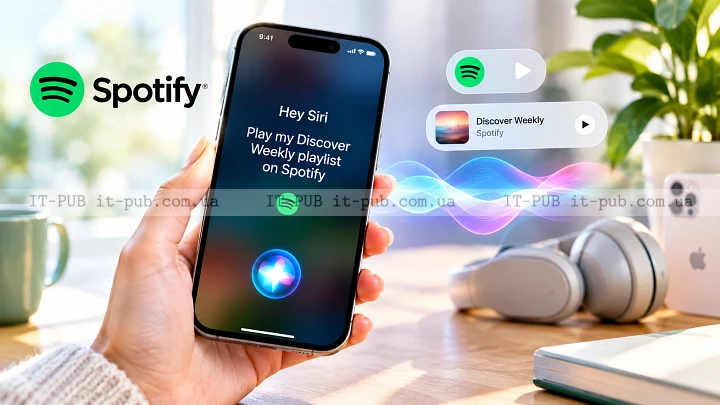
On supported iPhones running iOS 27, Siri can send music requests to Spotify without the extra “on Spotify” phrase, though the feature is unavailable in the EU.
Spotify has announced a small but useful change for iPhone users. On devices updated to iOS 27, Siri can now play content from Spotify without requiring people to add “on Spotify” to the end of a request. The goal is simple: make voice control feel more natural when users are driving, cooking, or doing anything else that leaves their hands full.
It may sound like a minor tweak, but it changes a familiar daily interaction. Instead of carefully wording a command so Siri knows which app to use, people can just ask for what they want to hear. Spotify says that should make hands-free listening easier and less awkward.
Siri can send requests to Spotify without the extra phrase
Until now, Spotify users often had to name the app when asking Siri to play something. With the new setup, that extra step is no longer necessary.
Users can make a request and Siri will play the content through Spotify. That includes a specific track, album, podcast, or audiobook. It also works for broader commands such as “play workout music” and for Spotify features like “play my DJ.”
Spotify says Siri can also handle other actions through the app, including personalized recommendations, resuming podcasts, searching a user’s library, and creating a Prompted Playlist with AI. As IT-PUB News notes, the main shift is that Siri can now learn a user’s preferred music app and route audio requests there automatically instead of waiting for the service to be named each time.
Why the update matters for everyday listening
Spotify is presenting the feature as a way to remove friction from voice commands. In practice, that means fewer steps between a spoken request and playback.
For many people, voice control is only really useful when it is fast and predictable. Having to remember the exact wording can make the experience feel stiff. This update is meant to reduce that problem by letting Siri behave more like an assistant and less like a command parser.
It also reflects a broader move toward more context-aware voice assistants. Rather than treating every request the same way, Siri can now take a user’s listening habits into account. For people who already rely on Spotify as their main audio app, that could make everyday use noticeably smoother.
The feature is limited by device, region, and settings
The rollout is not the same for everyone. Spotify says the feature is available globally for users with an iPhone 15 Pro or later, outside the EU, as long as Apple Intelligence is enabled in Settings.
That ties the feature to newer hardware and a specific software setup. It is also not available in the EU, according to Spotify’s announcement.
Those limits narrow the group of people who can actually use the update. The feature is designed to simplify voice control, but it will only reach users who meet Apple’s device requirements, have the right settings enabled, and are in supported regions.
Spotify gets a smoother path through Siri
Spotify’s announcement does not point to a major redesign, but it does show a broader shift in how digital assistants are being used. The company is trying to make Siri better at understanding what users already want, without forcing them to shape every request around the app.
For users, the benefit is convenience. For Spotify, it means easier access through one of the most common voice interfaces on iPhones. The trade-off is clear too: the feature depends on Apple’s ecosystem, so access is still defined by device type, region, and Apple Intelligence support.
This is not a universal Siri change. It is a targeted update for eligible iPhone users, removing one extra phrase from a voice command — and for regular Spotify listeners, that may be enough to make the experience feel noticeably smoother.