Shield AI, Waabi and GM to discuss AI safety at Disrupt
TechCrunch Disrupt 2026 will host leaders from Shield AI, Waabi and General Motors for a panel on testing, validation and trust in autonomous systems.
At TechCrunch Disrupt 2026, three companies working on autonomous systems will take up a hard question: when is AI safe enough to leave the lab and operate in the real world? Shield AI, Waabi and General Motors are sending senior leaders to discuss that issue at a time when failures can carry serious consequences in aircraft, vehicles and robotics. According to IT-PUB News, the session will focus on how companies test, validate and build trust in systems designed to act on their own. That makes it relevant well beyond the tech industry.
The session, titled “Building AI Systems When Failure Is Not an Option,” centers on a practical divide. If an AI chatbot gives a wrong answer, the damage may be limited. If an AI system controls a plane, a car or a robot, a mistake can bring much higher stakes, including crashes or mission failure.
A session on trust in high-stakes autonomy
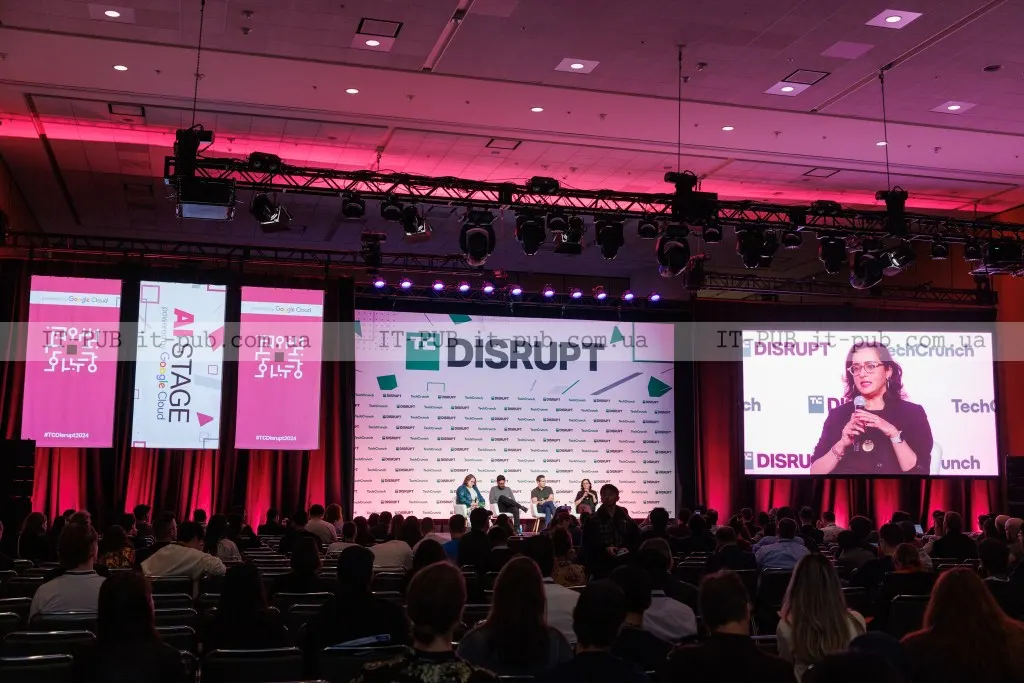
The panel will take place on the Real World AI Stage at TechCrunch Disrupt 2026. It will feature Nathan Michael, chief technology officer at Shield AI; Raquel Urtasun, founder and CEO of Waabi; and Mikell Taylor, director of robotics strategy at General Motors.
According to the event description, the discussion will cover what it takes to deploy AI in high-risk settings. That includes building a safety culture, testing and validating systems, handling regulatory hurdles and earning trust before autonomous technology is put to use.
The bigger issue is not whether AI can do impressive things in controlled demonstrations. It is whether it can be trusted when the consequences of failure are immediate and real.
Shield AI brings defense autonomy to the discussion
Nathan Michael leads development and deployment of Hivemind, Shield AI’s platform-agnostic mission autonomy software. His background includes work in AI, control, perception and multi-robot systems, as well as years at Carnegie Mellon University’s Robotics Institute, where he directed the Resilient Intelligent Systems Lab.
Shield AI’s work has already reached a major defense program. In February, Hivemind was selected as an autonomy provider for the U.S. Air Force’s Collaborative Combat Aircraft drone prototype program. A month later, Shield AI announced $1.5 billion in Series G funding at a $12.7 billion post-money valuation.
Michael’s role in the session is expected to reflect the view of someone building autonomous systems for environments where performance alone is not enough. Assurance matters too, especially when the technology is tied to mission-critical use.
Waabi emphasizes validation before driverless rollout
Raquel Urtasun brings a long background in AI and autonomous vehicles. Before founding Waabi, she served as chief scientist and head of R&D at Uber ATG. She is also a professor of computer science at the University of Toronto, co-founded the Vector Institute for AI, and has published more than 200 AI papers.
Waabi is now working to expand its autonomous-driving technology. In January, the company raised $1 billion and announced a partnership with Uber to support the deployment of 25,000 or more Waabi Driver-powered robotaxis.
At the same time, Waabi’s approach shows how heavily autonomous vehicle companies rely on validation. Its Waabi World simulator is used to train, test and stress-test the Waabi Driver in a virtual environment. Urtasun has also said the company’s autonomous trucks still need to be fully validated before driverless deployment.
That makes Waabi a natural fit for the panel’s central question: how do companies decide when an autonomous driving system is ready to operate without a human behind the wheel?
General Motors adds the human side of adoption
Mikell Taylor leads robotics strategy at General Motors’ Autonomous Robotics Center. Before that, she led the Amazon Robotics team that developed Proteus, Amazon’s first autonomous mobile robot.
Her career has also included work on autonomous underwater vehicles and industrial robotic systems. The source notes that her focus has been on robots that are practical, reliable and able to work effectively around people.
That human factor matters in the way the session is framed. When AI-powered machines move beyond controlled demos and into workplaces, product design and deployment planning have to account not just for technical performance, but also for how people will use and trust the systems.
Taylor’s experience suggests adoption is not separate from engineering. It is part of the same challenge.
Why the panel matters at TechCrunch Disrupt 2026
The session brings together three different corners of autonomy: defense, autonomous driving and industrial robotics. The shared problem is straightforward — how to deploy AI when mistakes are not a minor inconvenience, but a serious risk.
For companies building autonomous systems, that question affects more than product launches. It shapes testing methods, validation standards, regulatory planning and customer trust. It also helps explain why the shift from software that answers questions to systems that act in the physical world remains so sensitive.
TechCrunch says Disrupt 2026 will include more than 200 sessions across six industry stages, roundtables and breakouts, with more than 10,000 founders, investors, operators and tech leaders expected in San Francisco from October 13 to 15. The event will also feature 250-plus speakers and 300-plus exhibiting startups.
For this session, though, the focus is narrower and more urgent. In physical AI, “almost ready” is not enough. The issue is not whether the technology works in theory, but whether it can be trusted when failure has real-world consequences.