US memo links Megaspeed executive to spying claim
Reports say a U.S. intelligence memo alleged Megaspeed executive Alice Huang was recruited to gather information on Nvidia CEO Jensen Huang.
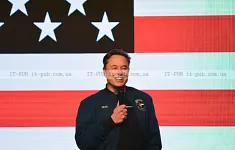
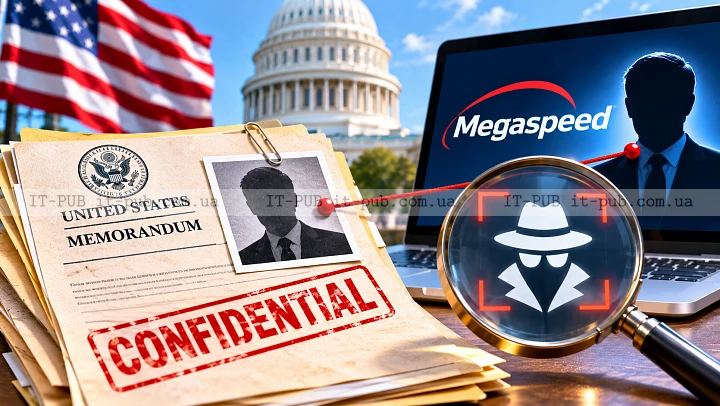
A U.S. intelligence memo reported on by several media outlets has put Nvidia and CEO Jensen Huang under fresh scrutiny. The document allegedly claimed that Alice Huang, an executive at Singapore-based Megaspeed, was recruited by China’s Ministry of State Security to gather information on him. Nvidia has pushed back, saying Jensen Huang’s interactions with her were routine and did not involve classified information.
The reporting adds another layer to the already sensitive debate around Nvidia’s ties to China. But the allegations described in the memo have not been independently confirmed in the source material.
The memo reportedly alleged an intelligence recruitment effort
The New York Times, which had previously reported that Jensen Huang had been targeted by Chinese intelligence, was the first outlet to write about the memo. The Financial Times later reported that the document also alleged a romantic relationship between Jensen Huang and Alice Huang.
According to the reports cited in the source, the memo said Alice Huang had been recruited by China’s Ministry of State Security to gather information on Jensen Huang. That is what made the document stand out. It moved beyond the usual business and trade tensions around semiconductor access and into allegations of intelligence activity.
The source does not explain how the memo was obtained, only that it was reportedly based on U.S. intelligence. It also provides no evidence beyond the claims described by the newspapers that reported on it.
For Nvidia, that matters because the company sits at the center of the global AI chip market. Any suggestion that its leadership may have been monitored by foreign intelligence services is likely to draw attention far beyond the company itself, especially while advanced chips remain a geopolitical flashpoint.
Nvidia says contact with Alice Huang was routine
Nvidia responded by downplaying the significance of Jensen Huang’s contact with Alice Huang. A spokesperson told The New York Times that their interactions were “not unusual” and added that the company does not share classified information with customers.
That response directly challenges the implication that ordinary business contact was suspicious. According to IT-PUB News, the source does not indicate whether Nvidia addressed the relationship allegation reported by the Financial Times, but its broader position was that customer interactions are routine and sensitive information is not disclosed.
The company also used the moment to underline its role in the U.S. market. In the source, the spokesperson said Nvidia sells “the first, best and most of our technology in America,” framing the company’s priorities firmly around the U.S. despite the wider controversy.
Reporting also raised questions about New Matrix
The same New York Times report cited in the source also examined New Matrix, a Chinese company that had been authorized by the U.S. Commerce Department to buy advanced Nvidia chips. Reporters who visited the office address listed for the company found what they described as “a hollow gray shell.”
That raised concerns that New Matrix could be a front for a blacklisted private equity firm. The source does not say that this was proven, only that the condition of the office fueled suspicion.
This part of the reporting shows how closely Nvidia’s chip sales are being watched. Advanced AI chips are not just lucrative products; they are also subject to export controls and political scrutiny. Even a company cleared to buy that hardware can become controversial if its identity or purpose appears unclear.
The story adds to pressure around Nvidia’s China ties
The memo and the reporting around it show how business, national security, and personal relationships can become entangled in the tech sector. Even without confirmed findings in the source, the story is likely to draw attention because it brings together three highly sensitive issues: alleged espionage, access to advanced AI chips, and the role of Chinese-linked companies in the global supply chain.
For Nvidia, the immediate issue is reputational. The company is already operating in a highly charged environment, where its technology is central to AI development and its sales to China are politically sensitive. Any allegation linking its leadership to foreign intelligence activity is likely to be viewed through that wider context.
At the same time, key questions remain unanswered. The source does not confirm the memo’s allegations, does not show what evidence may support them, and does not establish whether the relationship claim reported by the Financial Times has any factual basis. What is clear is that Nvidia remains in the middle of a broader struggle over technology, access, and trust.