Inertia Enterprises cuts fusion fuel time to hours
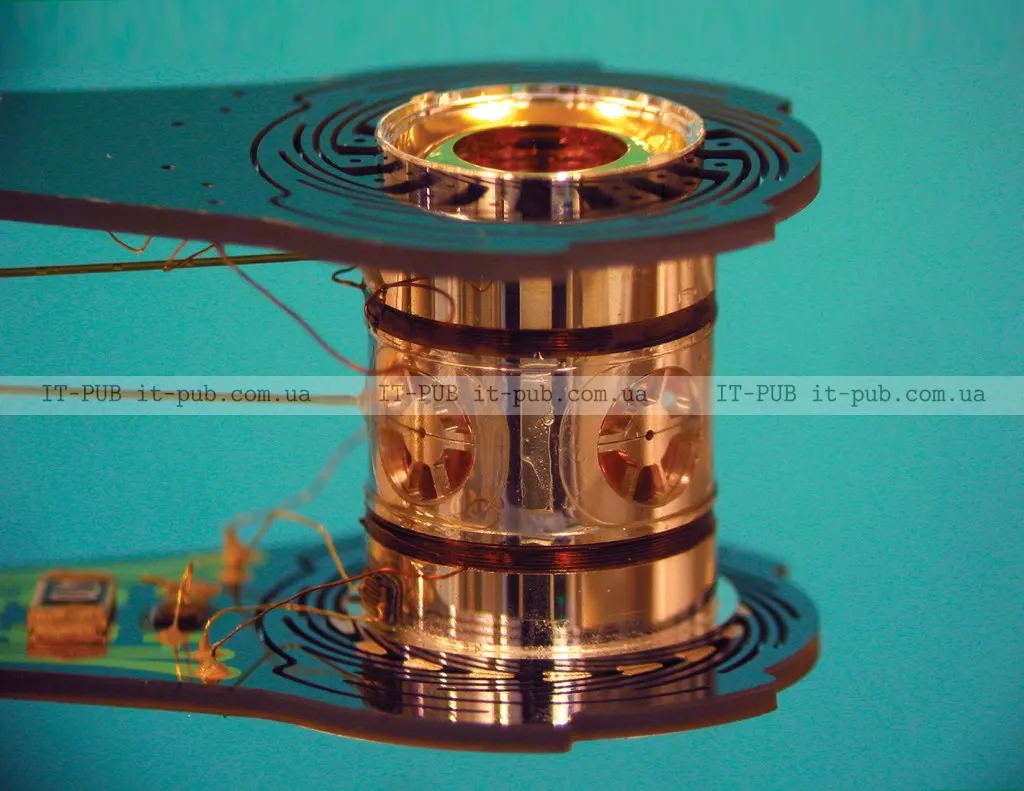
The startup says one key pellet-making step now takes about 30 minutes, down from up to a week at NIF, as it pushes toward commercial fusion.
Fusion startup Inertia Enterprises says it has sharply reduced the time needed to make its fuel pellets, cutting one of the slowest steps from several days to minutes. The company argues that this removes a major obstacle on the way to its first commercial power plant phase. For a fusion company built around scaling a delicate lab process into industrial production, that is a consequential claim. It also speaks to a broader problem in fusion: making the fuel is hard enough to shape the economics of the whole system.
The announcement matters because Inertia was funded on the promise that it could turn an extremely precise laboratory process into something manufacturable at scale. That is a difficult leap in fusion, where tiny imperfections can change whether a pellet performs as intended. Inertia says it has now sped up production without straying too far from the physics developed at the National Ignition Facility, as IT-PUB News notes.
Inertia is trying to turn NIF science into factory output
Inertia’s work is tied to technology developed at the National Ignition Facility, or NIF, where fuel pellets are made with painstaking precision. At NIF, producing these pellets can take a week or more and is expensive — not a workable model for a commercial power plant.
Jeff Lawson, co-founder and CEO of Inertia, described the challenge as moving beyond prototypes. He said the company looked at a process that had been carried out only in small numbers each year, then set out to make it suitable for industrial manufacturing.
That shift sits at the center of Inertia’s pitch. Rather than treating the fuel pellet as a one-off scientific object, the startup says it is trying to make it something that can be produced repeatedly and in large volumes.
The fuel pellet leaves little room for error
The pellet itself is unusually complex. According to the source, it has a spherical diamond shell on the outside. Just inside that shell is a thin layer of frozen deuterium and tritium, the hydrogen isotopes used as fuel for a fusion reactor. The center contains a mix of gaseous deuterium and tritium.
Each layer has to be extremely close to perfectly spherical. The pellet is then placed inside a gold casing called a hohlraum, which turns laser energy into X-rays that compress the fuel. If that compression works as planned, atoms fuse and release energy.
Even small flaws in the pellet’s shape can interfere with ignition. So this is not simply a manufacturing issue. The production process is tied directly to whether the reactor can work at all.
One crystal-growth step now takes about 30 minutes
Inertia says it has condensed the process enough to make commercial use more plausible. The company’s team, which includes Annie Kritcher, co-founder and chief scientist, went through several rounds of development before reaching the new result.
Kritcher previously designed the first fusion experiment at NIF that produced more power than it consumed. That gives the startup a direct link to the research base it is trying to commercialize.
The company says it can now grow the crystals in about 30 minutes. At NIF, that step could take up to a week. In total, Inertia says a single fuel pellet can now be made in about two to three hours, and that the process can be scaled up to industrial production.
The startup developed the process with help from NIF at the Lawrence Livermore National Lab, where it has formed a public-private partnership.
A more powerful laser could relax manufacturing demands
Inertia says it has one advantage that NIF does not: it plans to use a laser that is four times more powerful than the one currently at NIF. The company says that stronger laser lets it tolerate more imperfections in the fuel pellet, which in turn helps speed up manufacturing.
Lawson said that extra room to work is part of the company’s strategy. By oversizing the laser, Inertia says it gains more flexibility in other parts of the system.
That trade-off helps explain the company’s approach. Instead of requiring near-perfect pellets at every stage, Inertia is relying on a more powerful driver to absorb some of the variation.
Faster pellets could ease tritium pressure
The faster production process also affects tritium use. Tritium is radioactive, so handling it requires care. It is also extremely expensive at the moment, at about $30,000 per gram, and only about 25 kilograms are stockpiled globally, according to the journal Science.
By reducing the time needed to make fuel pellets, Inertia says it can keep the amount of tritium it needs on hand lower. That matters because the startup, like many fusion companies, plans to make its own tritium using fusion reactions eventually. It still needs some inventory to begin operations.
That is one practical reason the fuel breakthrough drew attention. In fusion, the challenge is not just generating energy but making the fuel supply chain workable. If the process is too slow, too expensive, or too inventory-heavy, a commercial power plant becomes much harder to picture.
Lawson said the reduction in latency makes the facility smaller, faster, and more efficient. In Inertia’s view, faster fuel production is not merely a manufacturing upgrade. It is part of the larger push to make a fusion plant commercially viable.
The company expects its full-scale commercial power plant will use ten fuel pellets every second. That figure helps explain the focus on speed. A process that takes days would be hard to square with that level of demand, while a process measured in hours moves closer to what an industrial system would require.
For now, that does not mean fusion power is ready for everyday use. But it does put a spotlight on one of the field’s less visible bottlenecks: before any plant can produce electricity, the fuel itself has to be made quickly, reliably, and at a scale that does not undermine the economics.