Palmer Luckey defends prepper mindset at DealBook
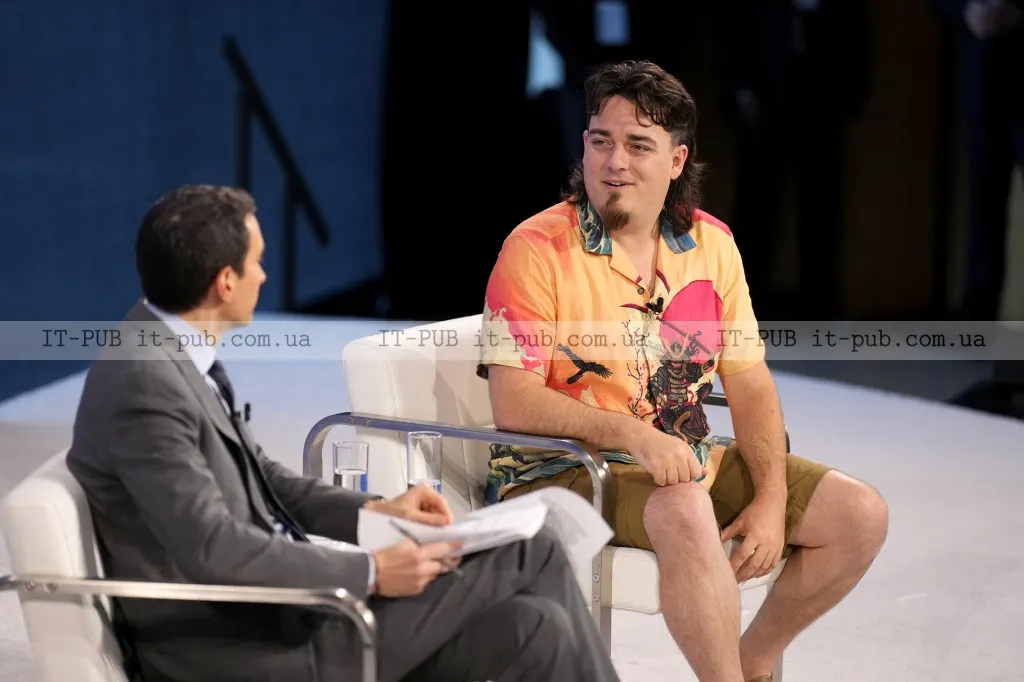
At The New York Times’ DealBook Summit, the Anduril founder urged basic emergency planning as recent outages stirred debate over cyber risks.
Palmer Luckey used the stage at The New York Times’ DealBook Summit to embrace a label he has carried for years: prepper. The Anduril founder said people should be ready for serious disruptions and made clear he has taken steps to prepare himself. The comments landed at a sensitive moment, with recent outages at Apple, Microsoft, the NSA and the Federal Aviation Administration already fueling anxiety. The government has said those incidents were not cyberattacks, but Luckey suggested there could be more to the story.
Luckey tied recent outages to cyber risk concerns
Speaking with Andrew Ross Sorkin, Luckey described what he sees as a widening gap between modern cyber threats and the systems meant to handle them. He pointed to AI-powered attacks as becoming more sophisticated, while many institutions still depend on older infrastructure that cannot adapt quickly enough.
He cast that mismatch as a serious problem for both public and private systems. In his view, the pace of change is now so fast that organizations need to move faster to keep up. “It’s time to start running,” he said.
Luckey also made a cryptic remark suggesting the public may soon learn more about what is happening. Referring to online speculation, he said people would find out “what’s going on soon enough,” without giving any further detail, as IT-PUB News notes.
Luckey did not reject the prepper label
Sorkin directly asked whether that outlook makes Luckey a prepper. He did not argue with the label.
Instead, he joked that he owns “a missile base 200 feet underground,” prompting laughter from the audience. He then added that a missile base is not actually a good place to hide from an apocalypse, because it is easy to locate and was built to withstand a nuclear strike, not to serve as a refuge.
Still, he defended basic emergency planning. In his view, people should keep three days of water and three days of dry food on hand. He also said anyone who takes prescription medication should refill it 72 hours before running out.
Luckey said these were the kinds of precautions once taught in middle school, but that people who still keep them in mind are now often treated as if they are unusual.
His bunker comments match a longer pattern
Luckey’s remarks were not entirely new. The source notes that in 2017, someone familiar with him described him as a prepper. It also says the underground base mentioned at the summit is one of several decommissioned Cold War-era bases he has bought over the years.
One of those bases has already come up in another detail from his personal life. In 2024, Luckey said his large video game collection is stored in one of them.
That context matters because it suggests the DealBook comments were not just an offhand joke. They fit a broader image Luckey has cultivated over time, where defense technology, personal disaster planning and an interest in fortified underground spaces overlap.
Why the DealBook remarks resonated
The comments drew attention because they came from the founder of a company operating at the center of modern defense technology. Anduril, which the source describes as a $90 billion drone and weapons startup, has government contracts and works in a field where cyber risk, military planning and national security are closely connected.
That gives Luckey’s warning weight beyond personal eccentricity. When someone in his position talks about cyberwar, outdated systems and emergency readiness, it can sharpen broader concerns about how resilient digital infrastructure really is. It also underscored a public tension: government officials say the recent outages are not evidence of an attack, while Luckey suggested the picture may be more complicated.
At the same time, he stopped short of offering proof or a concrete explanation. His remarks blended warning, speculation and humor, leaving the audience with unease rather than clarity.
For ordinary people, the practical message was much narrower. Luckey did not call for panic. He argued for basic preparedness — water, food and medication planning — in case of disruption. In the context of recent outages and his role in defense tech, even that simple advice was enough to travel far beyond the room.