How to Choose a Smartphone for Your Needs
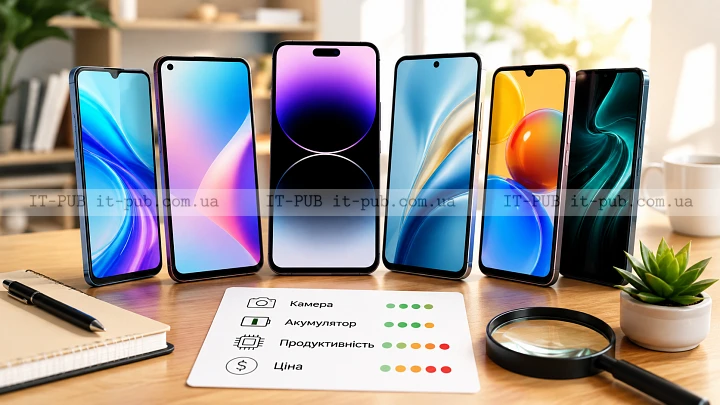
A smartphone can do almost everything now, but that does not make the choice easier. There is no single model that works best for everyone. What makes sense for you depends on how you use your phone, what you care about most, and which compromises you are willing to accept.
Once you know what actually matters in daily use, the whole process becomes much simpler. Instead of getting pulled around by marketing language, you can focus on the things that will affect your experience every day.
Start with how you actually use your phone
The simplest way to choose a smartphone is to start with your own habits. A phone used mostly for calls, messaging, and browsing does not need the same level of hardware as one used for gaming, content creation, or constant multitasking.
If your day is mostly social media, maps, email, and video calls, a solid mid-range device is often more than enough. If you take lots of photos, stream regularly, or keep many apps open at once, you will probably want better performance, stronger battery life, and more storage.
It helps to think about the role your phone plays in your day. For some people, it is mainly a work tool. Others care most about camera quality. Some just want something compact and comfortable to hold. The best smartphone for your needs depends on that real-world context, not on specs alone.
Set a budget before comparing models
Any good smartphone buying guide starts with budget, because price quickly narrows the field. It also helps you avoid paying extra for features you may never use.
More expensive phones often give you better cameras, faster chips, brighter displays, and more premium materials. Still, a higher price does not automatically mean you will choose the right phone. Plenty of mid-range models offer a very good balance of speed, battery life, and screen quality.
Set your limit before you start browsing. That makes smartphone comparison more useful, because you are looking at realistic options in the same range instead of being swayed by branding or headline features.
Choose the size and shape that feel right
You hold your phone every day, so comfort matters more than many people expect. Screen size affects typing, reading, watching video, and whether the phone is easy to use with one hand.
A larger display is great for games, video, and split-screen use. Smaller phones are easier to carry and usually easier to handle. There is no universal best option here. It comes down to whether you value pocket comfort or more room on the screen.
Weight and grip matter too. Some phones look slim in photos and still feel awkward in actual use. If you can, hold the device before buying. If not, compare the dimensions and pay attention to how reviewers describe the feel in the hand, not just the diagonal screen size.
Pay attention to the display, not just the number of inches
The display is the part of the phone you interact with most. You read on it, watch on it, type on it, and tap it all day. That alone makes it worth close attention.
Size is only part of the story. Display type, brightness, color quality, and smoothness all shape the experience. A screen that stays clear outdoors may matter more than one that is slightly larger. For many people, everyday readability is more important than a long list of technical terms.
If you watch a lot of video or spend a lot of time scrolling, a smoother display can make the phone feel nicer to use. If your priorities are battery life and basic tasks, a simpler panel may be perfectly fine. This is one of those phone features explained best by habit: the right choice depends on what you actually do.
Pick performance that matches your workload
Performance is really about how smoothly the phone handles your routine. It affects app launches, switching between tasks, gaming, and how responsive the device feels over time.
For basic use, most modern smartphones are capable enough. Messaging, browsing, navigation, and streaming usually do not demand top-tier hardware. Performance starts to matter more when you play demanding games, edit video, multitask heavily, or rely on your phone for work throughout the day.
When you compare models, do not get stuck on marketing labels. What matters is real-world speed and stability. A well-optimized mid-range phone can feel better in daily use than a pricier one with messy software or poor thermal control. In practical terms, the phone should stay smooth during the tasks you actually care about.
Decide how much storage you really need
Storage is one of those things people ignore until it becomes a problem. Photos, videos, apps, downloads, and offline files add up faster than expected. If you buy too little, the phone can start feeling cramped surprisingly quickly.
If you mostly stream content and rely on cloud services, modest storage may be enough. If you take lots of photos, download media, or keep large apps on your device, it makes sense to buy more from the start.
It is also worth checking whether the phone supports expandable storage. Some do, some do not. If that matters to you, do not assume it is included. Storage is not always something you can fix later, so it deserves attention early in the buying process.
Battery life should fit your routine
Battery life is one of the most important practical factors in how to pick a mobile phone. If a phone dies too early, the rest of its strengths stop mattering pretty quickly.
Think about your normal day. If you spend a lot of time away from a charger, endurance matters more than a thin design. If you are usually near a power outlet, you have more flexibility. Heavy screen use, gaming, navigation, and long video calls all put more strain on the battery.
Fast charging helps, but it is not a substitute for solid battery life. It is useful when you need a quick top-up, but your phone should still get through your usual day without stress. The best result is a device that combines decent battery capacity with efficient hardware and software.
Camera quality is about more than megapixels
A lot of buyers focus on megapixels because the number is easy to compare. It also tells only part of the story. Camera quality depends on software processing, sensor quality, stabilization, and how the phone handles different lighting conditions.
If the camera matters to you, look at sample photos and think about what you usually shoot. Portraits, landscapes, food, indoor shots, moving subjects, low light — those details are more useful than one number on a spec sheet.
For casual use, a reliable main camera is often all you need. If photography is a bigger priority, compare sharpness, color, and how consistently the phone handles motion. Video matters too, especially if you record family moments, work clips, or social content.
Don’t ignore software and update support
A smartphone is not just a piece of hardware. The software has a huge effect on how pleasant, simple, and secure the phone feels over time.
Good software should be easy to understand and not overloaded with unnecessary extras. Too many preinstalled apps can make the whole experience feel cluttered. In most cases, a cleaner interface is easier for beginners and quicker for everyone else.
Update support matters for the long term. Security updates help protect your data, and software updates can improve compatibility and fix bugs. If you want a phone that stays useful beyond the first few months, this is one of the key things to check.
Think about connectivity and everyday convenience
A phone should fit into your daily digital life without creating friction. That includes a few basics people often overlook.
Check the charging port, wireless connectivity, mobile network support, and whether the phone includes the features you actually use. For some people, a headphone jack still matters. For others, dual SIM support or eSIM flexibility is more useful. Small details like these can have a bigger impact than flashy headline features.
It is also worth looking at how the phone unlocks. Fingerprint sensors and face unlock are both common, but they are not all equally fast or reliable. A secure and convenient unlock method makes the device easier to live with every day.
Match the phone to your ecosystem
If you already use a laptop, tablet, smartwatch, or earbuds tied to a specific platform, that can make the decision easier. Devices that work well together usually save time and reduce setup hassle.
That does not mean you have to stay in one ecosystem forever. Still, it is smart to think about how your phone will connect with the rest of your devices. File sharing, message syncing, photo backup, and accessory support can all shape the overall experience.
For some people, ecosystem convenience is a major reason to go with one model over another. For others, flexibility matters more. Neither approach is wrong. It depends on what fits your routine best.
Separate needs from nice-to-have features
It is very easy to get distracted by features that sound impressive on paper but make little difference in real life. One of the smartest ways to choose a smartphone is to separate what you truly need from what is simply nice to have.
The essentials are usually the things you notice every day: battery life, display quality, comfort, speed, and camera reliability. Nice extras may include premium materials, advanced zoom options, or special features you rarely use.
A good phone solves everyday problems without getting in your way. If a feature does not improve your routine, it may not be worth paying more for. Keeping that in mind makes the decision more practical and helps you avoid overspending.
Compare phones the practical way
When you compare devices, do not rely on a spec sheet alone. Look at the whole package. A phone with a great camera but weak battery life may not suit you. Another with a fast processor but a dull screen may feel less enjoyable than expected.
Reviews can be useful, but it helps to focus on patterns instead of isolated opinions. If many reviewers point to the same strength or weakness, that usually tells you more than one especially positive or negative take. Real-world feedback is especially valuable for battery life, software smoothness, and camera consistency.
It also helps to picture a normal day with the phone. Would it last long enough? Would it feel comfortable in your hand? Would it run your usual apps without frustration? That kind of simple reality check is often more useful than chasing the highest numbers.
Choose for long-term comfort, not just first impressions
A phone can look great in a store and still become annoying after a few weeks. Long-term comfort comes from the small details that make daily use easy.
A good choice should feel natural once the first impression wears off. It should be easy to charge, easy to carry, easy to read, and easy to trust. The phone should adapt to your habits, not force you to adapt to it.
That is really the answer to how to choose a smartphone. Start with your needs, compare the features that matter in real use, and tune out the noise around everything else. When you choose the right phone for your life, it stops feeling like just another gadget and becomes a tool you can rely on.