Discovered Materials uses AI to find cooler chip materials
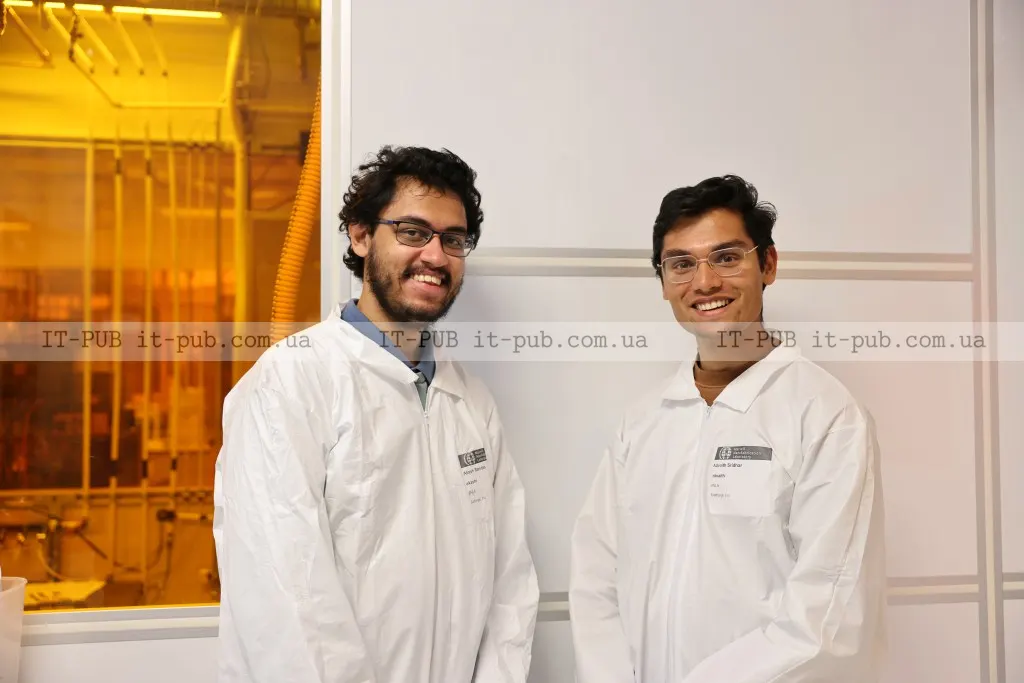
The startup raised a $9 million seed round to search for semiconductor materials that could cut heat in AI chips and ease data center cooling demands.
Discovered Materials is trying to use AI to address one of AI’s own biggest side effects: heat. The startup has raised a $9 million seed round and is building software to search for new materials that could help chips run cooler and more efficiently. According to IT-PUB News, that matters most in data centers, where AI chips push up electricity use and cooling needs. The idea has attracted attention because it combines frontier AI models with materials science, though the company still faces a familiar hurdle in this field: identifying candidates is only one part of the job.
The company says new semiconductor materials could help reduce that burden, but it has not yet shared full details of the materials it says it has found.
AI agents are searching for new materials
Discovered Materials was founded by Advaith Sridhar and Akash Ramdas. Ramdas holds a doctorate in materials science from Stanford, while Sridhar previously worked on agents at Persona AI and Luma Labs.
The startup has built a software pipeline that uses Anthropic models inside a custom system to generate ideas for materials. Those suggestions are then checked with foundational physics models the company has trained to simulate whether the materials are actually promising.
Sridhar said the setup lets the team explore far more possibilities than a human researcher could manage alone. He contrasted Ramdas’ earlier pace of around 20 guesses a day during his PhD with the company’s ability to run thousands of guesses a day by keeping agents working around the clock in the cloud.
The $9 million seed round gives it more room to test
The company said it recently closed the $9 million seed round after emerging from Y Combinator. The round was led by Lightspeed India Partners and also included Peak XV Partners, along with angel investors Paul Graham, Gokul Rajaram, and Thariq Shihipar.
That backing gives Discovered Materials more room to keep testing ideas in a field where progress can be slow and expensive. The company is not only building software — it is also trying to connect AI-generated suggestions with real-world lab validation.
The startup is focusing on chip heat
Discovered Materials is not trying to find materials for every industry. Instead, it is concentrating on thermal problems in semiconductor materials, especially chips overheating during AI workloads.
That narrow focus is part of the company’s strategy. It says it has already discovered several materials that match the properties of existing materials used by major chipmakers, though it has not disclosed more detail. It also released examples of hundreds of new materials and introduced its “Material Discovery Bench,” which is meant to measure how frontier models handle this kind of search task.
The company’s view is that a more targeted approach may help it stand out from other startups working on similar problems, including MatNex, SandboxAQ, and CuspAI.
A promising material still has to work in a real chip
Even if AI points researchers toward a promising material, that does not mean it will work in an actual chip. The source describes a key trade-off: a material might reduce heat or improve dissipation, yet still be too difficult to manufacture or have electrical properties that do not fit the job.
That is why the process is described as a kind of “whack-a-mole with atomic structures.” A usable material has to satisfy several requirements at once, which is what makes the search so difficult.
This is also where the broader limits of AI materials science become clear. The source says the industry still has not seen AI-discovered drugs or materials make a major commercial impact. Some promising results have appeared, including Insilico Medicine’s Renterosib reaching Phase II clinical trials and materials work from companies such as MatNex, Panasonic, and Citrine Informatics. But those outcomes have not yet turned into large-scale deployment.
Patents and lab work remain central to the plan
Discovered Materials plans to patent useful materials for GPUs, or the process of making chips from them, and then license those patents to chipmakers. Sridhar said the company hopes to have new materials worth patenting within the next year.
Even so, the startup is not presenting AI as a shortcut around the slow parts of science. Sridhar acknowledged that the work will require real wet-lab experimentation and that this part cannot be sped up. That is an important limit in the current wave of AI-driven discovery: software can narrow the search, but it cannot replace physical testing.
Lightspeed partner Hemant Mohapatra, who led the round, said the real bottleneck is not necessarily finding more candidate materials, but filtering them correctly and synthesizing them. He also said the ability to run a lab that can quickly test candidates, combined with Ramdas’ experience, is what makes Discovered Materials notable.
For now, the startup is positioning itself within the broader race to apply AI to science, while staying focused on one practical problem — keeping chips cooler as AI workloads keep pushing them harder.