Bluesky says DDoS attack caused 24-hour outage
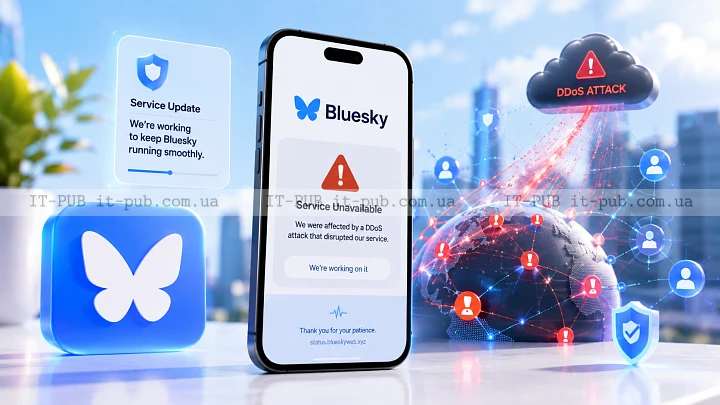
The social network said junk traffic overwhelmed its systems for a day, and that it has already strengthened defenses after the disruption.
Bluesky says its recent day-long outage was caused by a distributed denial-of-service, or DDoS, attack. On Monday, the social network said the disruption over the previous 24 hours came from a flood of junk traffic meant to overwhelm its systems.
The company said it has already upgraded its defenses and is still monitoring the situation. It did not give more details about the attack, and a Bluesky spokesperson did not immediately respond to TechCrunch’s questions. As IT-PUB News notes, Bluesky is describing the outage as an availability attack rather than a breach involving accounts or stolen data.
That distinction matters for users. A platform can still be knocked offline for hours even if attackers never break in, disrupting posting, messaging, and basic access.
Bluesky says junk traffic overwhelmed its systems
DDoS attacks are built to swamp a website or server with more traffic than it can handle. Rather than coming from a single source, that traffic usually arrives from many hijacked internet-connected devices working together as a botnet, or through a residential proxy network.
There is nothing subtle about the tactic. Attackers try to exhaust a service’s resources until it slows down or stops responding altogether. In Bluesky’s case, the result was a full day of disruption.
Bluesky has faced a similar outage before
This was not the first major traffic flood to hit the social network in recent months. In April, Bluesky suffered a prolonged series of outages caused by a similar kind of attack.
The source text does not say whether the April incident and the latest one are connected, so that remains unclear. Still, a repeat disruption is likely to draw attention from users and from people watching the security of fast-growing social platforms.
For a service built around constant availability, repeated outages can be especially damaging. Even short interruptions can frustrate users and raise questions about how resilient the platform is under pressure.
Forum claims add a possible political dimension
Security researchers discussing the attacks in the IFIN public forum said Iran-backed attackers have claimed responsibility for the latest incident. The source text does not independently verify that claim, but it adds a geopolitical angle to what might otherwise look like a routine cyberattack.
That means the attack is not being discussed only as a technical nuisance. It is also being viewed in the context of broader cyber activity tied to tensions involving Iran, U.S. businesses, and critical infrastructure.
The text says Iran has increased its attacks on U.S. businesses and critical infrastructure since the start of the U.S. and Israel-led war earlier this year. Bluesky enters that wider picture only to the extent that the latest outage is being discussed alongside those claims.
Repeated outages put pressure on Bluesky's defenses
For ordinary users, the immediate effect of a DDoS attack is simple: a service they rely on stops working. For the company behind it, the fallout can include reputational damage, higher security costs, and pressure to strengthen defenses quickly.
Bluesky says it has upgraded those defenses, but it has not explained exactly what changed. That leaves an open question about how well the platform can withstand similar attacks in the future.
The outage is also a reminder that digital services can be vulnerable when attackers target availability rather than access. Even without a data breach, a successful DDoS attack can be enough to disrupt communication and expose how much online platforms depend on constant protection behind the scenes.