Why the Most Popular Programming Languages Last
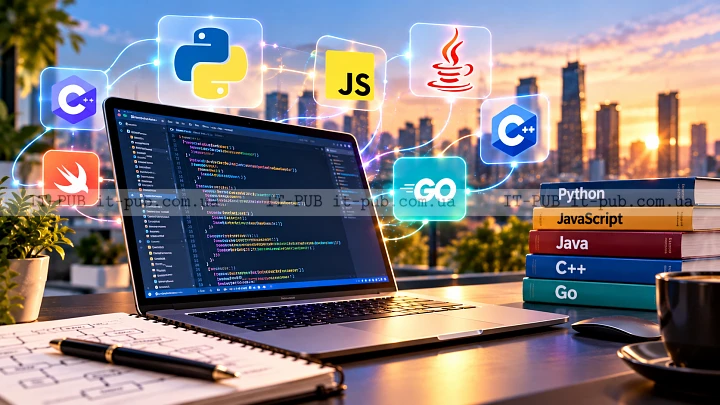
The most popular programming languages shape how software gets built, maintained, and expanded. They sit behind websites, mobile apps, cloud services, data tools, and the digital products people use every day. Still, popularity does not mean exactly the same thing for every developer or every project.
For beginners, popular languages are often easier to approach. There is usually more documentation, more community support, and a larger pool of learning material. For working developers, popularity often points to job demand, mature tooling, and a strong ecosystem. If you understand why certain languages remain widely used, it becomes much easier to choose well, whether you want to learn programming languages for the first time or sharpen your current stack.
Why some programming languages become popular
Programming languages become popular when they solve real problems in a practical way. That sounds obvious, but it explains why some stay relevant for years while others fade out.
A useful language helps people build software efficiently. If it is readable, maintainable, and flexible enough to handle different kinds of work, developers tend to stick with it. The surrounding ecosystem matters just as much. Libraries, frameworks, and tools can remove a lot of repetitive work and help teams move faster.
Community support is a big part of the picture too. When many developers use a language, it is easier to find answers, examples, tutorials, and open-source code. That lowers the barrier for newcomers and makes the language more workable in real teams.
Industry demand matters as well. Companies usually prefer languages that feel proven, stable, and backed by a large talent pool. Once a language becomes part of a business’s systems, it often stays there for a long time.
Popularity does not mean one best language
People often look for the best programming languages as if one clear winner exists. In practice, the right choice depends on what you are trying to build.
A language that works brilliantly for web development may be a poor fit for embedded systems. A language that is friendly for beginners may not be ideal for performance-critical software. Some languages are built with speed in mind. Others prioritize simplicity, safety, or fast development.
That is why any discussion of coding languages for beginners or experienced teams needs context. Popularity can tell you a language is broadly useful, but it cannot tell you whether it fits a specific technical need. The best language is usually the one that matches the project, the team, and the maintenance work that comes later.
Languages that stay widely used across many fields
Some widely used programming languages stay popular because they are useful in more than one area. They are not boxed into a single niche. You see them in web development, backend services, scripting, automation, and data work.
That range matters. Languages with broad ecosystems and plenty of learning resources are attractive to both newcomers and experienced developers. They are also easier for companies to hire for, which becomes important when software development languages need to support larger teams.
Adaptability is another reason they last. A language that works for both small scripts and large applications has a better chance of staying relevant. It can grow with the needs of a developer, a product, or a business.
What beginners should look for first
If you are just getting started, the most popular programming languages are often a sensible place to begin. Popular languages tend to come with more beginner-friendly material, more examples, and more community help. That can make the learning curve feel much less steep.
Readability matters a lot early on. A language with clear syntax lets you focus on core ideas instead of wrestling with the language itself. Variables, loops, functions, and conditionals are easier to understand when the code is not overloaded with complexity.
It also helps to choose a language that connects to something you actually want to do. Maybe you want to build websites, work with data, automate tasks, or create apps. Learning tends to go better when the goal feels concrete. Motivation counts, especially at the start.
Web development keeps certain languages in demand
Web development is one of the biggest reasons some languages remain among the most popular programming languages. Websites and web applications need both front-end and back-end code, and those layers often rely on different tools.
On the front end, languages shape how a site looks and behaves in the browser. On the back end, they handle business logic, databases, authentication, and communication with servers. Because modern web projects are built in layers, several languages can matter at the same time.
That is one reason the most popular programming languages so often overlap with web work. Developers want tools that are flexible, well supported, and compatible with common frameworks. Businesses want technology that helps teams move quickly without making long-term maintenance harder.
Data, automation, and scripting keep growing
A lot of people first meet programming through automation or data tasks rather than full-scale software development. That helps explain why some languages stay popular year after year. They are useful for scripting small tasks, processing files, connecting systems, and working with data.
In that kind of work, simplicity has real value. A language that lets you write short, readable scripts can save time and cut down on manual effort. It can also help teams automate repetitive processes without building a full application from scratch.
Data work adds another layer to the story. Analysts, engineers, and scientists often lean toward languages with strong libraries for cleaning data, analysis, and visualization. A language does not have to be the fastest to be effective. It has to make the work practical and dependable.
Mobile and app development influence language choices
Mobile development also shapes which languages remain popular. Apps for phones and tablets depend on specific tools, and language choice often follows the platform a team is targeting.
Some languages are closely linked to one ecosystem. Others can be used across platforms. That flexibility can be valuable for teams that want to reuse knowledge or code. It also matters for companies trying to reduce development effort without lowering quality.
App development tends to reward languages with strong tooling, solid performance, and clear support for user interfaces. When a language makes apps easier to build and maintain, developers have a good reason to keep using it.
Performance still matters, but not always in the same way
Performance comes up in almost every discussion about programming languages, but it helps to be specific about what that means. Fast execution matters in systems software, games, high-load services, and applications that need quick response times.
But raw speed is only one part of the equation. Development speed, maintainability, safety, and ease of hiring can matter just as much. A language that runs a bit slower may still be the better choice if it helps a team build, update, and support software more efficiently.
That is why the most popular programming languages are not always the fastest ones. In many cases, they are the languages that strike a useful balance between speed, usability, and ecosystem strength.
How to choose a language without getting lost in hype
It is easy to get pulled into rankings and programming language trends. Still, choosing a language should begin with purpose, not popularity by itself.
If your goal is to land a first job, look at the languages used in the roles you want. If you want to build personal projects, choose a language with enough learning material and practical use cases. If you want to work in a specific area, such as web development or data, focus on the languages commonly used there.
It is also worth thinking about long-term value. A language with a strong community is more likely to stay useful because updates, tutorials, and libraries keep coming. That matters when you are learning, and it matters even more when you have to maintain code over time.
A good choice usually gives you access to both knowledge and opportunity. Popularity can help with both.
Why learning one language makes others easier
Many beginners worry about picking the wrong first language. In reality, the first one matters less than the skills you build with it.
Once you understand the basics of programming, moving to another language gets much easier. The syntax changes, but the logic is familiar. Variables still store values. Functions still group reusable code. Loops still repeat actions. Conditions still guide decisions.
That is one reason starting with one of the most popular programming languages makes sense. It gives you a foundation in patterns that carry across much of software development. After that, learning another language is usually about understanding differences, not starting over.
What employers usually value beyond language names
Employers do care about language knowledge, but they care even more about what you can do with it. Knowing a popular language helps. Knowing how to write readable code, debug issues, work with version control, and understand software design matters more.
Developers with strong fundamentals adapt more easily to new tools. That flexibility matters in real teams, where requirements change and technology does not stand still. Companies often value people who can learn quickly over people who know only one syntax well.
That is why conversations about the best programming languages should stay grounded. A language can help open the door, but long-term progress comes from the way you think and work.
How the most popular programming languages evolve
Languages do not stay popular by accident. They change through updates, community feedback, and shifts in industry needs. New features can improve readability, safety, or performance. Tooling gets better. Frameworks make development smoother.
At the same time, older codebases do not vanish. Many companies still rely on software built years ago, so established languages continue to matter. The result is a mix of continuity and change. Popular languages survive because they can support modern development while still fitting into older systems.
This is one reason programming language trends are worth paying attention to. They show where the industry is moving, but they also highlight what remains stable enough to build on.
A practical way to think about language popularity
The most popular programming languages are popular for practical reasons, not just because they are fashionable. They are useful, adaptable, and backed by strong communities. They help people solve real problems in web development, data work, automation, mobile apps, and other areas.
If you are choosing a language, start with your goal and then look closely at the ecosystem around it. Think about learning resources, community support, job relevance, and the kinds of projects you want to build. Popularity is not everything, but it is a useful signal.
In the end, the best programming languages are the ones that help you build with confidence and keep learning over time. Popular languages make that easier because they give you more ways forward, not just more names to compare.