Apple TV adds built-in sign language to films
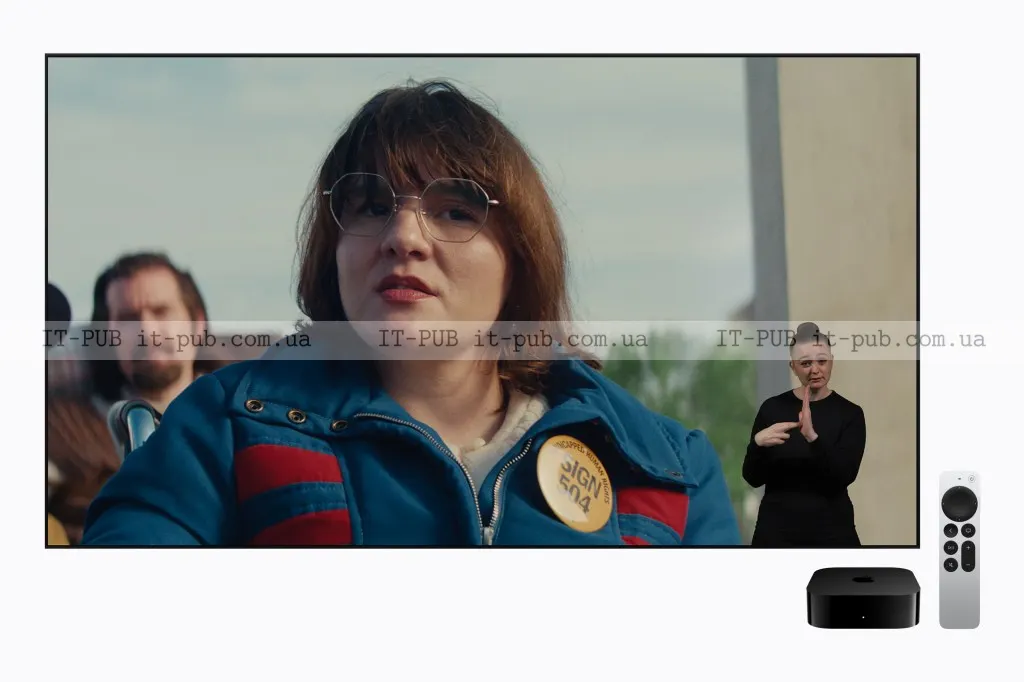
The feature starts Friday with “Being Heumann” and will expand to a handful of Apple titles later this year, with interpreters integrated into playback.
Apple TV is adding a sign language interpretation feature to its streaming service, starting with a small group of films and shows for Deaf viewers. The rollout begins this Friday with “Being Heumann,” a biopic about disability rights activist Judy Heumann, and Apple says more titles will follow later this year. The change is notable because Apple is not releasing separate versions of films for sign language users. Instead, it is building the option directly into playback, more like closed captions.
That approach makes sign language part of the viewing experience inside the same title, rather than a separate product aimed at a narrower audience. For viewers, that is the practical shift.
Sign language will appear inside the film
When the feature is turned on, an interpreter appears in the bottom right corner of the screen while the title is playing. Apple says the interpretation is designed to match the tone of each film, and the company worked with DASLs, or Directors of Artistic Sign Language, to shape how it appears.
Apple also says it is not using AI-generated interpreters. According to IT-PUB News, the company said that is not what the Deaf community has said it needs. That gives the launch added weight in a broader discussion about accessibility tools, including who designs them and how those decisions are made.
The first supported titles will be limited. Alongside “Being Heumann,” Apple said American Sign Language and British Sign Language will be available for its film “F1.” Later this year, the company plans to add more titles, including “Way of the Warrior Kid” and “Greyhound.”
How viewers can enable the feature
The new option is included in the latest release of iOS 27.2. Users can turn it on through a new sign language setting in Settings. Once enabled, supported Apple Original titles on Apple TV will show a new button indicating that sign language is available.
Apple is also labeling those titles with a sign language icon on the title page, alongside other accessibility features such as closed captions and audio descriptions. Under languages, viewers will be able to see which sign languages are available for each title.
The company is also trying to make the feature easier to find. Apple TV will highlight supported films and shows in a curated collection called “Movies & Shows with American Sign Language.” Users can also search for them by entering terms such as “with ASL.”
Apple ties the update to its accessibility work
Apple is presenting the release as part of its broader accessibility efforts, which the company says it develops in-house. In its statement, Sarah Herrlinger, Apple’s senior director of Global Accessibility Policy and Initiatives, said Apple believes everyone should be able to enjoy stories and entertainment.
That makes the update more than a simple interface change. For Deaf audiences, the difference is direct: instead of relying only on captions, viewers can access sign language interpretation built into supported titles. For people who prefer sign language as their primary way of consuming media, that could make some content easier and more natural to follow.
The launch also points to a wider issue in accessibility design. Adding features is one part of the work; deciding what form those features should take is another. Apple’s decision to avoid AI-generated interpreters suggests the company is responding to concerns about whether automated tools can properly serve the people they are meant to help.
The rollout is small, but the approach stands out
For now, the feature applies only to a limited number of Apple Original titles, not the full Apple TV catalog. So this is not a service-wide shift yet. Apple has announced only a few films for the initial rollout, and the near-term scope remains narrow.
Still, the update matters because of how Apple is implementing it. Rather than treating sign language support as an extra version of a film, the company is making it a built-in playback option shaped with input from sign language specialists. Even with a small launch, that sets a clear direction for how Apple wants accessibility to work on Apple TV.