Meta brings Muse AI to Apple Watch and Wear OS
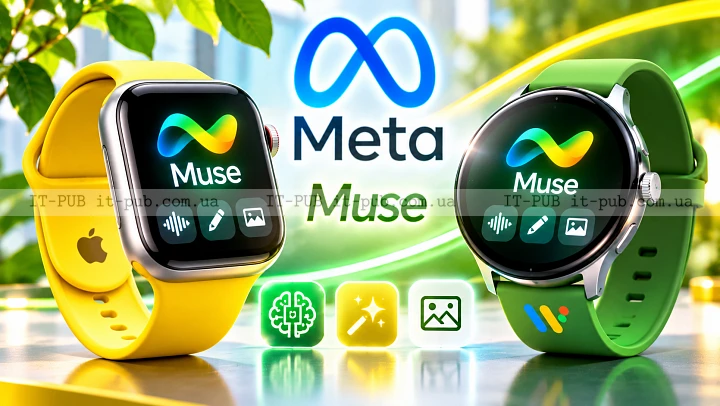
Meta has added Muse to Apple Watch and Wear OS, letting users reach the assistant by voice, text, or dictation directly from their wrist.
Meta is bringing its Muse AI assistant to Apple Watch and Android’s Wear OS, giving users a new way to access the company’s consumer AI product from their wrist. The update pushes Muse further into everyday use, beyond phones and tablets and into a device people often use for quick tasks. It also underlines Meta’s effort to make Muse a bigger part of its ecosystem. The rollout comes as the assistant is still picking up new features at a brisk pace.
Muse arrives on smartwatches
Meta announced on Monday that Muse is now available on Apple Watch and Wear OS. On smartwatches, users can interact with the assistant through voice calls, text messages, or dictation directly on the device.
That gives Muse another entry point in moments when reaching for a phone is less convenient. On a watch, the assistant is positioned for shorter, faster interactions — the kind of use that fits a device worn throughout the day.
Meta framed the update around constant availability, saying Muse works “around the clock” and is now on the wrist. Promotional language aside, the change itself is simple: Muse is moving beyond phones and tablets into another everyday device category, as IT-PUB News notes.
Meta is widening Muse’s presence across devices
The smartwatch launch follows a dedicated iPad app that Meta introduced just a month earlier. Muse first arrived on the App Store in September, and its expansion across Apple devices suggests Meta wants the assistant available wherever users already spend time.
That puts Muse inside a broader ecosystem rather than leaving it as a standalone app. For users, that could mean easier access across devices. For Meta, it signals a clear push to keep Muse visible as the consumer AI market gets more crowded.
The company has been moving quickly. The smartwatch version arrived soon after the iPad release, showing Meta is leaving little gap between updates as it tries to build momentum around the product.
Meta wants Muse to handle everyday tasks
Muse is one of many consumer-facing AI agents competing for attention. Like similar assistants, it can connect to user accounts to help manage email, meetings, bills, and other routine tasks.
It can also carry out more practical actions such as booking reservations, ordering groceries, setting goals, and making purchases. That makes Muse more than a chat tool. Meta is positioning it as an assistant for everyday digital chores, which helps explain why the product is drawing attention.
The assistant also includes personalization features. Users can change their Muse avatar and make it look like a person, an animal, or another kind of character. That gives the product a more visual and customizable identity in a market where many AI services can otherwise feel similar.
Meta keeps shipping new Muse features
Meta has not slowed down since Muse launched. A few days ago, the company introduced Spaces, a new way for users to communicate and collaborate with the assistant.
Spaces are described as dedicated conversations built around specific topics. Meta calls them “custom experiences,” saying they are mini apps created on the fly. In practice, they appear in the sidebar of the Muse interface and open a focused conversation where the AI agent works toward a particular goal for the user.
Last week, Meta also rolled out video chat with the Muse AI avatar for users in the U.S. The company said the avatar would use “subtle expressions and gestures” that match the tone and context of the conversation. Meta also said Muse does not actually see users, but can hear them and respond in real time.
Together, those updates show Meta building Muse into a more layered product, with different ways to interact depending on the device and the task.
Fast growth puts more weight on Meta’s AI push
Muse’s expansion is happening against a backdrop of strong early adoption. Shortly after launch, it became one of only 12 mobile apps to pass 10 million U.S. downloads within its first 40 days in the App Store.
That is a notable milestone because only 11 other apps had reached the same mark before, and Meta’s Threads was the most recent to do so in July 2023. The figure does not say everything about long-term use, but it does show Muse entered the market unusually quickly.
For Meta, that early traction may help justify the rapid rollout of new features and new platforms. For users, it means the assistant is appearing in more places very quickly, which can be convenient but also makes Muse’s growing role in personal digital life harder to miss.
Meta is clearly treating Muse as more than a novelty. By bringing it to smartwatches, adding new conversation modes, and extending it across Apple and Android devices, the company is trying to make the assistant part of daily routines. That is what makes the rollout stand out: Muse is no longer limited to a single app or screen, and Meta is moving fast to keep expanding its reach.