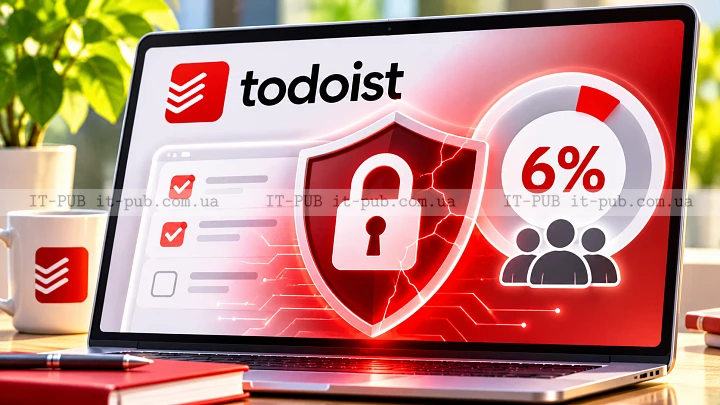
Todoist says breach exposed data for 6% of users
The company says a hacker used stolen credentials to reach production systems, exposing customer data and triggering password, token, and access changes.
Todoist has confirmed a data breach that affected about 6% of its customers after a hacker used stolen credentials to get into the company’s production systems. The task management app said the attacker accessed customer data including email IDs, password hashes, and account creation dates.
The company says this was not a random break-in but a credential-based attack that moved through several internal systems. Todoist has since blocked the access route, reset passwords as a precaution, and disabled the Todoist for Outlook email add-on.
For users, the issue goes beyond one app. In some cases, the attacker also looked for credentials tied to other services, which raises the stakes for anyone who stored tokens, keys, or similar details inside Todoist.
Stolen credentials opened a path into internal systems
According to Todoist, the hacker used stolen credentials to enter its version control system and source code environment between November 22 and 23. From there, the attacker changed employee access controls and then reached the company’s cloud infrastructure through an employee’s work account.
Todoist said the hacker downloaded credentials belonging to early users, whose passwords had been stored with an older hashing method. The company also stressed that the attacker did not change any source code during the intrusion.
As IT-PUB News notes, the company describes the incident as a chain of access through internal systems rather than an attack that relied on a software flaw. A stolen login, in this case, was enough to open the way further in.
The breach included account data and some user content
Todoist said the stolen information included email IDs, password hashes, and account creation dates. For a small number of users — about 0.001% of the userbase — the attacker also searched through tasks, comments, and attachment names to look for credentials tied to other services, such as API keys and access tokens.
The company also said the hacker pulled Todoist API tokens and Slack integration tokens. In addition, the attacker looked for emails, addresses, and attachment file names through the Todoist for Outlook extension, if it was connected to accounts and had permission to read emails.
That makes the incident more serious than a simple account-data leak. Some of the exposed material could potentially be used to reach other services if users had stored related credentials or keys inside Todoist.
Todoist asks users to change passwords, tokens, and stored keys
Todoist said it has notified affected users and asked them to reset their credentials. The company also told people to change login details elsewhere if they used the same password in other places.
It is also asking users to update API tokens, reconnect integrations, and revoke or replace any access keys, recovery phrases, or credentials they had stored in Todoist comments.
The practical impact may stretch well beyond Todoist itself. Users may need to check connected services too, especially where tokens or keys were reused or stored in notes and comments.
Todoist changed internal access after the incident
Todoist said it has reset its internal access structure and changed how remote command execution works in its cloud environment to reduce the chance of a similar incident happening again. It also blocked the attack path and disabled the Todoist for Outlook email add-on.
The company’s founder and CEO, Amir Salihefendić, apologized to users on X and said Todoist will take a closer look at why the incident happened.
Todoist said this year has already seen other companies hit by the same type of attack, including Uber and Klue. For users and businesses, the case is a reminder that stolen credentials can have consequences far beyond a single compromised account, especially when a service holds sensitive notes, integration tokens, or other access details.