Spotify will label AI Persona artists on profiles
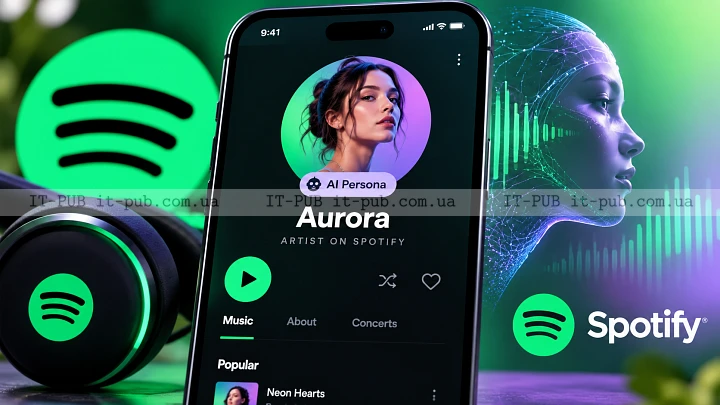
Badges start appearing in mid-September, and labeled profiles will be kept out of editorial and algorithmic recommendations by default.
Spotify is changing how it handles AI-generated artist identities on its platform. The company says it will add “AI Persona” labels to profiles that represent synthetic identities rather than real people, while also keeping that music out of editorial and algorithmic recommendations by default.
The move puts Spotify in the middle of a growing debate over AI-made music. It is still expanding its own AI features, but it is also trying to respond to concerns that synthetic content could overwhelm music services. According to IT-PUB News, Spotify says the new labels are meant to help users distinguish between real artists, AI Personas, and other forms of AI-assisted music.
AI Persona badges will appear across Spotify
Starting in mid-September, some artist profiles will begin showing an “AI Persona” badge. Spotify said the label will appear in several places, including the profile banner, the About section, Search, and track rows inside playlists.
The badge is meant to show that the artist identity is AI-generated and does not represent a real person. Spotify said artists will be able to identify themselves as AI Personas, but the company will not rely only on self-disclosure.
Instead, Spotify plans to review profiles on its own and look for cases where the artist name and imagery appear to represent photorealistic AI-generated identities. The company said it will begin with profiles that meet pre-defined audience thresholds, so more widely listened-to artists are covered first.
Labeled profiles will be left out of recommendations
Spotify is also changing how these profiles reach listeners. Once an artist is labeled as an AI Persona, its music will not be included in editorial or algorithmic recommendations.
That also means the tracks will not appear in personalized recommendations unless a user already follows the AI Persona. Spotify described that as a clear signal from the listener, since following an artist is a direct choice to hear more from them.
The company did not say it would remove this music from the platform. The main shift is around visibility and discovery — two factors that can strongly affect how many listeners a profile reaches.
Spotify says the badge refers to identity, not production
Spotify stressed that the AI Persona badge is not a judgment on how the music was made. The label refers to the artist’s public identity, the company said, not the production process behind a track.
That matters because Spotify is also preparing to show more information about how music itself was created through other tools, including AI Credits and SongDNA. In practice, the company is separating one question — who the artist is — from another: how the song was produced.
Spotify also said artists will be able to appeal if they believe the label was applied incorrectly. It did not give details on how that appeal process will work.
Spotify ties the move to low-quality synthetic content
The change comes as music platforms and labels grapple with a growing volume of AI-generated content. Spotify described the problem as a flood of low-quality material that AI makes easier to mass-produce, and warned that letting it spread could hurt the listening experience and even lead to subscription cancellations.
At the same time, Spotify is not stepping away from AI. The company already offers AI-powered features such as Prompted Playlists, AI DJ, and chat, and has said more AI-related tools are on the way, including AI remixes.
That leaves Spotify walking a narrow line. It wants to use AI in ways that help listeners, while limiting synthetic content that may be seen as repetitive, misleading, or simply unwanted.
Spotify also acknowledged a broader consumer backlash against AI-generated art. In its announcement, the company said its programming is focused on elevating music from “authentic artists building careers in music,” even as it gives artists some freedom in how they present themselves.
Users will be able to report unlabeled AI Personas
Spotify is also preparing another tool that could make the system more active. In the coming months, users will be able to report artist profiles that appear to be AI Personas but have not yet been labeled.
That adds a community layer to Spotify’s review process and suggests the company expects some profiles to slip through its initial checks. It also shows the system is not meant to stay fixed once the first labels go live.
The timing matters. Spotify said artists will be able to self-disclose as AI Personas starting on August 11, 2026, through Spotify for Artists. The labels themselves will begin appearing next month.
The new labels could reshape discovery on Spotify
For listeners, the most immediate effect is clearer identification. A profile badge should make it easier to tell whether an artist is a human performer or an AI-generated identity before pressing play or following the profile.
For the music business, the bigger issue may be discovery. Recommendation systems play a major role in how tracks find an audience, so excluding AI Personas from those channels may sharply limit their reach unless listeners actively seek them out.
The labels also help Spotify separate AI Personas from another kind of AI content it is preparing to allow: AI-generated remixes and covers under recent licensing deals with UMG and Merlin. Those agreements are expected to permit fan-made remixes and covers while still directing money back to participating artists.
Spotify’s announcement draws a clearer line inside its AI strategy. Some uses of AI are being built into the product, while AI-generated identities are being pushed away from the platform’s main discovery systems.