Medium launches TK for AI-assisted writing
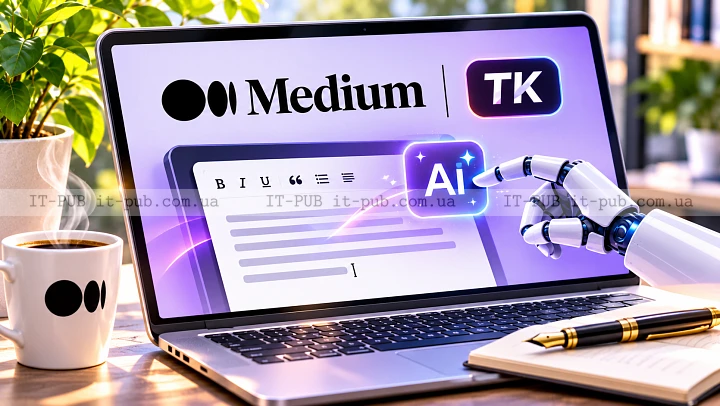
The new web app lets writers call up AI inside the editor, while Medium also pushes for disclosure around how AI shapes a draft.
Medium has launched TK, a new app that brings AI directly into the writing process. The company says it is designed to help people turn ideas into text more easily by letting them summon an assistant inside the editor. The launch also drops into an ongoing debate over how much AI should shape writing, and how clearly that influence should be disclosed. That tension is part of the story from the start.
TK is not just another note-taking tool with a chatbot bolted on. Medium is presenting it as a writing environment where AI can help from the earliest stages of drafting, not only after a text is already finished.
TK puts AI help inside the editor
The main feature of TK is a built-in assistant that users can call up by typing “@TK” and then entering a request or prompt. Medium says that could help with quick factual checks that might otherwise require leaving the app, such as asking how many days are in a given month.
The app is also designed to pull in material a user has already saved while developing an idea. In other words, TK is meant to help writers work with their own unfinished thoughts, notes, and fragments instead of starting from scratch each time.
Medium says the app will also include skills for editorial feedback, headline feedback, and matching a draft to the style guide used by Medium publications. So TK is positioned as more than a brainstorming tool — it is meant to help shape copy before publication.
Medium gives a publishing placeholder a new job
The name TK comes from a term long used in publishing and journalism. Traditionally, “TK” marks missing information that will be added later. It stands for “to come,” with the unusual “K” helping the placeholder stand out in text.
Medium is reworking that familiar label for a different purpose. In this app, TK is supposed to help fill in those missing parts rather than simply mark them. As IT-PUB News notes, the company is taking a term tied to unfinished copy and turning it into the name of a tool meant to help complete it.
That fits the broader product idea: AI as a drafting helper, not just a post-writing assistant.
The launch touches the authorship debate directly
TK arrives while the publishing and literary worlds are still wrestling with AI’s role in writing. Medium’s approach is likely to draw attention because it places AI at the very beginning of the drafting process, where questions about authorship are especially sensitive.
The source text notes that multiple authors have lost book deals over suspicions that they used AI to write, and that some literary awards have also faced scrutiny when winners were suspected of using AI assistance. In that context, a tool that openly invites AI into drafting is likely to raise questions.
There is also a practical concern here. Writers have long used software to proofread or make light grammar corrections, but concern is growing that AI suggestions can drift from editing into actual writing. That is where the line gets harder to define: if an assistant helps generate the wording, is the final text still primarily the writer’s own work?
Medium’s launch lands squarely in that dispute.
Medium backs transparency while embracing AI
The company does not sidestep those concerns. It says TK allows authors to publish notes explaining how AI was used in their work. Medium describes that as part of what it believes will be needed to publish in the AI era: clear, transparent, and inspectable provenance of writing, including prompting and source material.
At the same time, Medium’s public stance is clearly pro-AI. The company says artificial intelligence makes writing more important, not less, and argues that AI can amplify human intelligence while relying on the written word as its foundation.
That framing matters because it shows where Medium is placing its bet. Rather than treating AI as a threat to writing, the company is presenting it as a tool that can expand what writers do. But it also acknowledges that AI can produce low-quality content and blur the line between human-written and AI-written work.
That tension sits at the center of the launch. Medium wants to support AI-assisted writing while also acknowledging the editorial and reputational risks that come with it.
TK also adds project memory and collaboration tools
TK is not limited to generating or improving text. Medium says it can also help users remember and organize what they have written before, and it can suggest prompts to move a draft forward.
The app can optionally connect to a user’s own AI agent through TK’s MCP server or Claude skill. Medium says this can help the app better understand a user’s projects, positions, and other ideas stored in the agent’s memory. For people already working with AI systems, that could make TK feel more connected to the rest of their workflow.
There is also a social layer built into the app. Medium says writers can share early drafts with others and gather feedback, keeping the product tied to the collaborative side of writing rather than making it a purely private drafting tool.
Still, the company notes that writing in TK is not encrypted because the app is designed for collaboration. Users will be able to set access control permissions, but the lack of encryption may matter to people who are cautious about storing early drafts in a connected writing environment.
TK starts on the web, with more planned
TK is available on the web at launch, and Medium says a desktop app is planned. The app can import and export Markdown, though Medium says it is not itself a Markdown app.
Medium also says TK will be free for people with a Medium account. That could help the company persuade writers to try it early, especially in a crowded and sensitive area where trust matters as much as features.
For now, TK looks less like an attempt to replace the writing process than to change where AI sits inside it. Medium is betting that writers will want help before a draft is complete, not only after the fact — and that leaves the app tied, from day one, to the harder question of how authorship should be defined when AI is part of the work.