Mamdani criticizes MSG owner over face-scanning
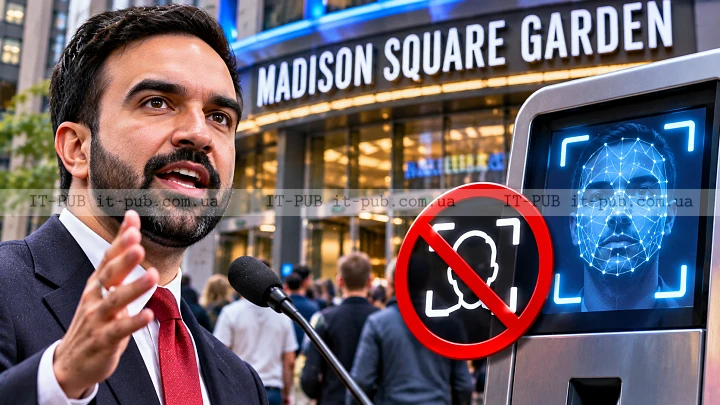
The New York City mayor backed proposed limits on biometric tracking after reports about Madison Square Garden’s surveillance practices.
New York City Mayor Zohran Mamdani has publicly criticized Madison Square Garden owner James Dolan over the use of surveillance technology, saying it should not be allowed. His comments add political weight to a growing debate over biometric tracking in public spaces, after Wired’s reporting raised questions about how the company identifies and monitors visitors.
Mamdani made the remarks in an interview with Wired on Tuesday. He said surveillance technologies are “indicative of much that is wrong in our country today” and pointed to local legislation aimed at restricting biometric data collection, including facial recognition, across the city. As IT-PUB News notes, the issue has moved beyond venue security and into a wider public argument about privacy and oversight.
Mamdani backs a local biometric ban
The mayor said City Council member Shahana Hanif has introduced two pieces of legislation designed to ban the collection of biometric data in public places in New York City. According to Mamdani, the draft measures are “an important response to this kind of an issue.”
That places city leadership more directly into a broader discussion about how much monitoring should be allowed in venues that draw large crowds. The issue is not just technical. It also touches on privacy, public trust, and whether businesses should be able to use tools that can identify people without their direct involvement.
The source does not say the legislation has passed. It is described as draft legislation, meaning it remains a proposal rather than an existing rule.
Wired reports put Madison Square Garden under scrutiny
Mamdani’s comments follow a series of Wired reports about how Madison Square Garden owner James Dolan allegedly uses surveillance cameras and face-scanning technology to track people across and outside its venues.
One of those reports said Dolan’s company keeps a database that, among other things, labels some visitors, including celebrity performers, as “LGBTQIA,” for reasons that are not clear. That drew attention because it suggested the system may be used not only to identify people, but also to categorize them in ways that were not explained.
Dolan later sued Wired over its reporting. The source does not provide further details about the lawsuit.
The reporting turned the company’s surveillance practices into a public issue rather than an internal security matter. That matters because facial recognition in places like arenas and theaters can affect ordinary visitors as well as public figures, and people may not always know when they are being scanned or how the data is being used.
A 2021 Radio City ban still shapes the debate
The controversy is not new. In 2021, MSG made headlines after a woman was barred from Radio City, another venue owned by Dolan, after facial recognition systems identified her as an attorney at a law firm that was suing Dolan’s company, even though she was not involved in the case.
That incident helped turn a technical question into a broader social one: whether biometric systems can create consequences for people who are not the intended target. In this case, the source indicates that recognition technology was linked to a ban from a venue, showing how surveillance tools can directly affect access to public entertainment spaces.
The current debate builds on that history. It is not only about whether the technology works, but also about who gets flagged, who decides what happens next, and how much oversight exists when private companies use such systems.
MSG disputes the reporting and pursues legal action
When reached by TechCrunch, Madison Square Garden spokesperson Mikyl Cordova rejected the Wired reporting, calling it “inaccurate and false.” Cordova added that MSG is pursuing legal remedies, but did not provide evidence to support the claim.
That leaves the dispute unresolved in the source material. On one side, Mamdani is aligning himself with efforts to curb biometric surveillance in public places. On the other, MSG is disputing the reporting that brought the issue back into focus.
For visitors, the practical concern is straightforward. Biometric systems can identify people quickly and quietly, but they also raise questions about error, transparency, and consent. For businesses, they may be seen as security tools. For critics, they can become a way to monitor and sort people in ways that are hard to challenge.
New York already requires biometric disclosure
New York City has required businesses since 2021 to disclose when they are collecting biometric data from visitors. That rule does not amount to a ban, but it shows the city has already taken some steps toward transparency.
The new legislation mentioned by Mamdani would go further if it becomes law. Based on the source, its goal is to stop the collection of biometric data in public places, including the use of facial recognition.
That would mark a significant change for venues and other businesses that rely on surveillance systems, shifting the debate from disclosure to restriction. For the wider public, it could mean stronger limits on how much personal data can be gathered simply by entering a building or walking through a public space.
For now, the dispute remains centered on the same basic question: how much surveillance is acceptable in a city where entertainment venues, private companies, and public life often overlap.