How to Choose a Smartphone for Everyday Use
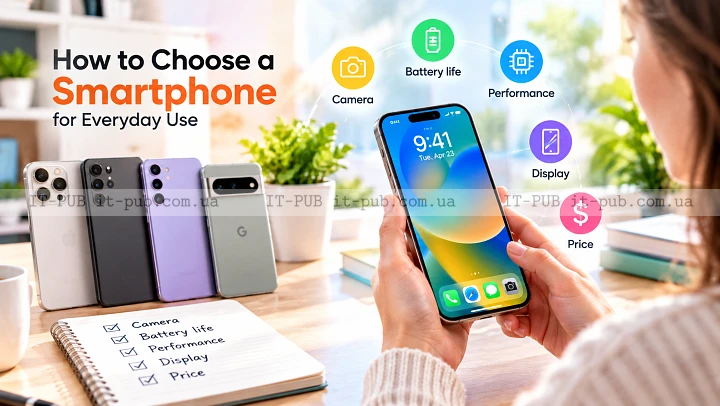
Choosing a smartphone for everyday use is usually less about chasing the newest specs and more about getting the balance right. Most people simply need a phone that feels reliable, comfortable, and easy to live with from morning to night. In many cases, the right pick is the one that suits your habits, not the one with the longest spec sheet.
A good phone should handle everyday tasks without fuss, last through the day, and feel good in the hand. Once you know what actually matters to you, the whole decision gets a lot easier.
Start with how you actually use your phone
Before you compare models, take a step back and think about your routine. Some people mostly message, browse, use maps, and check email. Others spend more time on photos, video, gaming, or jumping between lots of apps.
That difference matters. A phone that makes perfect sense for one person can be excessive for someone else. If your usage is light, you probably do not need a top-end processor or a huge amount of memory. If you multitask heavily or want to keep your phone for years, paying more for a stronger device can be justified.
The simplest approach is to focus on the things you do most often. That makes it easier to see what deserves your budget and what you can safely ignore.
Battery life matters more than flashy specs
For daily use, phone battery life is one of the biggest factors. A phone can have a sharp display and a fast chip, but if it struggles to make it through the day, that quickly becomes annoying.
Look for a device that can handle your usual routine without making you think about charging all the time. Endurance is not just about battery capacity. Software efficiency, display brightness, and your own habits all play a part. Big screens, lots of streaming, and mobile gaming will drain power faster.
Charging speed matters too, mainly for convenience. If you often forget to plug in your phone overnight or need quick top-ups during the day, faster charging can help. Still, strong battery life should come first. Fast charging is useful, but it does not make up for weak stamina.
Pick a screen that is easy on the eyes
You interact with the display constantly, so comfort matters. For everyday use, you do not need the most advanced panel on the market. You just need a screen that is bright enough, clear enough, and pleasant to look at.
Screen size comes down to preference. Larger displays are better for reading, browsing, and watching video. Smaller phones are easier to hold and easier to fit into a pocket. There is no single right answer here. It depends on whether you care more about one-handed comfort or a larger viewing area.
Smartphone display quality affects daily comfort more than many buyers expect. Text should look sharp, colors should feel natural, and brightness should be good enough for outdoor use. If you spend a lot of time outside, sunlight visibility matters a lot.
Performance should match your routine, not your wish list
A lot of buyers get pulled toward processor names and benchmark scores, but phone performance for everyday tasks is easier to judge in real use. A phone should open apps quickly, switch between them smoothly, and stay responsive during common tasks.
For messaging, social media, web browsing, navigation, and streaming, most modern mid-range phones are already enough. If you keep many apps open, edit photos regularly, or play demanding games, then stronger performance and more memory will make a difference.
RAM and storage deserve attention too. Enough RAM helps with multitasking. Enough storage keeps the phone from filling up too quickly with apps, photos, and downloads. If you tend to keep a lot of media on your device, storage may matter even more than raw speed.
The safest choice is usually the phone that feels consistently responsive in normal use. That matters more than a device that sounds impressive on paper but feels clumsy in daily life.
A camera should fit real-life moments
For many people, the camera is one of the main reasons to upgrade. Still, the best camera for everyday photos is not automatically the one with the most lenses or the longest list of features.
Think about what you actually shoot. If it is mostly family pictures, food, pets, documents, or casual travel moments, you want a camera for everyday photos that is quick, consistent, and easy to use. Reliable automatic results matter more than manual controls you may never open.
Low-light performance is worth checking if you often take photos indoors or in the evening. Sharpness, color balance, and autofocus speed also shape how useful the camera feels from day to day. A phone that gets decent shots with little effort is often more satisfying than one that demands careful setup.
Video can matter too, especially if you record clips for work, family, or social sharing. If that is important to you, pay attention to how clear and stable the footage looks in real use.
Build quality affects everyday comfort
A smartphone is something you handle all the time, so the physical design matters more than it may seem. It should feel secure in the hand, not slippery or awkward. Weight is part of that too. A very heavy phone can become tiring, especially during long sessions.
Materials and overall build quality also affect durability. A solid phone is less likely to feel fragile in everyday use. That does not mean it has to be expensive. Even a modest device can feel well made if the design is balanced and the buttons are easy to reach.
If you often carry your phone in one hand, in a pocket, or in a bag, comfort becomes even more important. A beautiful phone that feels annoying to hold will lose its appeal quickly.
Don’t overlook software and updates
Software can matter just as much as hardware. A clean, intuitive interface makes a phone easier to live with. Cluttered menus, confusing settings, and too many preinstalled apps do the opposite.
It is also worth checking how long the phone is likely to receive software and security updates. Updates help keep the device secure and can improve stability over time. For many buyers, that is one of the most practical reasons to choose a well-supported model.
This matters even more if you plan to keep the phone for several years. A device that stays secure and usable for longer often gives better value than a cheaper one that feels outdated too soon.
Storage and connectivity should fit your habits
Storage is one of those things people often underestimate. If you take lots of photos, save music offline, download videos, or install large apps, space can disappear faster than expected. Cloud services can help, but local storage still matters for convenience.
Connectivity is another part of the everyday experience. Make sure the phone supports the networks and wireless features you need. Reliable Wi‑Fi, Bluetooth, and mobile data all make a difference. If you use wireless earbuds, a smartwatch, or in-car connectivity, compatibility is worth checking.
For some people, dual SIM support or eSIM will also be useful. That depends on how you handle work and personal numbers, travel, or mobile plans.
Think about repairability and long-term value
A smartphone is not just a purchase for today. It is something you will probably use every day for a long time, so long-term value matters.
A phone that is built well, supported with updates, and easier to repair can be a smarter buy than a cheaper model that ages badly. Case availability, screen protection, and access to service can also affect how practical the device is over time.
It makes sense to compare the whole ownership experience, not just the starting price. A slightly more expensive phone may turn out to be the better deal if it lasts longer and stays pleasant to use.
Match the phone to your budget without overthinking it
Budget matters, of course, but it should not be the only thing guiding the decision. The goal is not to buy the most expensive phone you can justify. It is to find the best fit for your needs.
If your everyday use is fairly simple, a well-chosen mid-range phone often offers excellent value. If you rely on your phone for work, photography, or heavy multitasking, spending more may make sense. The key is paying for features you will actually use.
Try not to buy based only on spec sheets or marketing language. A phone can look powerful and still be frustrating if the battery is weak, the software is messy, or the size just does not suit you.
A simple way to compare phones
When you narrow down your options, compare them against your own habits. One phone may offer better battery life, another may have a stronger camera, and a third may simply feel better in the hand. The right choice depends on which trade-offs matter most to you.
If possible, test the phone in person. Hold it, look at the screen, and imagine using it through a normal day. If that is not possible, a good smartphone buying guide or review that focuses on real-world use will be more useful than one built only around technical data.
A good everyday phone should feel dependable in ordinary situations. It should not demand much attention. It should just work.
What usually matters most for daily use
For most people, the main priorities are pretty simple: battery life, display comfort, smooth performance, and a camera that handles common moments well. After that come storage, software support, and build quality.
The best smartphone for daily use is the one that fits your routine without forcing too many compromises. Some people want a compact phone. Others prefer a larger screen. Some care most about photos, while others want long battery life and easy navigation.
Once you focus on real needs instead of marketing claims, it becomes much easier to understand how to choose a smartphone for everyday use. In the end, the most practical phone is often the one you stop noticing, because it quietly does its job well.