Caterpillar brings mining automation lessons to AI
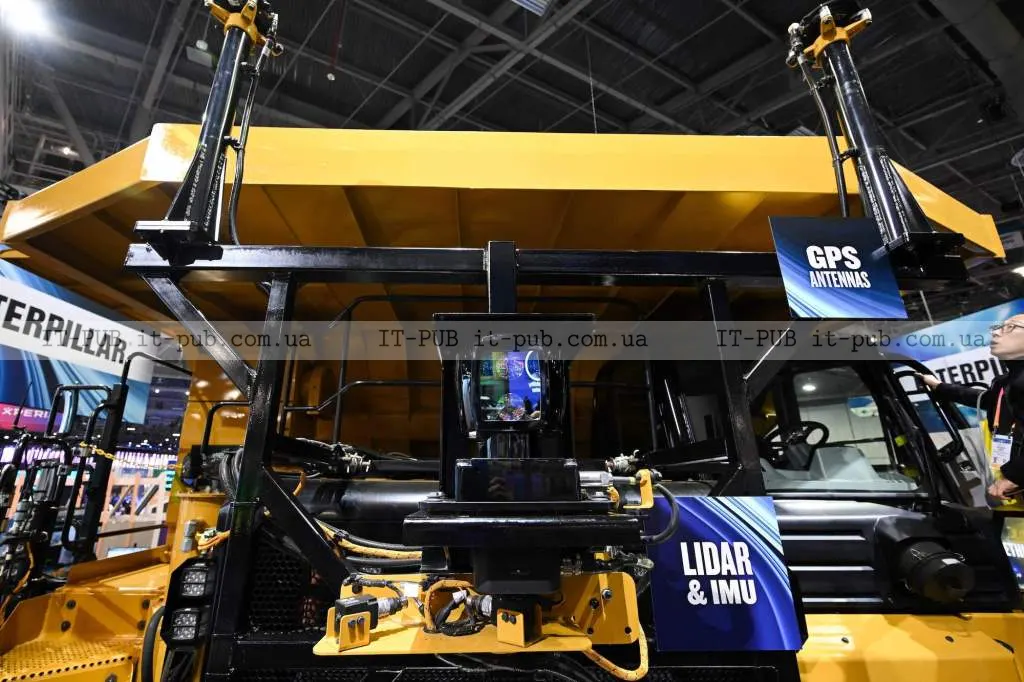
The company says the bigger challenge is fitting AI into real jobsites and workflows, and plans to spend $100 million on employee training.
Caterpillar is drawing on decades of mining automation as it pushes artificial intelligence deeper into everyday industrial work. The company says the real challenge is not building AI tools, but making them fit actual jobsites, workflows and existing operations. That makes its approach relevant beyond Caterpillar itself, for businesses trying to move AI past pilot projects and into regular use.
Its strategy starts in mining, where automation has long been useful because of labor shortages and dangerous working conditions. Now Caterpillar is trying to carry that model into less predictable settings, including construction sites, quarries and other dynamic environments. According to IT-PUB News, the company is framing that shift as a practical deployment problem as much as a technology one.
Caterpillar expands beyond autonomous mining trucks
Caterpillar’s autonomous business began with mining equipment and has since spread across a broader set of machines and systems. The company sells automated haul trucks, drilling equipment, underground loaders, dozers and remote-controlled construction machinery. It also offers supporting software, including a command center for operations, fleet management tools and remote terrain intelligence.
Speaking at the Ai4 conference in Las Vegas earlier this month, Caterpillar CTO Jaime Mineart said the company is now trying to apply what it learned in mining to environments that are less controlled and more complex.
“Now we’re in this super exciting time where we can take all of that learning from mining and bring it into much more dynamic environments, jobsites, quarries, and construction sites,” Mineart told TechCrunch.
That matters because industrial AI is not just about a machine making decisions on its own. It also depends on how workers, equipment and software work together under real-world conditions.
The Cat AI Assistant is already being used in the field
One of Caterpillar’s newer AI tools is the Cat AI Assistant, built to help technicians working directly next to a machine. Using voice commands, they can pull up repair procedures, troubleshoot possible problems and identify parts that may be needed before a repair starts.
Mineart said the assistant is already being used by customers, operators and technicians. The tool relies on Caterpillar’s own data, including information generated by connected machines.
That data pool is large. Mineart said Caterpillar has about 1.6 million connected assets worldwide and more than 16 petabytes of structured data. That gives the company a substantial internal base for training and deploying AI tools, especially in maintenance and equipment support.
Caterpillar is also using AI in other parts of the business. Mineart said it powers software for scanning sites and creating digital twins in manufacturing, which can then be used to analyze operations. The company is also applying AI across internal enterprise work and software development.
“We use AI agents to modernize legacy code, generate and test new software, and identify defects earlier,” Mineart said.
Workflow changes, not just machines, are the main hurdle
Mineart said the toughest part is not simply adding automation to a machine. The harder task is changing how a site operates so the technology can actually be used effectively.
“The hard part about autonomy and about physical AI is incorporating that technology into the customer jobsite and into the workflows,” she said.
That distinction is central. A company can buy a system, but that does not mean workers, processes and responsibilities are ready for it. In Caterpillar’s case, the transition appears to require both machines and people to adapt together.
The company says it relies on experienced operators to help train its AI systems, drawing on knowledge built over decades. As machines become more autonomous, some operators may shift from controlling one machine at a time to monitoring several machines from a remote command center.
That could change how some industrial jobs are done. It may also make operations more flexible, but it requires new processes and new skills.
Caterpillar sets aside $100 million for workforce training
To support that shift, Caterpillar is planning a major investment in its workforce. Mineart said the company intends to spend $100 million over the next five years to train its 118,000 employees in AI, autonomy and robotics.
The spending underlines a practical issue that often gets less attention than the technology itself: companies need workers who can actually use these systems. For Caterpillar, the training push appears to be part of a broader effort to make automation and AI part of everyday industrial operations rather than isolated experiments.
The move also shows how AI adoption is spreading beyond software companies and consumer apps. In Caterpillar’s case, the technology is being tied to heavy equipment, field service, manufacturing and internal development work. That broad use could help improve efficiency, but it also raises the stakes for training, coordination and operational change.
Data center demand is also lifting Caterpillar’s results
Caterpillar’s AI push comes as the company is already benefiting from demand linked to the wider AI boom. Its quarterly revenue reached an all-time high of $20.5 billion in the second quarter, helped by strong demand for power-generation equipment used in data centers.
Sales in its power-generation division jumped 72% to $3.10 billion. CEO Joe Creed said that “no one is slowing down” when it comes to demand for cloud computing and generative AI infrastructure.
That shows Caterpillar is not only experimenting with AI inside its own operations. It is also supplying infrastructure that helps other companies run AI systems at scale.
For now, Caterpillar’s message is straightforward: getting AI to work in the physical world depends less on flashy demos than on training, workflow redesign and practical support for the people using the machines. That leaves a broader question for other industries trying to do the same in messy, real-world settings.