Authors dispute claims in Anthropic settlement
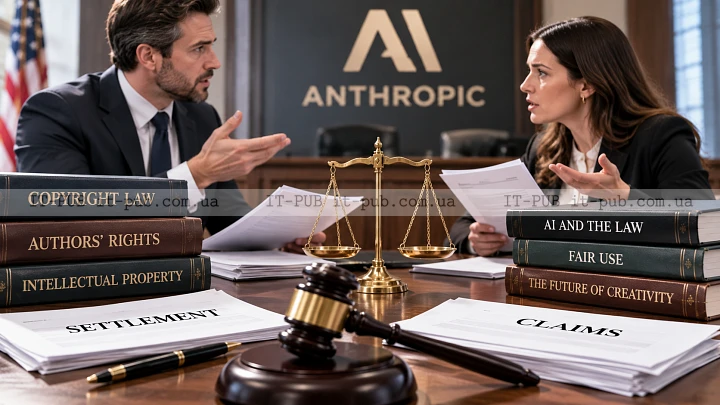
Writers say publishers and some agents are seeking shares of Anthropic settlement payments, even when rights may have reverted years ago.
Some authors expecting money from Anthropic’s $1.5 billion copyright settlement say they have hit an unexpected obstacle: other parties are also claiming part of their payments. According to IT-PUB News, the dispute is drawing attention because the settlement is supposed to compensate writers for pirated books used in AI training, yet the payout process is now raising a separate fight over who owns which rights.
The issue reaches beyond one company’s settlement. Publishing records can get messy when rights revert, books go out of print, or older contracts are still being used to support claims. For authors, that can mean receiving less than expected — or having to contest whether a publisher should be paid at all.
Anthropic’s settlement is now entering the payout stage
Anthropic reached the copyright class action settlement last year after a judge ruled that training AI models on copyrighted material is allowed under fair use, but pirating that material is not. The deal received final approval in July, clearing the way for payments to begin.
Under the settlement terms, authors of nearly 500,000 titles are set to receive $3,000 for each pirated work. But the amount depends on the book’s publishing status. If a title is still in print with a traditional publisher, the payment is split evenly between author and publisher. If the book was self-published, or if the publisher had already reverted the rights by letting it go out of print, the author is supposed to receive the full amount.
That setup is now at the center of the complaints. Some writers say the claims tied to their books do not reflect the current rights situation.
Authors say some publishers are claiming books they no longer control
Several authors have posted on social media that publishers appear to be claiming more than they should. Mystery and thriller author April Henry said HarperCollins claimed one of her books in the Anthropic settlement even though the rights had reverted many years earlier. She also said she received a credit alert showing HarperCollins had been added as her employer, which she said had never been the case.
At Writers Beware, Victoria Strauss said she has been hearing from authors about two main kinds of complaints. In some cases, publishers are seeking money from works they no longer have a legitimate claim to because the rights have reverted. In others, publishers are trying to collect the entire payment even though they would be entitled to only half.
Strauss said she is “reluctant to attribute to malice what can be plausibly explained by poor recordkeeping.” She also said some publishers have already described the issue as a mistake and asked Anthropic to correct it.
Authors Guild CEO Mary Rasenberger struck a similar note in comments to The New York Times. She said she does not see the situation as “a grab by the publishers” and does not believe publishers are “specifically trying to screw any author over.” In her view, the problem is more likely tied to weak records and a settlement process that is hard to navigate.
Literary agencies are also facing complaints
Publishers are not the only parties authors say are trying to claim a share. Strauss said she has also received complaints about literary agencies filing claims, which she called surprising because agents are not rightsholders in the books they sell.
Author Courtney Milan, the pen name of former law clerk and law professor Heidi Bond, was blunter. In a Bluesky post, she wrote that some agents are trying to claim percentages from the Anthropic settlement and said they should stop.
The complaints suggest the dispute is not confined to one company or one type of claimant. Instead, they point to broader confusion over who is entitled to payment when a book has passed through several hands over time.
Rights timing could decide who gets the money
Strauss said the complaints she has seen are only a small glimpse of a much larger process. Even so, she argued that the number of similar reports over the past two days suggests the problem may extend beyond a few isolated errors.
One especially sensitive issue is timing. Authors who want to claim the full 100% payment for a book need the rights reversion to have happened before August 10, 2022, the settlement’s “download date.” If that timing does not line up, the payment may be treated as one that should be split with a publisher.
That detail is likely to matter for many writers, especially those with older titles or more complicated publishing histories. It also helps explain why disputes are surfacing now: the settlement depends on records that may be incomplete, outdated, or read differently by the people filing claims.
For Anthropic, the settlement is meant to resolve a major copyright case and move payments forward. But the complaints from authors show that the distribution phase may create a new set of disputes, even after the legal fight over AI training has been settled.