Apple retail veteran questions AI shopping push
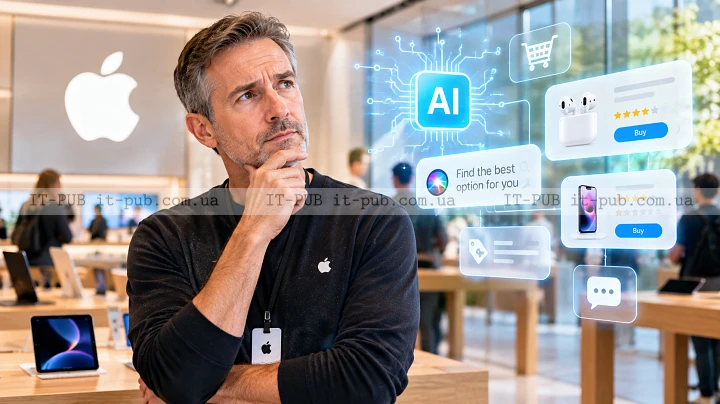
Ron Johnson says AI can improve product research and online buying, but he doubts shoppers will hand over big purchase decisions to software.
Ron Johnson, the executive who helped build Apple’s retail stores, is pushing back on one of Silicon Valley’s biggest new bets: AI agents shopping on people’s behalf. In a new interview, he said artificial intelligence may make online shopping easier, but it will not fundamentally change how most people buy things. That view carries weight because Johnson helped shape how a major tech company sold products in person. And it lands just as Google, OpenAI and others push AI deeper into commerce.
The debate is not just about convenience. It also gets at a broader question: how much trust people are willing to place in software when money, product choice and personal preference are involved.
Johnson sees AI as support, not the shopper
Johnson said he expects AI to improve the online shopping experience, but not take over shopping itself. In his view, people still want to make the final call, especially on more expensive purchases.
He was especially direct when asked whether he could imagine someone letting an AI agent choose and buy a laptop worth $1,000 or $2,000 without ever visiting a website or store. His answer was simple: he does not think anyone will do that.
For Johnson, the issue is not whether AI can compare options or surface better information. It is that some purchases are too personal to hand over completely. A laptop buyer, he said, may want to feel the weight of the device, look at the screen and decide which size works best. AI may help narrow the field, but it cannot replace the physical experience of choosing a product.
That matters in the current push toward so-called agentic commerce, where tech companies want AI agents to handle more of the process from discovery to checkout. As IT-PUB News notes, Johnson’s comments suggest that even if the technology becomes more capable, shoppers may still want a human element before spending significant amounts of money.
Google and OpenAI are moving AI further into commerce
Johnson’s skepticism runs against the direction some of the biggest names in tech are taking. Google is promoting its Universal Commerce Protocol, a standard meant to help AI agents guide consumers from finding products to completing a purchase. OpenAI is also moving ChatGPT toward shopping, letting users research and compare products and, in some cases, buy products without leaving the chatbot.
That helps explain why Johnson’s comments drew attention. He is not just another critic of online retail. He helped create Apple’s store network at a time when many believed physical retail was fading under pressure from e-commerce. That history gives extra force to his argument that stores still have a role.
Johnson said AI can make shoppers better informed before they enter a store, but he does not see it eliminating the need to visit one. In his view, AI may reshape the preparation phase of shopping more than the final decision.
That is a more restrained vision than the one promoted by companies betting on AI-driven shopping assistants. Their pitch is that software can reduce friction, save time and eventually become the main interface between consumers and products. Johnson’s argument is narrower: for many purchases, especially higher-value ones, the store remains part of the experience.
Apple’s retail model relied on people as much as products
Johnson’s confidence comes from his time at Apple, where he joined in 2000 to build the company’s retail business as online shopping was gaining momentum. The stores he helped create became central to how Apple sells products and supports customers.
He said the stores were designed not just to sell Macs, but to let people try products, learn how to use them and come back for help if something went wrong. That mix of sales and support helped Apple’s retail operation stand out.
In his new book, Shop Different: How Retail Revealed Apple’s Genius, Johnson revisits those choices and the lessons he says came from building the stores alongside Steve Jobs. He said competitors copied some of the visible parts of Apple’s retail formula, including glass-heavy design, open layouts and versions of the Genius Bar. But, he argued, many missed the most important part.
For Johnson, the real advantage was not the architecture or the furniture. It was the staff.
“The secret sauce for Apple has always been its people,” he said, pointing to how employees treated customers in the store.
He also said Apple Store workers are not paid on commission, unlike many salespeople in retail. That, he explained, was meant to remove pressure and encourage employees to focus on what the customer actually needed rather than on closing a sale.
His J.C. Penney setback shaped the argument too
Johnson’s views on retail were also shaped by a much less successful chapter of his career. After leaving Apple, he became chief executive of J.C. Penney in 2011 and tried to reinvent the struggling department store chain. The effort ended badly. He was removed less than two years later after sales dropped sharply.
Looking back, Johnson said he tried to change too much too quickly and failed to bring employees and customers along. He described Apple’s stores as a startup that grew alongside the company’s products. J.C. Penney, by contrast, was a turnaround, and he said it required a different approach.
“I applied a startup mentality to what needed to be a turnaround transformation,” he said.
That experience appears to have sharpened his belief that retail is not just about technology or strategy. Timing matters. Trust matters too. So does whether people are ready for the change being pushed on them.
Johnson later returned to the startup world with Enjoy Technology, an e-commerce company that brought tech products and setup services directly to customers’ homes. That company filed for bankruptcy in 2022 and sold substantially all of its assets to Asurion.
Johnson remains optimistic about AI, with limits
Despite his doubts about AI taking over shopping, Johnson is not dismissing the technology. He said he is “a real believer in AI” and called himself “an AI optimist.”
What he rejects is the idea that AI should replace human judgment. He said Steve Jobs would likely have embraced AI as well, but not as a substitute for people thinking through problems together. Johnson said there is no replacement for human intuition.
That is the heart of his argument against the most aggressive version of AI shopping. He is not saying AI has no place in commerce. He is saying its role may be narrower than some in Silicon Valley expect.
For consumers, that could mean AI becomes a tool for research and comparison rather than a full shopping stand-in. For retailers, it suggests physical stores may remain relevant even as more buying begins online. For tech companies, it is a reminder that making shopping easier is not the same as persuading people to hand over the decision entirely.