Anthropic adds Claude text watermarks for EU rules
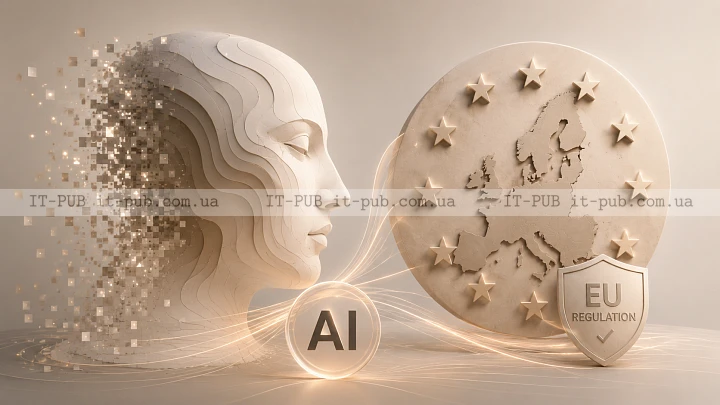
New Claude models released after August 2 will mark generated text and files, with Anthropic saying copied output may keep the signal too.
Anthropic says it will watermark text generated by its AI models, including Claude, to comply with European rules. The change was confirmed in an updated support page and affects how the company marks content produced by its systems. IT-PUB News reports the update comes as AI companies face growing pressure to make generated material easier to identify. For users and businesses alike, it points to a more formal system for labeling AI output across documents, services, and platforms.
The EU AI Act is pushing Anthropic to label output
Anthropic said the watermarking is tied to the EU AI Act’s Transparency Code, which took effect on August 2. The code requires AI companies to mark AI-generated or edited content in a way that other systems can detect.
In practical terms, that means AI output should not simply appear as ordinary text or files. It should also carry a signal identifying it as machine-generated or machine-edited. Anthropic now says its models will follow that rule.
The company said all models released after August 2 will automatically include technology to watermark both computer-generated text and files. For files, Anthropic said it will use the C2PA open standard.
Copied Claude text may keep the watermark
Anthropic also said it plans to extend support to older models. The company’s support page says the watermark is built into the text itself, which means it can travel when users copy and paste it elsewhere.
That matters because AI text is routinely moved across chats, documents, emails, and publishing tools. According to Anthropic, the watermark may survive some editing as well, and it will be applied at the model level. In other words, the marking should remain present regardless of which Claude product or interface the text comes from.
Anthropic has not said how much editing would be needed to remove the watermark. That leaves a practical question unresolved: how durable the labeling will be once users start changing the text.
The update covers multiple Claude products
Anthropic said the watermarking will apply across several products, including the Claude platform API, Claude, Claude Code, Claude Cowork, and Claude Tag.
That broad rollout suggests the company is not treating watermarking as a narrow feature for a single product line. Instead, it is being built into the wider Claude ecosystem, including tools used by developers and business customers through the API.
For companies that rely on AI-generated text in their workflows, the change could matter for compliance and content tracking. For everyday users, it may affect how Claude output is shared, reused, or identified in other systems.
More platforms are starting to label AI content
Anthropic’s update fits a wider shift across the tech industry. Platforms are increasingly moving to watermark or label AI-generated material, partly after user backlash and partly to avoid regulatory scrutiny.
The source notes that last week AI music platform Suno said it would mark tracks created on its platform after a series of legal challenges. Last month, newsletter service Substack partnered with Pangram to flag AI-generated content. Substack CEO Chris Best also referred to “Claudefishing,” a term used for people using AI to generate content.
The pattern is becoming harder to miss. Companies are trying to make AI output more visible, whether the content is text, music, or newsletters. That matters more as AI-generated material spreads through public and professional channels, where readers may not always know what was written by a person and what came from a model.
Other AI companies have also signed the EU code
Anthropic is not alone in agreeing to the EU code. The source says companies including Black Forest Labs, Google, Meta, Microsoft, OpenAI, and Synthesia have also committed to following it.
That does not mean every company is using the same method. But it does suggest a shared expectation is taking shape: AI-generated content should be labeled in a way other systems can recognize.
For regulators, that could improve transparency. For users, it may make it easier to tell when content was created or edited by AI. Still, the unanswered question around removal remains important, because any watermark system is only as useful as its ability to survive ordinary editing and sharing.