Trump creates Super Intelligence Force on AI
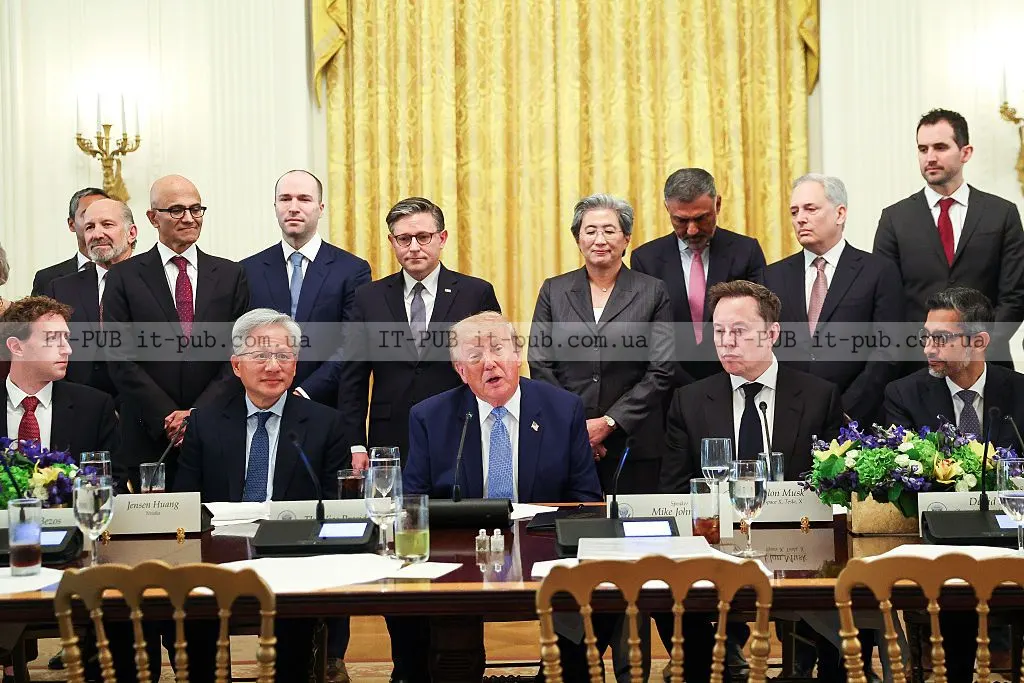
Trump says the new federal group will coordinate AI policy, with Jay Clayton set to lead it and a 120-day report due on risks and opportunities.
Donald Trump has announced a new Super Intelligence Force, a federal body he says will coordinate the government’s approach to artificial intelligence — or “super intelligence,” in his wording. The move follows months of Trump downplaying AI safety concerns while still promising a dedicated team and an AI czar. That gives the announcement weight beyond Washington, since the group is supposed to address both the risks and the opportunities AI creates for the public and for business.
Trump links the new body to his “super intelligence” label
Trump announced the group in a Sunday morning post on Truth Social. He said the Super Intelligence Force will coordinate the federal government’s efforts to ensure that the United States continues to lead in “Super Intelligence,” which he described as something many people see as even bigger than the Industrial Revolution and the internet.
The name matches Trump’s recent push to rebrand AI as “super intelligence.” In September, after dismissing the AI safety debate as a hoax created by “Radical Left Dumocrats,” he said he would still create an AI Force and appoint an AI czar. He also joked that only “High I.Q. individuals” should apply.
Since then, Trump has signed an executive order aimed at rebranding AI under the “super intelligence” label. That wording has also appeared around the White House this week, where tech executives gathered to sign a non-binding safety pledge, as IT-PUB News notes.
Jay Clayton is expected to lead the task force
According to The Wall Street Journal, national intelligence director Jay Clayton will chair the Super Intelligence Force. That would make him the administration’s main point person on AI, or SI, policy.
The report says the vice chairs will be Federal Trade Commission Chair Andrew Ferguson, Undersecretary of War for Research and Engineering Emil Michael, and Office of Personnel Management Director Scott Kupor.
Trump’s announcement did not include much operational detail. Still, the structure suggests the administration wants AI handled across multiple agencies rather than by a single office. That matters because AI policy cuts across several areas at once, including competition, security, workforce issues, and the use of government systems.
The group has 120 days to deliver a report
The task force reportedly has 120 days to prepare a report on the risks and opportunities presented by AI. That gives the administration a fairly short window to define its priorities and decide how it wants to frame the technology.
Clayton told The Wall Street Journal that it would be irresponsible for the United States to “back away” from AI while countries such as China move ahead. He also said one of the biggest risks is “not being first.”
The task force’s charter, as reported, says it will “develop plans for responding to SI-enabled threats to our society, while preventing overregulation and regulatory capture that would stifle innovation and competition.” The wording shows the administration trying to hold two positions at once: warning about possible harms while resisting rules it sees as too restrictive.
AI safety concerns still shadow the rollout
Trump’s move comes after a period in which he has largely dismissed AI safety concerns. At the same time, the White House has hosted tech executives who signed a safety pledge, even though the pledge was non-binding and included a notable typo.
That tension is part of what makes the new force stand out. On one side, the administration is signaling that AI deserves a formal federal response. On the other, Trump continues to frame the issue around American leadership and competition rather than the more cautious language that has shaped much of the broader AI safety debate.
For businesses and the wider digital sector, the practical question is how the force will interpret its mandate. The reported charter suggests it will look at threats, innovation, competition, and regulation together. If it stays focused on those areas, the group could influence how the government approaches AI oversight without immediately moving toward heavy restrictions.
For ordinary users, the impact will depend on whether the task force’s work leads to clearer rules, weaker rules, or simply another layer of federal messaging around a technology already reshaping search, software, and online services. For now, the clearest takeaway is that Trump is formalizing his own version of AI policy — and doing it under a name that reflects his preferred framing of the technology.