TechCrunch Disrupt 2026 puts AI safety in focus
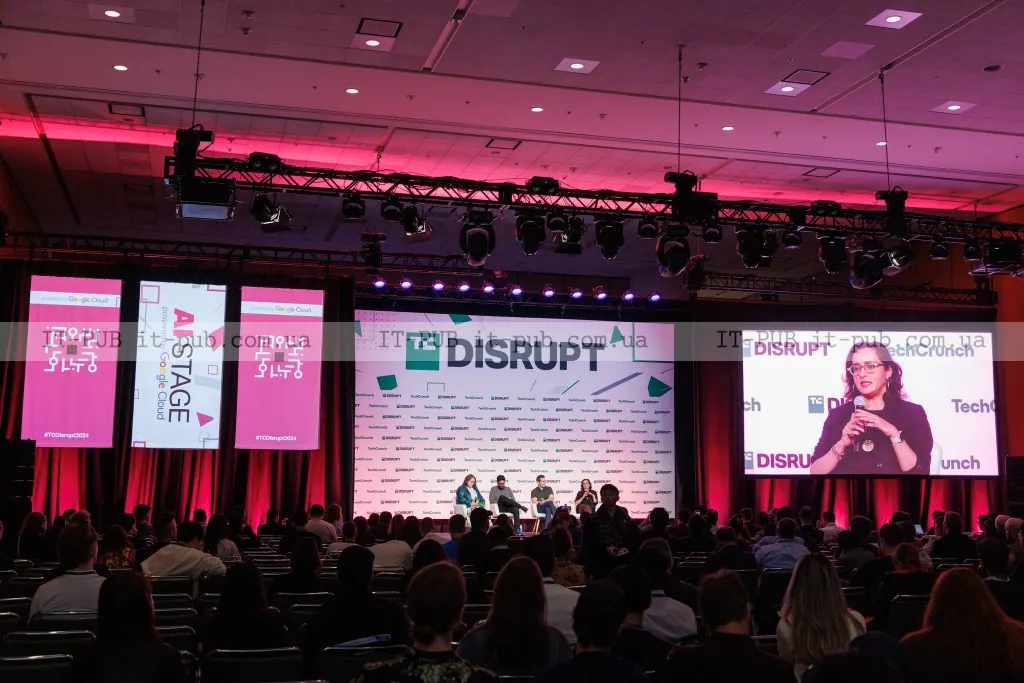
Five Disrupt 2026 sessions will examine enterprise AI rollouts, agent security, and robotics trust as AI moves into business systems and real-world use.
At TechCrunch Disrupt 2026, AI safety is being treated as more than a technical side issue. Five sessions across the AI Stage and Real World AI Stage will examine what happens when AI systems move beyond demos and into enterprise workflows, autonomous agents, vehicles, and robots. As IT-PUB News notes, the focus is shifting from what AI can do in theory to whether people and businesses can trust it in practice.
That shift matters for companies selling AI products and for organizations deciding whether to bring those systems into critical operations. The lineup reflects a broader debate around adoption: capability still matters, but trust, security, and reliability are becoming just as important.
Enterprise AI is moving beyond the pilot phase
One session will look at what happens when companies try to move Claude from testing into real deployment. Anthropic Head of Applied AI Cat de Jong is set to discuss where enterprise rollouts succeed, where they stall, and why some businesses remain stuck in pilot mode after 18 months.
The session is aimed at founders trying to understand why AI adoption inside companies can be uneven. A product may look convincing in a demo, but that does not mean it will hold up under the demands of day-to-day business use.
That gap between experimentation and production runs through the event. For vendors, the challenge is not simply building a capable model. They also need to show that the system can deliver measurable value in a form enterprises are actually willing to rely on.
Agent security is becoming a product-level concern
Another session will focus on a problem that grows more urgent as AI agents gain the ability to act on their own. If an agent can access systems and complete tasks, it also raises new security questions around permissions, limits, and control.
Okta President of Products and Technology Ric Smith and NanoCo Co-Founder and CEO Gavriel Cohen will discuss agent security at the infrastructure level. The session is set to examine weaknesses in application-level permission models and the architectural decisions founders need to consider when building agentic AI.
The stakes are higher because these systems are not limited to generating text or suggestions. They can interact with software and company systems directly, which makes overly broad access or weak safeguards a much bigger risk. The session signals that security can no longer be treated as something to add after an agent is already in use.
Cloud security gets more complicated as AI enters core systems
A third AI Stage session will approach enterprise AI from another angle: how AI changes security requirements across business systems. The panel, titled “Securing the AI Enterprise: Why the Cloud Just Got a Lot More Complicated,” will bring together AWS VP of Security Services Rudy Mitra, Luta Security CEO Katie Moussouris, and cybersecurity veteran Wendy Nather.
The discussion will center on the infrastructure enterprises need when AI takes on more autonomous roles. According to the session description, security, governance, and observability all become part of the picture once companies consider putting AI into critical systems.
For founders, that is a reminder that enterprise customers are not judging products on performance alone. They are also asking whether those products fit their security and oversight requirements. Even strong AI features may fall short if the surrounding infrastructure does not meet a buyer’s standards.
Physical AI puts trust and safety under more pressure
The Real World AI Stage will shift attention from software-only systems to AI operating in the physical world. There, mistakes do not stay on a screen — they can affect vehicles, aircraft, industrial systems, and other real-world missions.
The session “Building AI Systems When Failure Is Not an Option” will feature Shield AI Chief Technology Officer Nathan Michael, General Motors Director of Robotics Strategy Mikell Taylor, and Waabi Founder and CEO Raquel Urtasun. They will discuss how to judge when an autonomous system is safe enough to deploy.
The conversation is expected to cover safety culture, testing and validation, regulatory hurdles, and the challenge of building companies that can earn trust when failure has physical consequences. That gives the session relevance beyond robotics and autonomy specialists alone.
Robotics still faces a data bottleneck
The fifth session will tackle a different obstacle in physical AI: data. Robots do not have access to the massive training datasets that helped accelerate progress in language models and self-driving vehicles.
In “Robots Are Waiting for Their ChatGPT Moment. Here Is What Is Standing in the Way,” NVIDIA Inception Global Head of Physical AI Les Karpas will discuss how data pipelines, simulation environments, and foundation models could help narrow that gap. The session will also examine what it takes to build, test, and deploy robots that are more capable and reliable.
The issue matters because robotics has long promised more autonomy than it has delivered at scale. Without enough data, training systems to handle unpredictable physical environments becomes much harder. That leaves a familiar tension behind the excitement: getting robots to a point where they can be trusted in everyday use.
TechCrunch is presenting these five sessions as part of a wider discussion about AI adoption, trust, and safety. The event will take place October 13–15 at Moscone West in San Francisco and is expected to draw more than 10,000 founders, investors, operators, and tech leaders, along with 250+ speakers and 300+ exhibiting startups.
For AI builders, the message is straightforward. A smarter model or a more capable robot is only part of the equation. The harder task may be proving that the system is safe, secure, and reliable enough to deploy.