What Is an API and How It Connects Software
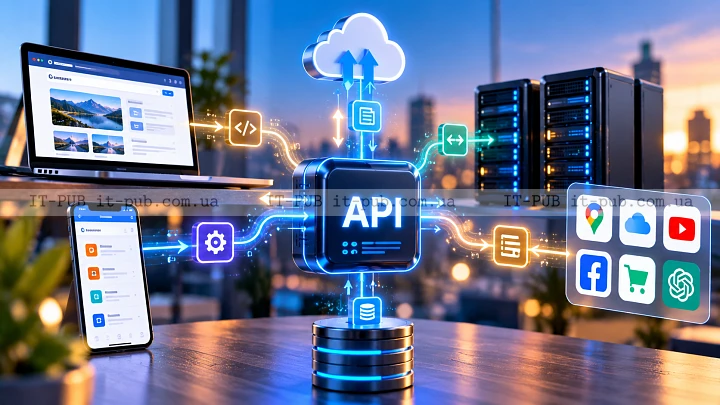
An API sits behind a huge part of modern software, even if most people never notice it. It gives different programs a structured way to communicate. That simple job makes it a core part of websites, mobile apps, cloud services, and plenty of digital tools people use every day.
If the term sounds intimidating, the idea itself is fairly simple. An API is not some mysterious product or a single standalone tool. It is a set of rules that allows one system to ask another system for something and get a response back.
What an API really is
API stands for application programming interface. The full term sounds more complex than the concept really is. In plain language, it is a connection point between software applications.
A good way to picture it is as a messenger between systems. One program sends a request through the API, and another program responds with the data or action that was requested. The API defines how that exchange happens so both sides can understand each other.
That matters because software is rarely built as one self-contained block. A website might need payment processing, a weather app might need forecast data, and a business platform might need access to a customer database. Instead of building every piece from the ground up, developers use APIs to connect systems that already exist.
How APIs work in practice
At the most basic level, API communication follows a request-and-response model. A client, such as a mobile app or browser-based service, sends a request. The API receives it, processes it, and returns a response.
That response may contain data, confirmation that an action was completed, or an error message if something failed. An app might request a user profile, submit form data, or ask for a list of available products. The API handles those API requests in a predictable format.
Structure is the key part. APIs define what can be requested, how the request should be formatted, and what kind of response will come back. Without that structure, software systems would depend on one-off custom connections that are much harder to maintain.
Why APIs matter for modern software
APIs make software more flexible. Developers can reuse existing services instead of rebuilding them from scratch, which saves time and reduces unnecessary complexity.
They also let systems stay separate while still working together. A company might run one service for user login, another for payments, and another for analytics. Each service can focus on its own role, while the API keeps communication between them clean and reliable.
For users, this usually appears as convenience. A travel app can combine flight data, hotel listings, and maps. A messaging app can sync across devices. A business dashboard can pull information from several internal tools. In all of these cases, APIs are doing the coordination behind the scenes.
The main parts of an API request
APIs can be designed in different ways, but many share the same basic parts. A request usually includes a destination, a method, and sometimes data.
The destination tells the system where the request is going. The method describes the action, such as asking for information or sending new information. The data, when needed, gives the API the details it has to process.
The response usually includes a result and a status. If the request succeeds, the response may return the requested data or confirm that the action was completed. If something goes wrong, it may explain the problem. This is one reason APIs are easier to work with than informal program-to-program connections: they create a clear conversation.
APIs and the client-server model
Many APIs operate within a client-server model. The client is the part that asks for something. The server is the part that provides the answer or performs the action.
A browser opening a page, a mobile app loading content, or a backend service collecting data can all act as clients. The server stores the data or runs the process. The API sits between them and defines how the exchange should happen.
This setup is common for a reason. It keeps responsibilities separate. The client focuses on presenting information to the user, while the server handles storage, logic, and security. The API becomes the bridge that connects the two.
Common types of APIs
APIs can be built in several ways, but some approaches show up more often than others. One of the most common is the web API, which allows software to communicate over the internet. These APIs are widely used by websites, apps, and cloud platforms.
REST API is another term that comes up often when people look for an API explained in practical terms. REST is a design style based on standard web principles, which makes APIs easier to understand and use. It is popular largely because it fits naturally with the way the web already works.
There are also APIs for operating systems, libraries, hardware, and internal software tools. They may be less visible to everyday users, but they are just as important. A software library API, for example, gives developers a consistent way to use a set of functions without needing to know every detail of the underlying code.
A simple example of API integration
API integration means connecting one system to another through an API. It is one of the most practical and common uses of this technology.
Imagine an online store that wants to show shipping information. Instead of building its own shipping network, it can connect to a delivery service through an API. The store sends order details, and the delivery system returns tracking information or shipping updates.
The same pattern shows up everywhere. A company may connect its website to a payment processor, a CRM tool to an email platform, or a mobile app to a login service. In each case, the API makes the connection possible without forcing those systems to become one large application.
What APIs are not
It helps to clear up a common misunderstanding here. An API is not the same as a database, even though it may access one. It is not the same as a website interface, even though it may power one. And it is not always visible to users.
People interact with software powered by APIs all the time without realizing it. When an app loads a map, checks the weather, or signs in through another service, an API may be doing the work in the background. The interface is meant for software, not for the human user directly.
That distinction matters. It explains why APIs are so useful: they let systems exchange information in a controlled way without exposing internal code or private infrastructure.
Why APIs need rules and security
Because APIs connect systems, they need clear rules. Not every request should be accepted. Not every system should have access to every function. Good API design includes permissions, limits, and validation.
Security becomes especially important when sensitive data is involved. An API may need to verify identity before returning information or accepting an action. It may also need to reject malformed requests or block traffic that looks suspicious.
That is one reason APIs are managed so carefully by developers and platform teams. A well-designed API supports integration while helping protect data. A poorly designed one can lead to confusion, errors, or security risks.
How developers think about API design
From a developer’s perspective, a good API should be predictable, consistent, and easy to understand. The goal is not only to make it function, but to make it usable for other systems and teams.
Clear naming helps. A stable structure helps too. If the same kind of request behaves the same way across the API, integration becomes much easier. Documentation matters as well, because developers need to know what each endpoint does, what data it expects, and what it returns.
That is why many teams treat an application programming interface almost like a product of its own, even when it is used internally. A well-designed API saves time, reduces errors, and makes future changes easier to manage.
APIs in everyday digital life
Most people first run into APIs indirectly through the services they use every day. A ride-hailing app may rely on maps and payment APIs. A streaming platform may use recommendation and authentication APIs. A business tool may connect to cloud storage or analytics services through APIs.
The pattern stays the same. One system asks another to help with a specific task, and the API makes that exchange possible in a reliable, structured way.
This is a big part of why APIs have become so central to digital products. They help companies build faster, connect services more easily, and update one part of a system without rebuilding everything else.
When API problems appear
APIs work best when requests and responses are clearly defined, but problems still happen. A request may be missing information. A system may send data in the wrong format. A server may be unavailable. Permissions may be too strict, or not strict enough.
When that happens, the API usually returns an error message or status that points to the issue. For users, these problems may show up as a failed login, a missing result, or a feature that suddenly stops working. For developers, fixing them often means checking the request, the response, and the system on the other side.
This is also why good documentation and testing matter so much. The more clearly an API behaves, the easier it is to maintain.
Why understanding APIs is useful
You do not need to be a developer to understand why APIs matter. Knowing what is an API helps explain how digital services fit together and why some tools can connect so easily.
For beginners, it gives a clearer picture of how apps and websites work behind the scenes. For IT professionals, APIs are part of everyday architecture, automation, and integration work. For business teams, they explain how software tools can exchange data without manual effort.
Once the idea clicks, a lot of digital systems start to make more sense. APIs are not just a technical detail. They are one of the main reasons modern software can be modular, connected, and adaptable.
The practical takeaway
An API is a structured way for software systems to communicate. It handles requests, returns responses, and helps separate applications work together without turning into one merged system.
That makes APIs essential for web services, mobile apps, cloud platforms, and business software. They support flexibility, automation, and API integration across a wide range of digital products. Most of the tools people use every day depend on them in one way or another.
Understanding what is an API and how APIs work gives you a much clearer view of the software landscape. It turns a vague technical term into something practical, recognizable, and useful.