Microsoft merges Copilot apps and cuts AI features
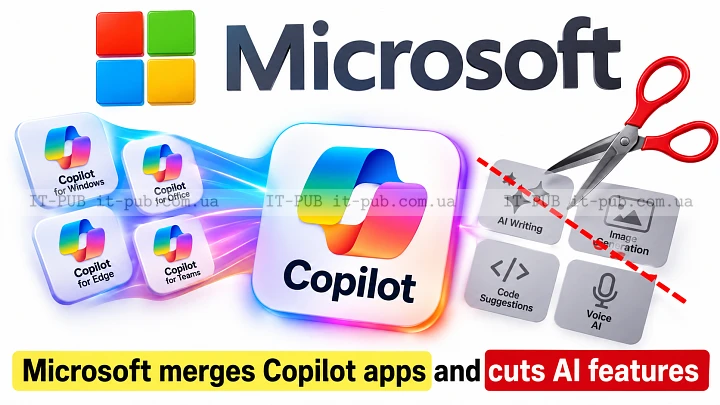
Microsoft will combine its consumer and business Copilot apps and remove several underused features by August 18, 2026.
Microsoft is reshaping Copilot by merging its consumer and business apps and cutting a set of AI features that did not succeed. The move matters because Copilot has been one of the company’s most visible bets on generative AI, and this latest change suggests its first approach had become too complicated. It also reflects a broader shift in AI apps, as major companies trim overlapping tools and try to make their products easier to use.
The update was first reported by GeekWire and later outlined in Microsoft’s support documentation. As IT-PUB News notes, Microsoft is combining the consumer-facing Copilot app with the more business-oriented Microsoft 365 Copilot app into a single experience.
That consolidation speaks to a basic reality of how people use AI tools. Personal and work tasks often overlap, and Microsoft appears to be responding after splitting Copilot into separate products that may have been harder to navigate. The move also comes as other major AI services fold more features into fewer apps instead of scattering them across multiple products.
Microsoft will remove several Copilot features by 2026
Alongside the app merger, Microsoft is removing several capabilities from Copilot. Consumers will lose access to Group Chats, AI-generated podcasts in Copilot, Copilot Labs experimental features, and Deep Research. Microsoft says those features will be gone by August 18, 2026.
For paid professional users, the company says Researcher will replace Deep Research, at least in that context. The source does not say whether the other removed consumer features will get direct substitutes.
Microsoft is also ending support for Mico, the animated floating character that served as Copilot’s visual persona. The character was described as a blob-like figure that evoked Clippy, Microsoft’s best-known old Office assistant. Its removal suggests Microsoft is moving away from some of Copilot’s more playful elements in favor of a more streamlined product.
The company also warns that some features may disappear temporarily during the transition. It says files created in the standalone Copilot app will be moved to OneDrive.
The merger points to a broader Copilot reset
Microsoft says the goal is to create a “simpler, more cohesive experience.” That wording matters. These changes are not just cosmetic — they suggest Microsoft is narrowing Copilot’s scope and trying to make it easier to understand, both for everyday users and for businesses that may have been unsure which Copilot app they were supposed to use.
The shift also reads as a correction. Two years ago, Microsoft described AI as a “generational shift” and said it wanted to lead it. Since then, Copilot has been presented as a central part of that strategy. Now, by removing some of its less successful features, Microsoft is effectively acknowledging that not every experiment helped the product become useful enough to compete with ChatGPT, Claude, and Gemini.
That competition helps explain why the change drew attention. The AI assistant market has become crowded, and companies are increasingly trying to avoid confusing users with too many separate experiences. Microsoft’s move follows similar consolidation elsewhere: Claude has merged Cowork into Chat, OpenAI has merged its agentic feature Operator into ChatGPT, and Google has been adding specialized capabilities to Gemini, including the combination of deep research and web browsing.
Copilot’s strategy had already faced questions
The latest move also fits with earlier signs that Microsoft was rethinking Copilot’s direction. In July, The Information reported that Microsoft EVP Jacob Andreou, who oversees Copilot, said in an internal memo that the app needed to earn “the right to exist” in customers’ lives. According to that report, the company needed to move on from features that did not work.
Microsoft’s current actions line up with that message. Instead of continuing to pile experiments onto an already complicated product, the company is cutting features and folding the app structure into something more unified. That may make Copilot easier to explain and use, but it also means some users will lose tools they may have tried or relied on.
For businesses, the shift to a single Copilot experience could reduce confusion over where certain functions live. For consumers, the trade-off is clearer: fewer features, but a simpler app. Microsoft is now betting that clarity will matter more than breadth.