How Artificial Intelligence Works in Everyday Services
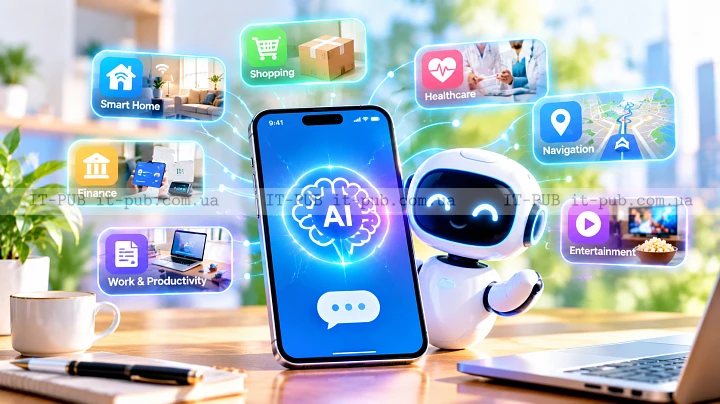
Artificial intelligence is no longer limited to research labs or futuristic products. It is built into services people use every day, often so quietly that most users barely notice it. Search results, streaming suggestions, fraud checks, voice assistants — all of these rely on AI to make digital products faster, more responsive, and easier to use.
That is the basic answer to how artificial intelligence works in everyday services. These systems look for patterns in data, learn from examples, and use that learning to make predictions, sort information, or suggest the next step. The underlying technology can be complex, but the goal is usually straightforward: make a service feel smoother, more relevant, and less manual.
What AI actually does behind the scenes
At a practical level, AI is mostly about pattern recognition. A system is trained on large amounts of data so it can detect useful relationships inside that data. After that, it applies what it has learned to new inputs.
In real products, that might mean spotting spam in an inbox, recommending a film, or sending a support request to the right queue. The system is not “thinking” like a person. It is estimating probabilities and choosing the response that seems most likely to fit, based on what it has seen before.
That is why AI tends to work best in services with repeated behavior and lots of data. It is especially effective when a platform needs to process huge volumes of similar requests, detect unusual activity, or adjust to user preferences over time.
Why everyday services rely on AI
Digital services produce an enormous amount of information. Every search, click, purchase, message, and pause can become a signal. No team of people can sort through all of that at scale. AI can.
That makes AI useful for a few clear reasons. It helps personalize services, automate repetitive work, and improve decision-making. A music app can learn which songs a listener skips. A bank can look for suspicious transactions. A shopping platform can surface products that better match past behavior.
That does not mean AI replaces human judgment. In many cases, it supports it. The system handles the repetitive layer so people can focus on exceptions, edge cases, and work that actually needs human attention.
How AI learns from data
Most examples of AI in daily life rely on machine learning in apps and platforms people already use. Instead of writing a fixed rule for every possible situation, developers train software on examples and let it learn patterns from the data.
Spam filtering is a simple example. If a service is trained on many spam and non-spam emails, it can start to recognize the words, structures, and behaviors that often appear in unwanted messages. Then it uses those patterns to classify new emails.
The same logic shows up across other services. Recommendation systems learn from user behavior. Navigation tools learn from traffic patterns. AI-powered customer support can learn which requests usually need a human agent and which can be handled automatically.
There is nothing magical about that process. Results depend on the quality of the data, the design of the model, and the context in which the system is used. If the data is weak or biased, the output can be weak or biased too.
Search engines and recommendations
Search is one of the clearest examples of how artificial intelligence works in everyday services. When someone enters a query, the system is doing far more than matching exact words. It is trying to interpret intent, rank useful results, and filter out low-value pages.
AI helps search understand spelling mistakes, synonyms, and context. It can also learn which results tend to satisfy a certain kind of query. That is why modern search feels much more flexible than a basic keyword lookup.
Recommendation systems operate in a similar way. Streaming services, news feeds, and online stores use AI to predict what a user may want next. They look at past behavior, similar users, item popularity, and other signals, then turn that into a personalized list instead of a generic one.
Useful, yes. Neutral, not always.
Recommendations shape what people see, and that matters. They are based on prediction, not certainty, which means they can be helpful while still narrowing the range of content or products a user encounters.
Voice assistants and conversational tools
Voice assistants are another familiar part of AI in daily life. When a user speaks, the system first converts audio into text. Then it tries to interpret the request and decide what action or response makes sense.
That usually involves several layers working together. Speech recognition processes the audio. Natural language processing helps interpret meaning and intent. A response system then decides what to say or do next.
That is how voice assistants can set reminders, answer straightforward questions, or control connected devices. They are designed for common tasks and predictable requests. Once the request becomes vague, unusual, or heavily dependent on context, reliability drops.
Chatbots work in much the same way. In support flows, they can answer common questions, guide users through simple steps, or collect basic details before passing the case to a person. When they are designed well, they reduce wait times and make help easier to access.
AI in customer support and service automation
A lot of companies now use AI-powered customer support to manage large volumes of incoming requests. The system might sort messages, suggest replies, or provide instant answers to common issues. That can reduce pressure on support teams and speed up response times.
In many services, AI acts as the first layer. It handles simple issues like account access, order status, or password reset instructions. If the case is more complicated, it moves the user to a human agent.
That balance usually works best. AI handles repetition. People handle nuance, emotion, and unusual situations. Not every support issue fits into a script, and users notice quickly when a service forgets that.
Automation also shows up away from the front end. AI can help verify documents, flag incomplete forms, or detect patterns that suggest an error. Users may never see those systems directly, but they still affect how fast and reliable the service feels.
Personalization without the jargon
Personalization is one of the main reasons AI feels so present in digital products. Often it works through small adjustments rather than dramatic changes.
A news app may prioritize topics a user reads often. A shopping platform may remember size or preferred brands. A map service may suggest routes based on traffic patterns and earlier choices. Those changes can make a service feel more relevant without drawing much attention to themselves.
At the center of this is prediction. The system uses available data to estimate what might be useful next. Sometimes that works impressively well. Sometimes it gets it wrong.
The more a service depends on personalization algorithms, the more important it is to understand that these choices are being made in the background. Good personalization saves time. Bad personalization can feel intrusive, repetitive, or oddly narrow. Most users want convenience, but they also want control.
Where AI can go wrong
AI can be powerful without being consistently right. It makes mistakes when data is incomplete, outdated, or unbalanced. It can also reinforce patterns already present in the data, including patterns no one actually wants to repeat.
A recommendation system might keep pushing the same type of content and gradually narrow what a person sees. A support chatbot might misunderstand a question and return an unhelpful answer. A fraud detection system might flag a legitimate payment. These are not strange exceptions. They are part of how real AI systems behave in production.
There is another issue too: confidence. AI can produce answers that sound convincing even when they are wrong. That is one reason human review still matters, especially in areas like finance, healthcare, legal services, and identity checks.
It also helps to remember what AI is not doing. It does not understand intent in the human sense. It infers patterns. That difference matters whenever people expect judgment, empathy, or deeper context.
Privacy and data use matter
Every AI-driven service depends on data, and that naturally raises privacy concerns. To personalize results, detect abuse, or improve performance, a service may collect information about behavior, preferences, location, or device use.
That does not automatically mean the service is doing something wrong. Many features need some data to work properly. Still, users should be able to understand what is being collected and why. Clear settings, transparent privacy controls, and limited data collection are strong signs that a service is being handled responsibly.
For organizations, responsible AI use means collecting only the data that is actually needed, protecting it properly, and being careful about retention. It also means explaining AI-driven decisions when those decisions have meaningful effects on people.
How to spot AI in a service
AI is often invisible, but there are usually clues. If a service adapts to behavior, sorts content automatically, predicts the next step, or responds in natural language, AI is probably involved somewhere in the flow.
You can see it in autocomplete, smart replies, fraud alerts, product recommendations, photo tagging, and voice assistants. Sometimes the AI is obvious. Just as often, it is tucked inside a feature that simply feels convenient.
A good rule of thumb is this: if a service seems to learn from patterns and improve its responses over time, AI is likely part of it. The system may be simple or advanced, but the core idea stays the same.
What users should expect from AI-powered services
AI can make everyday services faster, more relevant, and easier to use. It can reduce repetitive work, improve search, and help people find what they need with less effort. When it works well, it almost disappears into the product.
Still, users should not expect perfect judgment. AI is best understood as a tool for prediction, sorting, and assistance. Its value comes from scale and speed, not from thinking like a person.
The healthiest way to use AI-powered services is with a mix of trust and caution. Use the convenience, but stay aware that the system is shaping what you see and how it responds. That mindset helps people get the benefits without handing over all control.
As AI becomes more common across digital tools, the most useful skill is not technical expertise. It is knowing, in plain terms, what the system is actually doing. Once that part is clear, everyday AI feels a lot less mysterious — and a lot more practical.