DetectifAI brings deepfake voice detection to phones
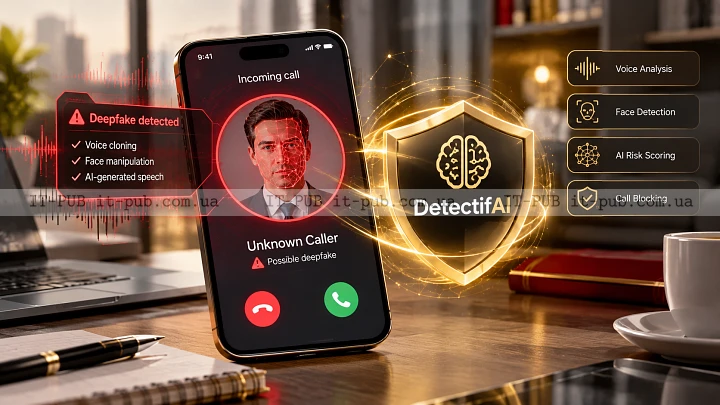
Founded after a family scam, DetectifAI says it can spot AI-generated voices during calls on the device instead of sending audio to the cloud.
DetectifAI is trying to move deepfake voice detection out of the cloud and into smartphones themselves. The San Francisco startup was founded by Tarini Padmanabhuni after a scam call fooled her grandfather with an AI-generated imitation of his brother’s voice. He lost money in the incident, but for Padmanabhuni the deeper problem was that he had no simple way to tell the voice was fake. That gap now sits at the center of the company’s pitch.
The timing matters because voice cloning scams are no longer a niche concern. The FBI says Americans lost close to $900 million to AI-driven scams last year, a 24% increase from 2024. Older adults were hit especially hard: people 60 and older lost twice as much as those aged 50 to 59, according to IT-PUB News.
A family scam became the basis for DetectifAI
Padmanabhuni says the call involving her grandfather stayed with her because it showed how persuasive these scams can be. The voice on the line claimed a kidnapping had happened and demanded a ransom. Her grandfather paid, only to learn later that the supposed victim was elsewhere and knew nothing about the scheme.
That experience became the starting point for DetectifAI. The company says it wants to help prevent similar deception through synthetic voices in phone calls, voice messages, and other audio.
The aim is not just to analyze suspicious audio later. DetectifAI says its system can deliver an instant verdict on whether a voice is AI-generated while a call is still happening, without sending the audio off the device.
DetectifAI wants detection built into the phone
Padmanabhuni argues that many existing deepfake voice detection products rely on cloud systems running on remote servers. In practice, she says, that makes it harder for phone makers to build those tools directly into devices.
DetectifAI says it is taking a different route by designing compact AI models from the start, small enough to run inside a smartphone’s operating system. In theory, that would let detection happen on the device itself rather than somewhere online.
For users, that changes where the protection sits. Instead of depending on a separate service or a warning that arrives later, the company wants detection to become part of the phone experience.
The startup is selling its technology to phone manufacturers first through licensing. Padmanabhuni compares that strategy to AT&T’s role in the original iPhone launch, arguing that the first phone maker to ship DetectifAI could gain an edge over rivals if deepfake detection becomes a standard feature.
The company is also working with financial institutions
DetectifAI’s core product is a software development kit, or SDK, that other companies can integrate into their own products. The company says it can be licensed through existing channels.
Padmanabhuni also sees a second revenue stream in sales to businesses and fraud-prevention firms. For now, the startup says it already has early revenue and is handling more than 100,000 calls a month for financial institutions in India.
Those calls are made by AI voice agents handling debt collections and follow-ups on loan documents. DetectifAI says every call includes deepfake detection and speaker verification, which checks whether the caller is really who they claim to be.
The company declined to name those customers, citing confidentiality agreements.
A WhatsApp beta test underscored the personal stakes
Padmanabhuni says one of the startup’s most meaningful moments came from a WhatsApp beta test. Users in that test could forward suspicious voice notes and get an assessment of whether they were authentic.
One tester told the company they would pay for the service without hesitation after relatives of their own had been scammed. For Padmanabhuni, that response reinforced how personal the problem can be. Her own family had already been through it.
That helps explain why deepfake detection is drawing attention beyond the security industry. Voice cloning scams are not just a technical issue; they can create confusion and pressure when people are trying to protect relatives, money, or personal information.
DetectifAI joins a crowded market for scam defenses
DetectifAI is entering a crowded field. Its competitors include Reality Defender, Pindrop, Resemble AI, Microsoft Azure AI Content Safety, and Nuance, which Microsoft also owns.
Still, Padmanabhuni argues that the market is large enough for more than one approach. The broader concern is that AI-generated voices are becoming convincing enough for scams, while many people still have no easy way to verify what they hear on a call.
That is where the business case meets the social concern. If detection tools become common on phones, they could give ordinary users a faster way to check suspicious audio. If they remain mostly limited to cloud services or enterprise systems, the person receiving the call may still be left exposed.
DetectifAI has raised a small seed amount from investors Josh Constine, formerly an editor at TechCrunch, and Manohar Kamath, a principal at the consulting services firm KM Growth. The startup is also one of the companies selected by TechCrunch’s editorial team to compete in its Startup Battlefield competition at TechCrunch Disrupt, set for October 13 to 15 in downtown San Francisco.
For Padmanabhuni, the issue is still personal. Her grandfather had no tool to distinguish a real voice from a synthetic one. DetectifAI is betting future phone users should not be left in that position either.